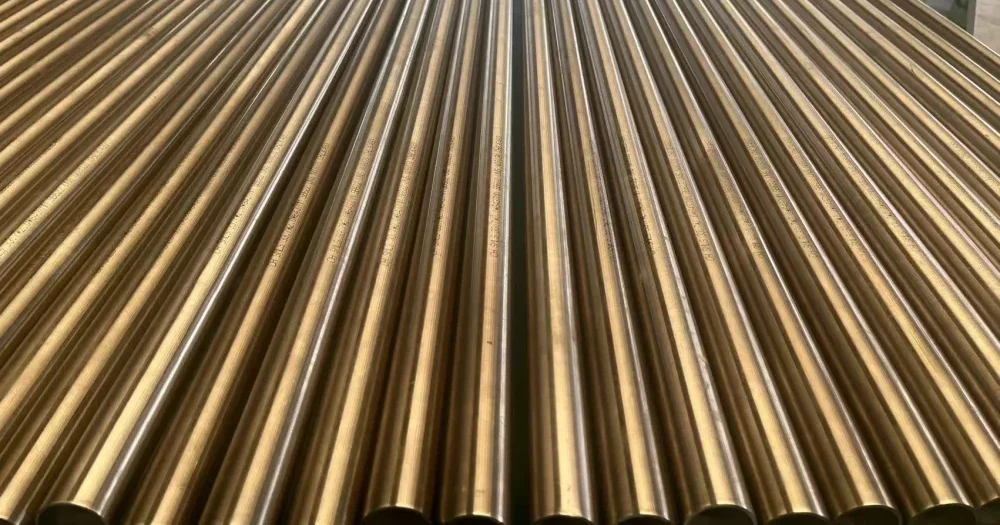
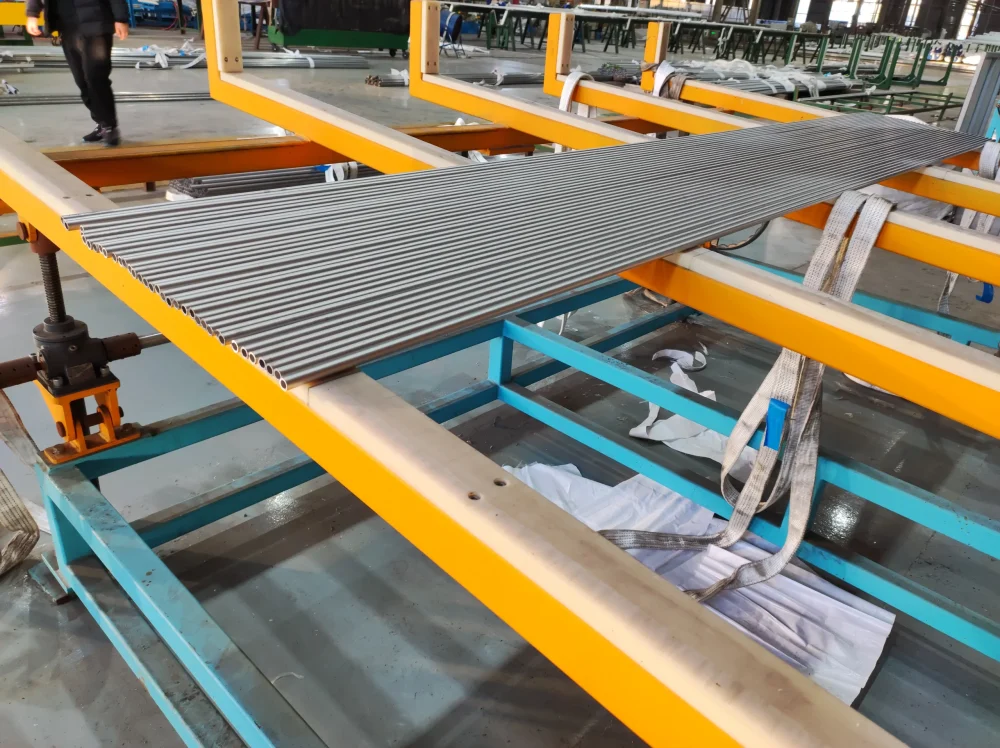
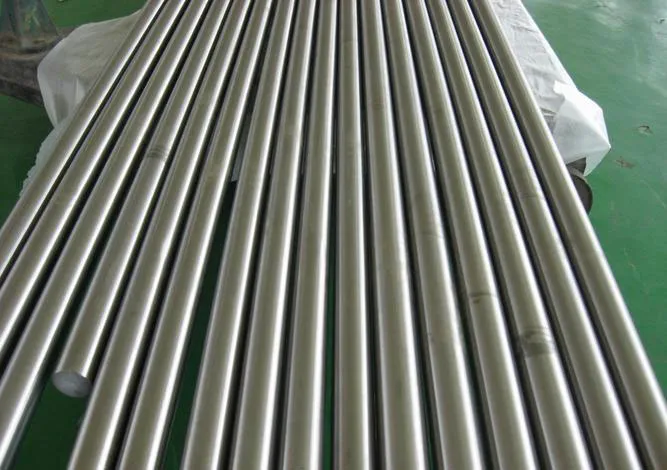
Best Incoloy 800/800H Flanges Manufacturer in China
Incoloy 800/800H Flange Difference
- Incoloy 800:
Best suited for general high-temperature applications up to 1100°F (593°C).It offers standard resistance to oxidation and nitriding. - Incoloy 800H:
Specifically modified with a tightly controlled carbon content and a high-temperature solution annealing process.This gives it vastly superior creep and stress-rupture strength at temperatures above 1100°F (593°C).
Material Properties & Advantages
- Oxidation and Carburization Resistance:
The chromium content forms a protective oxide layer on the flange surface,preventing degradation in punishing, hot gas environments. - SCC Immunity:
The high nickel concentration prevents the component from cracking when exposed to aggressive chloride ions. - Structural Stability:
Unlike common stainless steels,these alloys avoid becoming brittle over long periods of extreme heat exposure.
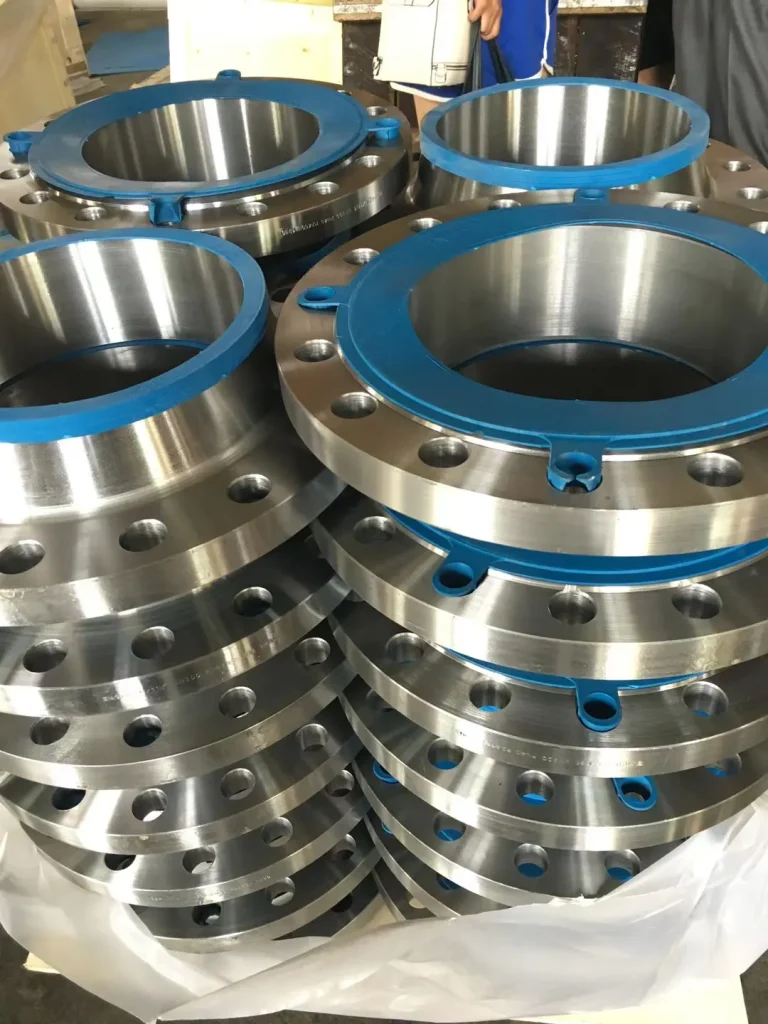
Common Flange Types Available
- Weld Neck (WN): Features a tapered hub that is butt-welded to the pipe, offering excellent structural reinforcement for high-pressure systems.
- Slip-On (SO): Slips over the pipe and is welded both inside and out; easier to align and cost-effective.
- Blind: Solid discs used to completely seal off a pipeline or block a section for routine maintenance.
- Socket Weld / Threaded: Used for smaller-diameter, high-pressure piping configurations.
Incoloy 800/800H Equivalent Designations
| Standards | UNS | W.Nr. | EN | JIS | BS | GOST | AFNOR |
|---|---|---|---|---|---|---|---|
| Inconel 800 | N08800 | 1.4876 | X10NiCrAlTi32-20 | NCF 800 | NA 15 | ЭИ670 / XH32T | Z10NC32-21 |
| Inconel 800H | N08810 | 1.4958 | X5NiCrAlTi31-20 | NCF 800H | NA 15(H) | ЭИ670 / XH32T | Z8NC33-21 |
Have a requirement?
Contact Us For More Information
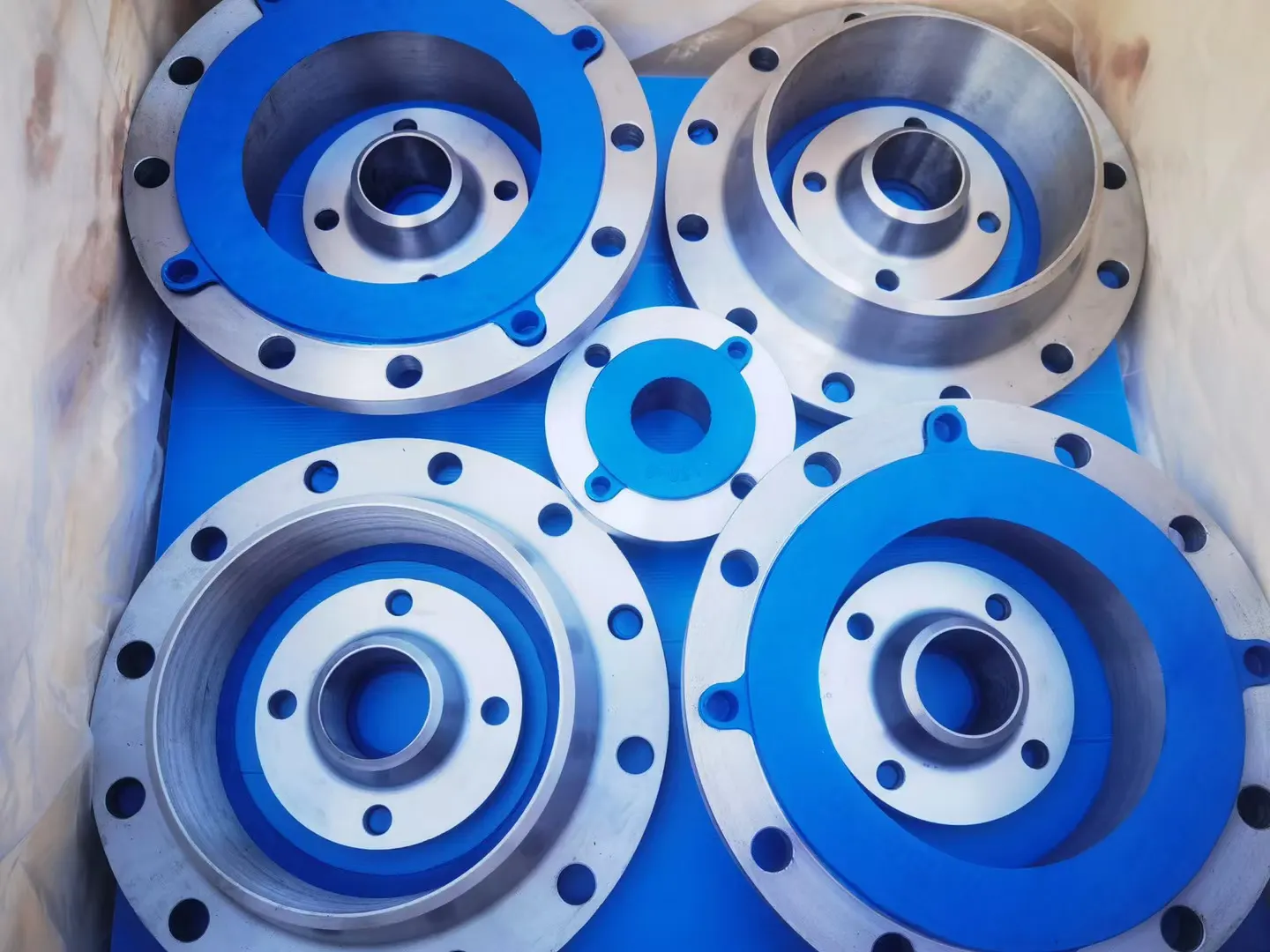
Dimensions of Our Flanges
Flange Standard
We supply stainless steel flanges in various standards, including but not limited to the followings:
ASME/ANSI B16.5, B16.47A/B, ASME B16.36, MSS SP-44, ISO7005-I, API type 6B/6BX, API605, GB9112~9124, BS1560-3.1,
EN 1092-1 (DIN2527, 2636, 2637, 2638, 2566, 2576, 2632, 3633, 2635, 2642, 2653, 2656, 2655, etc.)JIS B2220, AS2129, AS4078, GOST 33259, GOST 12820/12821, GOST 12816 etc.
The Capacity
It is about 400 tons/month for every type flanges. We produce and supply the flanges from Class 150 to Class 2500, stainless steel and duplex steel flange are our strength.Rate: 150 LBS, 300 LBS, 600 LBS, 900 LBS, 1500 LBS, 2500LBSDimension: 1/2” to 72” (DN15 ~DN1800)
Chemical Composition of Incoloy 800/800H Flanges, wt.%
| Element | Ni | Cr | Fe | C | Al | Ti | Al + Ti | Mn | Si | Cu | S |
|---|---|---|---|---|---|---|---|---|---|---|---|
| Incoloy 800 | 30.0 – 35.0 | 19.0 – 23.0 | ≥ 39.5 | ≤ 0.10 | 0.15 – 0.60 | 0.15 – 0.60 | 0.30 – 1.20 | ≤ 1.50 | ≤ 1.00 | ≤ 0.75 | ≤ 0.015 |
| Incoloy 800H | 30.0 – 35.0 | 19.0 – 23.0 | ≥ 39.5 | 0.05 – 0.10 | 0.15 – 0.60 | 0.15 – 0.60 | 0.30 – 1.20 | ≤ 1.50 | ≤ 1.00 | ≤ 0.75 | ≤ 0.015 |
Critical Composition Breakdown
- The Iron Base vs. Nickel/Chromium:
Despite often being lumped in with “nickel alloys,” iron actually forms the largest individual matrix share.The 30–35% nickel content preserves the stable,ductile austenitic structure and acts as a shield against chloride stress corrosion cracking.The chromium content provides the ultimate defense against high-temperature oxidation and scaling. - The Aluminum and Titanium Factor:
Both alloys use small additions of aluminum and titanium.Combined,they form gamma-prime precipitates that contribute to the material’s underlying strength. - Why Carbon Matters:
In standard Incoloy 800,lower carbon values can result in lower strength over time if the flange is subjected to extreme structural stress at heat.For 800H,forcing the carbon floor to 0.05% ensures that robust titanium carbides form during subsequent high-temperature solution-annealing heat treatments.This structural phenomenon keeps the grain matrix from sliding or fracturing under long-term stress.
Room-Temperature Mechanical Properties of Incoloy 800/800H Flanges
| Mechanical Property | Tensile Strength | Yield Strength | Elongation | Hardness |
|---|---|---|---|---|
| Incoloy 800 | ≥ 520 MPa(75 ksi) | ≥ 205 MPa(30 ksi) | ≥ 30% | 126 HB / 70 HRB |
| Incoloy 800H | ≥ 450 MPa(65 ksi) | ≥ 170 MPa(25 ksi) | ≥ 35% | 120 HB / 68 HRB |
Key Mechanical Performance Characteristics
The critical mechanical differentiator is the grain size.Standard Incoloy 800 has a fine grain structure optimized for strength below 1100°F (593°C).Conversely,Incoloy 800H is processed to exhibit a coarse grain structure of ASTM No. 5 or coarser.Large grains mean fewer grain boundaries,which prevents the flange from stretching out of shape under constant load at extreme heat.
- Incoloy 800:
Mechanical strength drops sharply when exposed to temperatures exceeding 1100°F (593°C). - Incoloy 800H:
Maintains exceptional design allowable stresses up to 1800°F (982°C).It is heavily utilized because it resists “creep”—the slow,permanent deformation that happens when materials are pushed to their thermal limits over months or years of continuous operation.
Applications of Inconel 800/800H Flanges
Inconel 800 Flanges
- Chemical and Petrochemical Process Piping
- Industrial Heating Element Sheathing
- Food and Beverage Processing Equipment
- Nuclear Power Plant Steam Generator Tubing
- Pulp and Paper Digester Systems
Inconel 800H Flanges
- Steam Hydrocarbon Reforming
- Ethylene Pyrolysis Cracking Furnaces
- Industrial Furnace Components
- Fossil-Fuel Power Generation
- Nitric Acid Production Catalyst Supports
Our Core Capabilities in Manufacturing Incoloy 800/800H Flanges
Precision Forging & Grain Flow Control
- Controlled Hot Forging:
The alloy must be forged within a strict temperature window to prevent thermal tearing or cracking. - Directional Grain Flow:
Advanced forging techniques align the internal grain structure with the shape of the flange.This maximizes impact toughness and fatigue resistance at critical stress points.
High-Tolerance CNC Machining
- Microstructure Engineering:
Advanced thermal capability ensures that Alloy 800H is held at a minimum of 2100°F (1150°C).This dissolves chromium carbides and induces a coarse grain size of ASTM No. 5 or larger. - Rapid Quenching:
Utilizing precise water-quenching or forced-air cooling prevents unwanted phase over-precipitation,locking in optimal creep-rupture performance.
Machining & Dimensional Accuracy
- Heavy-Duty CNC Machining:
Manufacturing requires rigid,high-torque CNC lathes and milling machines to prevent tool chatter and surface defects. - Flawless Sealing Faces:
Precision machining achieves exact RF serrations or RTJ grooves according to ASME B16.5 or EN 1092-1 standards,ensuring a leak-free seal under high pressure.
Stringent NDT & Quality Assurance
- Surface and Volumetric Inspections:
Manufacturing pipelines rely on liquid penetrant testing to catch micro-fissures and UT to scan the inner forged matrix for internal voids. - PMI:
Every single flange undergoes X-ray or laser-based PMI testing to verify that the carbon,nickel,and chromium weight percentages strictly match the required MTC specification limits.
FAQs About Incoloy 800/800H Flanges
No,not if the temperature exceeds 1100°F (593°C).
Standard Incoloy 800 lacks the carbon content floor and the coarse grain structure required to resist creep and stress-rupture.
Using standard 800 in an 800H high-temperature application will cause the flange to slowly stretch,warp,and ultimately leak or rupture under continuous pressure.
These alloys possess a high rate of work-hardening.
As a cutting tool passes over the metal,the surface layer instantly hardens.
To machine them successfully without destroying tools or leaving surface defects,manufacturers must use heavy-duty,highly rigid CNC machines,slow cutting speeds,heavy feeds,and specialized sharp carbide tooling with constant coolant flow.
- For temperatures above 1100°F (593°C):
Use Inconel Filler Metal 617 (ERNiCrCoMo-1) or Inco-Weld A.These match the high creep-rupture strength of the 800H base metal. - For temperatures below 1100°F (593°C):
Use Inconel Filler Metal 82 (ERNiCr-3) or Inconel Welding Electrode 182 (ENiCrFe-3).
- Stud Bolts:
Typically specified as ASTM A193 Grade B8M (Stainless 316) for moderate temperatures,or high-alloy studs like Inconel 625 for extreme high-temperature and high-pressure zones. - Gaskets:
Spiral wound gaskets featuring an Inconel or Incoloy winding with a flexible graphite filler are standard.For severe cyclic temperatures,RTJ solid metal gaskets are preferred.
Yes,but only under specific chemical and thermal conditions.
To carry a dual certificate, the heat must have a carbon content that falls tightly between 0.05% and 0.10%.
The material must also undergo the high-temperature solution annealing process to achieve the required ASTM No. 5 or coarser grain size demanded by the 800H standard.
- The Strengths:
The high chromium content provides strong resistance to oxidizing sulfur gases. - The Weakness:
High-nickel alloys are vulnerable to reducing sulfur environments at temperatures above 1100°F (593°C).The sulfur can react with nickel to form a low-melting-point eutectic film that destroys grain boundaries.
Contact Us
- RM901 No.22 Tangjiaqiao Road Wenzhou China
- +86 577 8551 1171
- [email protected]
- https://www.kaysuns.com/