El comportamiento químico del peróxido de hidrógeno y el acero inoxidable
Descomposición catalítica

- El proceso:
Las trazas de hierro, níquel o impurezas presentes en la superficie interior de la tubería provocan esta reacción. - El peligro:
En los sistemas de tuberías cerrados, esta reacción provoca una rápida acumulación de oxígeno gaseoso y una presión elevada. Si no se libera la presión, las tuberías pueden romperse.
Oxidación y corrosión
- Alta concentración: Aunque el peróxido de hidrógeno doméstico 3% no suele dañar las tuberías de acero inoxidable, el peróxido de hidrógeno de alta concentración puede corroer gradualmente el metal con el paso del tiempo.
- Composición química: La exposición prolongada al peróxido de hidrógeno en altas concentraciones puede provocar picaduras, decoloración y manchas de óxido.
- Efecto catalítico: Si se filtran iones de hierro libres al líquido, pueden desencadenar una reacción “tipo Fenton”, lo que acelera la corrosión de las tuberías.
Qué hacemos
- Plato
- Hoja
- Piezas forjadas
- Barra redonda
- Brida
- Tuberías
- Accesorios
- Personalizado
Más información
Selección de materiales y mitigación
| Calificación | Valoración | Concentración máxima | Riesgo de corrosión | Repercusión en la estabilidad del peróxido |
|---|---|---|---|---|
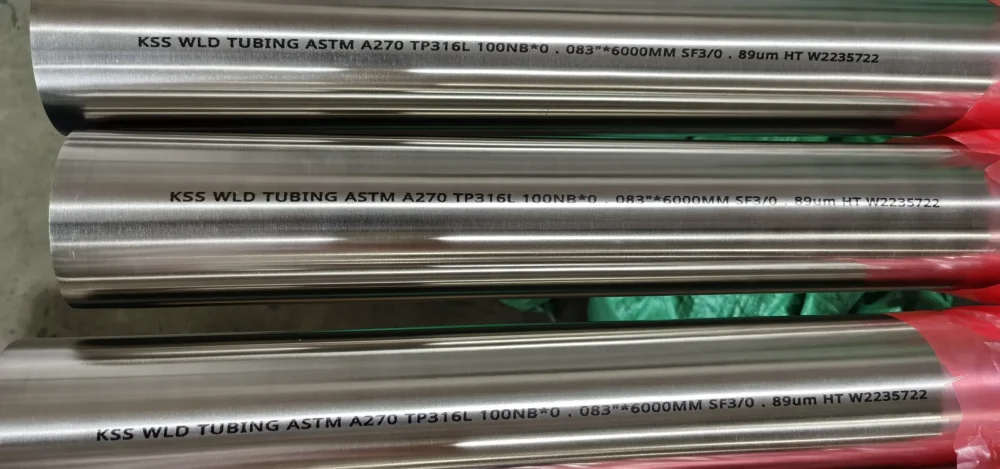
| 316L / 316 | Excelente | Hasta 90%+ | Muy bajo | Mínimo |
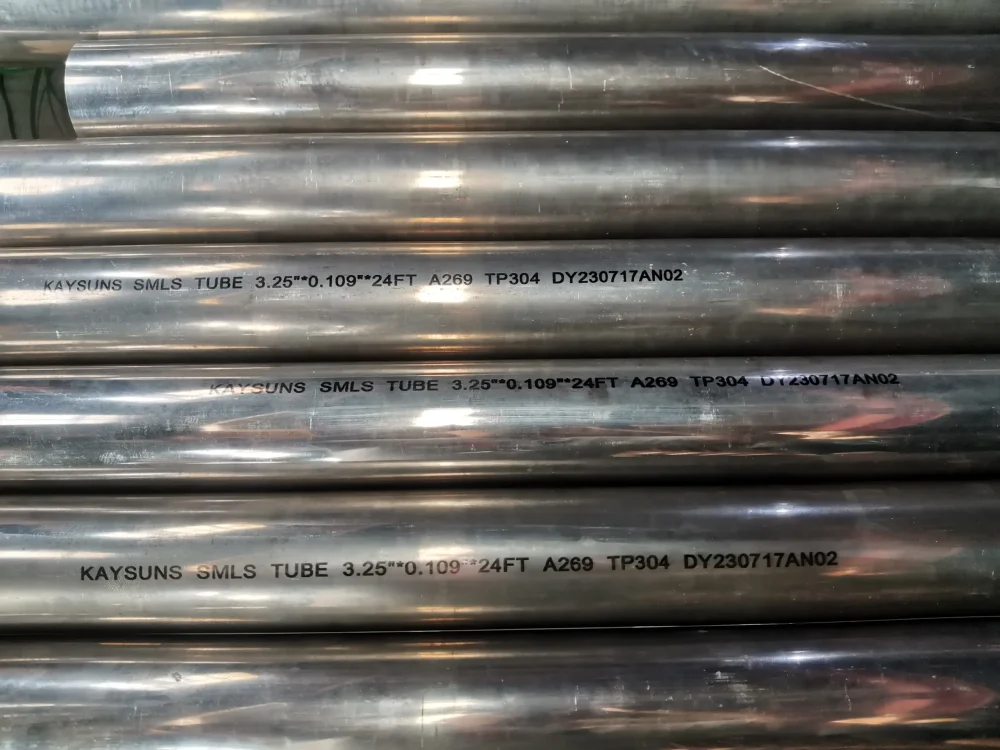
| 304L / 304 | Bien | Hasta 35% – 50% | Bajo a moderado | Bajo |
| Super Duplex | Excelente | Hasta 70% | Extremadamente bajo | Mínimo |
| Serie 400: ferrítica/martensítica | Pobre | 0% | Alta | Extremo |
Peróxido de hidrógeno y acero inoxidable: medidas de mitigación
Pasivación química avanzada
- El proceso: Las tuberías deben limpiarse químicamente con soluciones de ácido nítrico o ácido cítrico.
- El resultado: El ácido disuelve el hierro libre y hace que el cromo del acero se oxide, formando una capa gruesa, uniforme e inerte de óxido de cromo (Cr2O3) capa pasiva. Esta capa actúa como barrera física que impide cualquier contacto directo entre el metal y el fluido.
Desengrasado estrictamente ecológico
El peróxido de hidrógeno reacciona violentamente con los hidrocarburos (grasa, aceites, lubricantes y selladores de roscas) que quedan tras la instalación de las tuberías.
- Medidas de mitigación: Todas las tuberías, válvulas y accesorios deben someterse a un desengrasado intensivo con álcalis o disolventes para cumplir con las normas “Limpieza para servicio con oxígeno” (ASTM G93 / CGA G-4.1).
- Norma: No se pueden utilizar lubricantes estándar ni pastas para tuberías. Solo se permiten lubricantes totalmente fluorados y compatibles con el peróxido (como Krytox o Christo-Lube).
Alivio continuo de la presión hidrostática
- El riesgo: Si el peróxido queda atrapado entre dos válvulas cerradas (una “tubería obstruida”), el oxígeno se comprimirá, provocará un rápido aumento de la presión y, en última instancia, hará que la tubería de acero inoxidable reviente.
- Medida de mitigación: Cada tramo de tubería que pueda aislarse mediante válvulas debe estar equipado con una válvula automática de alivio de presión (PRV) o con un pequeño orificio de derivación perforado en la bola de la válvula, que descargue hacia un depósito de almacenamiento seguro o un sistema de contención.
Limpia las grietas y los rincones más recónditos
- El peligro:
Las bolsas de líquido estancado (“zonas muertas”) o los huecos estrechos en las juntas (grietas) permiten que se acumulen calor y burbujas de oxígeno. Este calor localizado acelera el ciclo de descomposición, provocando una rápida corrosión por picaduras localizada. - Las medidas de mitigación:
Los trazados de las tuberías deben maximizar un flujo suave y continuo. Todas las uniones permanentes deben soldarse mediante soldadura TIG orbital con penetración completa. Deben evitarse los accesorios de soldadura por encaje y las uniones roscadas, y sustituirse por bridas higiénicas o de cara elevada con juntas compatibles (como PTFE o Gylon).
Acabado de superficie lisa
- El concepto:
Una superficie interna rugosa de la tubería ofrece una mayor superficie, lo que proporciona más sitios catalíticos activos para la descomposición del peróxido. - Las medidas de mitigación:
Para operaciones que requieran un alto grado de pureza o una alta concentración, el diámetro interior (DI) de los tubos de acero inoxidable debe someterse a un proceso de electropulido. Este proceso electroquímico elimina las irregularidades microscópicas, creando un acabado liso como un espejo que maximiza la estabilidad del fluido y evita la adhesión de sustancias químicas.
Peróxido de hidrógeno y tuberías de acero inoxidable: material de las juntas y sellos
| Material de sellado | Compatibilidad | Límite de concentración | Riesgo principal / Nota operativa |
|---|---|---|---|
| PTFE / Teflón (TFE, Gylon) | Excelente | Hasta 100% | Estándar del sector. Sin degradación química ni contaminación de los fluidos. |
| FKM / Viton | Bien | Hasta 90% | Excelente para juntas dinámicas, pero debe utilizar calidades de primera calidad curadas con peróxido. |
| EPDM | Feria | Hasta 50% | Apto para aplicaciones de baja resistencia o de contacto con alimentos. Se hincha a altas temperaturas. |
| Buna-N / Nitrilo / Silicona | Pobre | 0% | Se endurece rápidamente, se agrieta y se desintegra. Provoca una reacción en cadena explosiva inmediata. |
Peróxido de hidrógeno y acero inoxidable: control de calidad de las soldaduras y decoloración térmica
- Calidad del gas de purga: Durante la soldadura TIG, el interior de la tubería debe estar completamente inundado con gas argón de alta pureza (99,999%) para desplazar el oxígeno.
- “Tinte térmico” de la soldadura: El oxígeno presente durante la soldadura genera una capa de óxido multicolor (tinte térmico). Esta capa contiene grandes cantidades de óxidos de hierro no pasivados.
- La solución: Las zonas de soldadura interiores deben cumplir las normas AWS D18.1/D18.2 (el tono de color provocado por el calor no debe ser más oscuro que el de la paja clara). Las soldaduras de color azul oscuro o negro descomponen rápidamente el peróxido, por lo que deben someterse a un decapado químico o a un lijado mecánico.
Termodinámica de la descomposición y sobrecalentamiento

- El ciclo de la temperatura: Cada aumento de 10 ℃ en la temperatura del fluido duplica, aproximadamente, la velocidad de descomposición del peróxido.
- Cambio de fase por ebullición: En concentraciones elevadas (> 70%), el calor generado por la descomposición localizada puede hacer que el componente acuoso del fluido entre en ebullición al instante, lo que provoca una expansión del volumen miles de veces superior y da lugar a una explosión física de vapor.
- Disipación del calor: El acero inoxidable tiene una conductividad térmica inferior a la del cobre o el aluminio. Las zonas de estancamiento o las tuberías sin aislamiento expuestas a la luz solar directa pueden superar rápidamente el umbral crítico de temperatura de activación.
Inspecciones, mantenimiento y vida útil de la pasivación
| Tarea de mantenimiento | Frecuencia recomendada | Objetivo / Indicador de referencia |
|---|---|---|
| Control de las emisiones de gases | Continuo | Detecta un aumento anómalo de la presión que indica corrosión interna activa en la tubería. |
| Imágenes térmicas (IR Flir) | Mensualmente | Detecta puntos calientes localizados a lo largo de la tubería que indican tramos sin flujo catalítico. |
| Lavado de repasivación | Cada 12-24 meses | Restaura la capa de óxido de cromo desgastada mediante ácido cítrico o nítrico. |
| Inspección con boroscopio | Durante los cierres | Comprueba visualmente las zonas de soldadura internas para detectar micropicaduras o manchas de óxido. |
Preguntas frecuentes sobre el ácido nítrico y el acero inoxidable
El burbujeo se debe a un reacción de descomposición catalítica,no tiene por qué deberse a la disolución del metal. Las partículas microscópicas de hierro libre, níquel o polvo presentes en la superficie del acero inoxidable actúan como catalizador químico. Este catalizador descompone rápidamente el peróxido de hidrógeno líquido en agua y oxígeno gaseoso. Las burbujas que se ven son oxígeno gaseoso puro que se escapa del líquido.
El mayor riesgo es un explosión catastrófica por presión.Dado que el acero inoxidable provoca la descomposición continua del peróxido en oxígeno gaseoso, el hecho de confinar el peróxido de hidrógeno en un tramo cerrado de tubería (sin ventilación) provoca una rápida acumulación de presión. Si la presión no se libera a través de válvulas de seguridad, la expansión del gas provocará la rotura o la explosión de la pared de la tubería de acero inoxidable.
| Concentración de peróxido | Comportamiento de reacción con el acero inoxidable | Nivel de riesgo |
|---|---|---|
| Bajo (3% – 10%) | Corrosión mínima del metal; burbujeo lento de gas con el paso del tiempo. | Bajo |
| Industrial (30% – 50%) | Puede atacar el acero no pasivado; requiere una selección rigurosa del tipo de acero (304L/316L). | Medio |
| Propelente (70% – 90%+) | Genera un calor exotérmico intenso; requiere acero 316L ultrapuro y electropulido. | Alta |
Contacto
- RM901 No.22 Tangjiaqiao Road Wenzhou China
- +86 577 8551 1171
- [email protected]
- https://www.kaysuns.com/