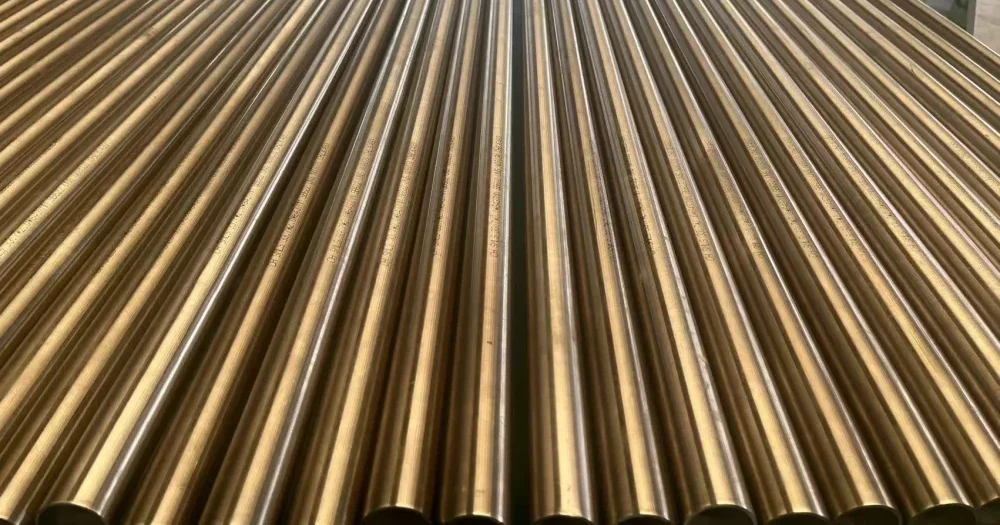
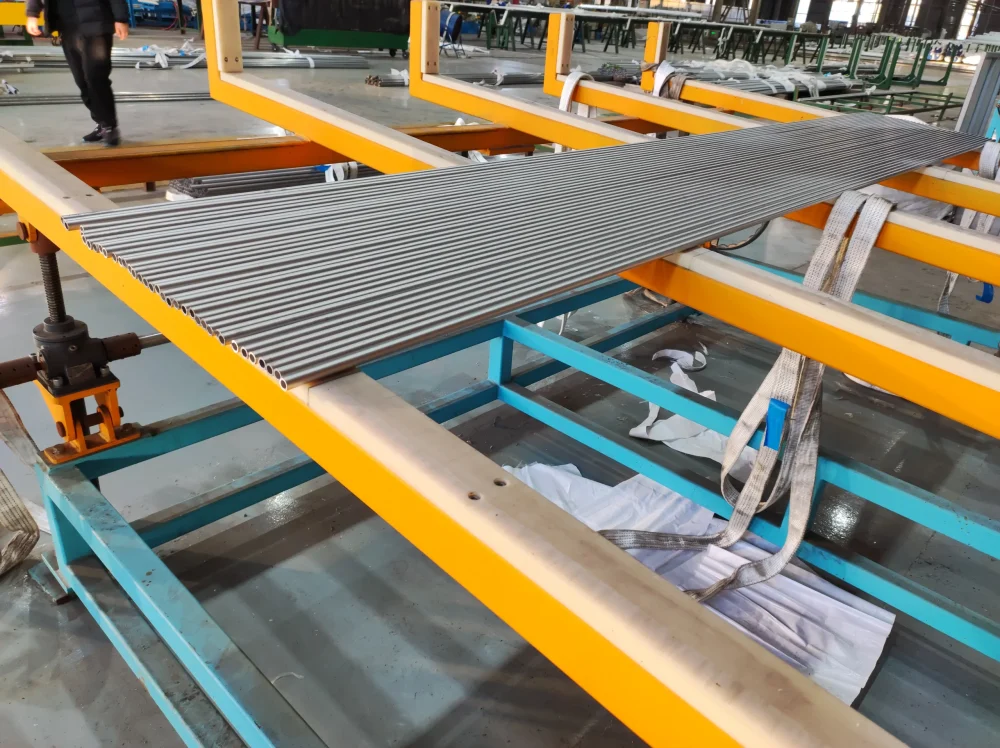
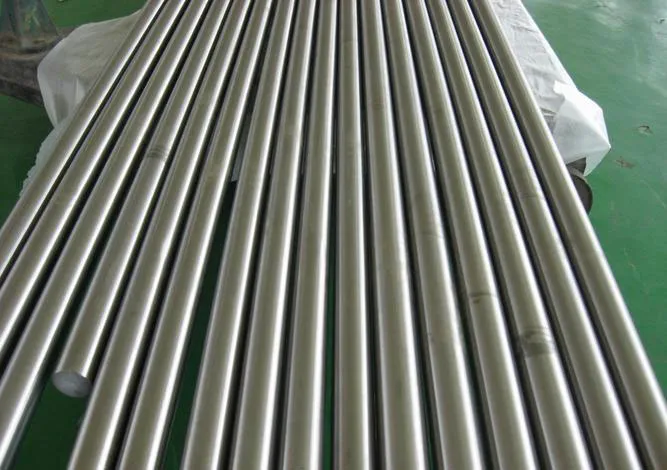
Inconel 600 Flanges Factory Direct Sales
Material Composition & Key Properties
- High Nickel Content:
Provides superior resistance to reducing environments and makes the component virtually immune to chloride-ion stress corrosion cracking. - Chromium Content:
Delivers excellent resistance to oxidizing compounds,sulfur compounds,and high-temperature oxidation or scaling. - Thermal Stability:
Capable of maintaining structural integrity and high mechanical strength across a massive temperature spectrum—spanning from cryogenic temperatures up to 2000°F (1093°C). - Non-Magnetic:
Naturally exhibits excellent non-magnetic properties,which is ideal for sensitive electronics and specific aerospace applications.
Common Types of Flanges
- Weld Neck Flange:
Feature a long tapered hub that is welded to the pipe.This design provides superior reinforcement,making it ideal for high-pressure and high-stress systems. - Slip-On Flange:
Slightly larger than the pipe’s outer diameter,allowing the pipe to slide inside before being fillet welded.They are easier to align and install. - Blind Flange:
Solid disks without a center bore used to permanently block off or seal the end of a piping system. - Socket Weld Flange:
Designed with a socket recess that accommodates the pipe end,providing a smooth flow of internal fluid while maintaining a strong grip. - Threaded Flanges:
Contain internal threads to connect with male-threaded pipes without the immediate need for welding. - Lap Joint Flange:
Used in conjunction with a stub end;ideal for systems requiring frequent dismantling and cleaning.
Inconel 600 Equivalent Designations
| Standards | UNS | W.Nr. | EN / DIN | JIS | BS | AFNOR |
|---|---|---|---|---|---|---|
| Inconel 600 | N06600 | 2.4816 | NiCr15Fe | NCF 600 | NA 14 | NC 15 Fe |
Have a requirement?
Contact Us For More Information
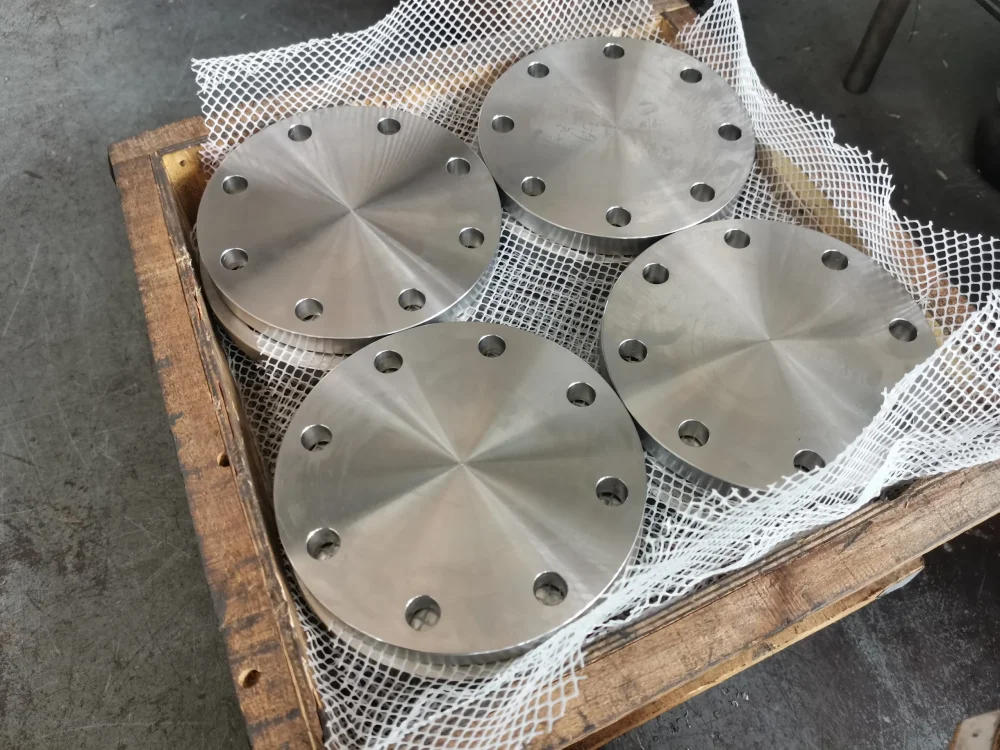
Dimensions of Our Flanges
Flange Standard
We supply stainless steel flanges in various standards, including but not limited to the followings:
ASME/ANSI B16.5, B16.47A/B, ASME B16.36, MSS SP-44, ISO7005-I, API type 6B/6BX, API605, GB9112~9124, BS1560-3.1,
EN 1092-1 (DIN2527, 2636, 2637, 2638, 2566, 2576, 2632, 3633, 2635, 2642, 2653, 2656, 2655, etc.)JIS B2220, AS2129, AS4078, GOST 33259, GOST 12820/12821, GOST 12816 etc.
The Capacity
It is about 400 tons/month for every type flanges. We produce and supply the flanges from Class 150 to Class 2500, stainless steel and duplex steel flange are our strength.Rate: 150 LBS, 300 LBS, 600 LBS, 900 LBS, 1500 LBS, 2500LBSDimension: 1/2” to 72” (DN15 ~DN1800)
Chemical Composition of Inconel 600 Flanges, wt.%
| Element | Ni + Co | Cr | Fe | Mn | Si | Cu | C | S |
|---|---|---|---|---|---|---|---|---|
| Inconel 600 | ≥ 72.0% | 14.0 – 17.0 | 6.0 – 10.0 | ≤ 1.00 | ≤ 0.50 | ≤ 0.50 | ≤ 0.15 | ≤ 0.015 |
Metallurgical Impact on Flange Behavior
- Resistance to Scaling:
The blend of high Nickel and moderate Chromium shields the flange face from scaling under cyclic heating up to 2000°F (1093°C). - No Intergranular Corrosion:
Low carbon limits ensure the material retains its corrosion-resistant qualities right up against weld joints.
Room-Temperature Mechanical Properties of Inconel 600 Flanges
| Mechanical Property | Tensile Strength | Yield Strength | Elongation | Hardness |
|---|---|---|---|---|
| Inconel 600 | ≥ 550 MPa(80 ksi) | ≥ 240 MPa(35 ksi) | ≥ 30% | 120 – 170 HB(65 – 85 HRB) |
High-Temperature Behavior
- Strength Retention:
It retains usable tensile strength at service temperatures up to 2000°F (1093°C). - Creep-Rupture Strength:
In temperatures exceeding 1000°F (540°C),design engineers rely on its creep and stress-rupture properties rather than standard yield strength,making it highly stable under prolonged thermal loads.
Cryogenic Capabilities
Applications of Inconel 600 Flanges
- Nuclear Reactor Engineering
- Chemical Processing Plants
- Thermal Processing Furnaces
- Ethylene Production
- Pharmaceutical Manufacturing
- Aerospace Propulsion
- Food Processing Infrastructure
- Pulp and Paper Mills
- Marine and Offshore Engineering
- Caustic Processing Equipment
Our Core Capabilities in Manufacturing Inconel 600 Flanges
Advanced Precision Forging
- Closed-Die Forging:
Utilizing heavy-duty hydraulic presses to form flanges with optimal grain flow alignment,which maximizes structural integrity and fatigue resistance. - Seamless Ring Rolling:
Rolling seamless rings for large-diameter flanges (like ASME B16.47) to eliminate weak points and weld seams. - Near-Net Shaping:
Minimizing raw material waste on expensive UNS N06600 alloy while ensuring consistent dimensions.
Controlled Solution Annealing
- Stress Relieving:
Utilizing calibrated furnaces to precisely heat forgings up to 1800°F–2100°F (980°C–1150°C),dissolving chromium carbides back into the nickel matrix. - Rapid Quenching:
Controlling cooling rates to prevent intergranular precipitation,optimizing the material for high-temperature and nuclear environments. - Hardness Control:
Ensuring the finished product falls precisely within the desired 65–85 HRB range for optimal machinability and toughness.
High-Tolerance CNC Machining
- Heavy-Duty Turning:
Overcoming the severe work-hardening nature of Inconel 600 using rigid CNC lathes and specialized carbide tooling. - Flange Face Sealing:
Achieving precise serrated finishes (Stock Finish,Smooth Finish,or RTJ grooves) to ensure leak-proof seals under high pressure. - Precision Bolt-Hole Drilling:
Maintaining strict geometric tolerances for seamless alignment with mating pipes and valves.
Stringent Quality Assurance & Testing
- Chemical Verification:
Performing Positive Material Identification and Optical Emission Spectroscopy to guarantee a minimum 72% Nickel content. - Non-Destructive Testing:
Conducting Ultrasonic Testing and Dye Penetrant Testing to detect subsurface flaws or micro-cracks before shipping. - Certification Compliance:
Issuing comprehensive EN 10204 3.1 Mill Test Certificates confirming full compliance with ASTM B564 / ASME SB564 specifications.
FAQs About Inconel 600 Flanges
The most commonly used standard in international procurement is the standard for nickel alloy forgings,namely ASTM B564 or ASME SB564.
Radius ≤ 24 inches: Complies with ASME B16.5.
Radius > 24 inches: Complies with ASME B16.47.
Our products must be shipped with a Material Test Report compliant with EN 10204 3.1 to certify that the chemical composition and mechanical properties meet the required standards.
When heated to high temperatures,the chromium and nickel in the alloy spontaneously form an extremely dense,firmly adherent,and durable protective layer of chromium-rich oxide on the flange surface.
This layer effectively prevents further reaction between oxygen and the underlying metal matrix,remaining stable even after repeated thermal cycling.
Preheating is generally not required before welding Inconel 600.
For filler materials,it is generally recommended to use ERNiCr-3 (Inconel 82) welding wire or ENiCrFe-3 (Inconel 182) welding rods made of the same material.
Since pure nickel alloys have poor fluidity,interpass temperatures must be strictly controlled during welding (typically kept below 100°C). High currents and excessive oscillation should be avoided to prevent hot cracks.
Inconel 600 flanges contain up to 72% pure nickel,and since nickel is a rare and precious metal,their price is significantly higher than that of stainless steel flanges.
Inconel 600 exhibits an extremely high tendency for work hardening;the surface cut by the tool hardens instantly,making subsequent machining extremely difficult.
Due to the alloy’s low thermal conductivity,heat generated during cutting cannot be rapidly dissipated through the chips but instead concentrates at the tool tip,making the tool highly susceptible to thermal wear or chipping.
Machining requires the use of extremely rigid,heavy-duty machine tools,with low cutting speeds and high feed rates,and high-pressure coolant must be used throughout the entire process.
These factors make it more expensive than ordinary stainless steel flanges.
Contact Us
- RM901 No.22 Tangjiaqiao Road Wenzhou China
- +86 577 8551 1171
- [email protected]
- https://www.kaysuns.com/