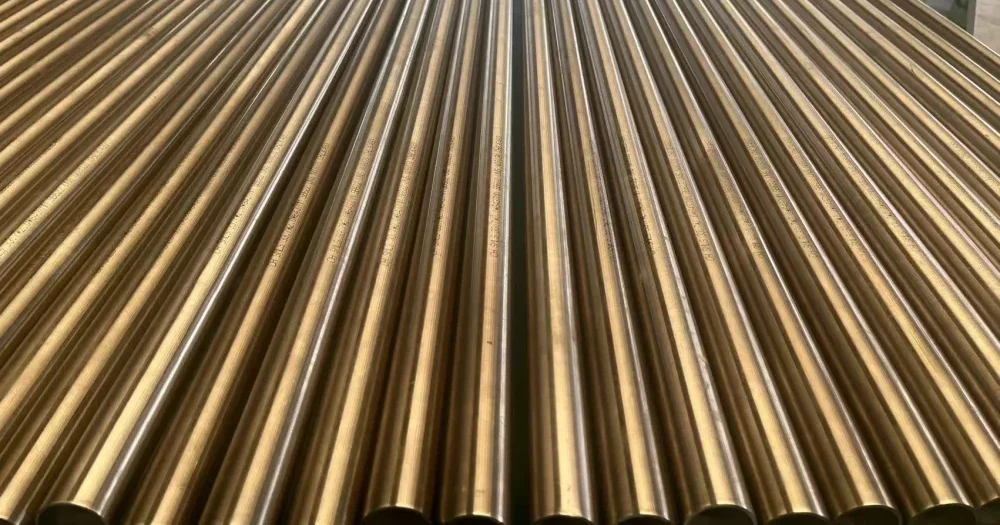
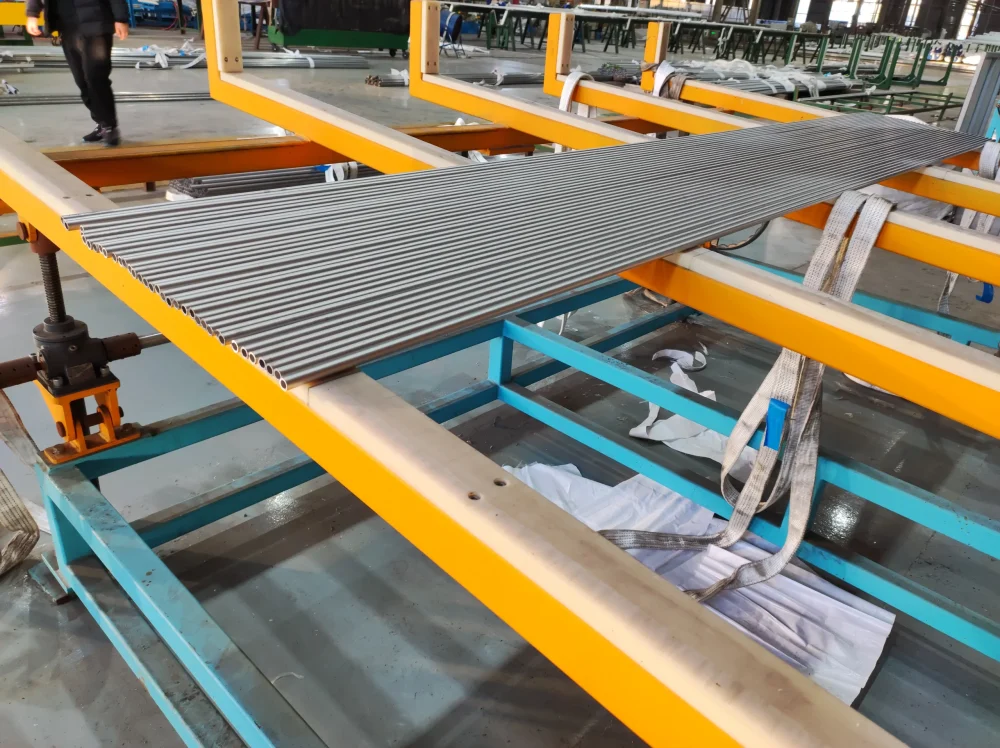
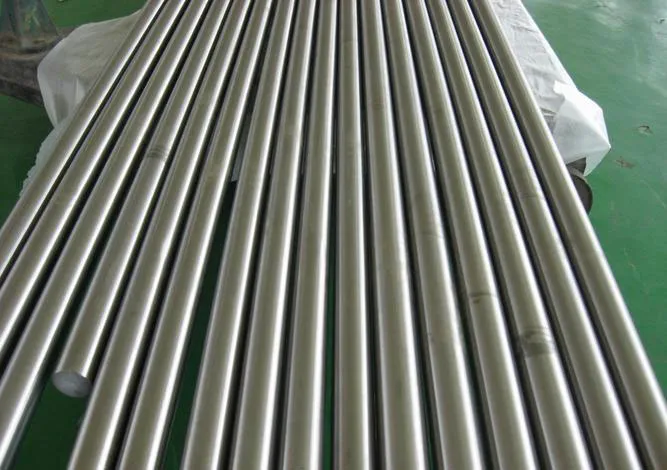
Chapa Super Duplex F55
Core Technical Properties
- High Pitting Resistance:
It achieves a PREN of >40, guaranteeing outstanding durability in seawater. - Alta resistência mecânica:
F55 yields double the strength of standard austenitic 316L stainless steel,allowing engineers to design thinner,lighter walls for pressure-rated systems. - SCC Resistance:
Excellent resistance to cracking in high-chloride,sour,and marine environments. - Temperature Limitations:
It maintains high impact strength at sub-zero temperatures,but is prone to embrittlement if subjected to prolonged use above 300°C (approx. 570°F).
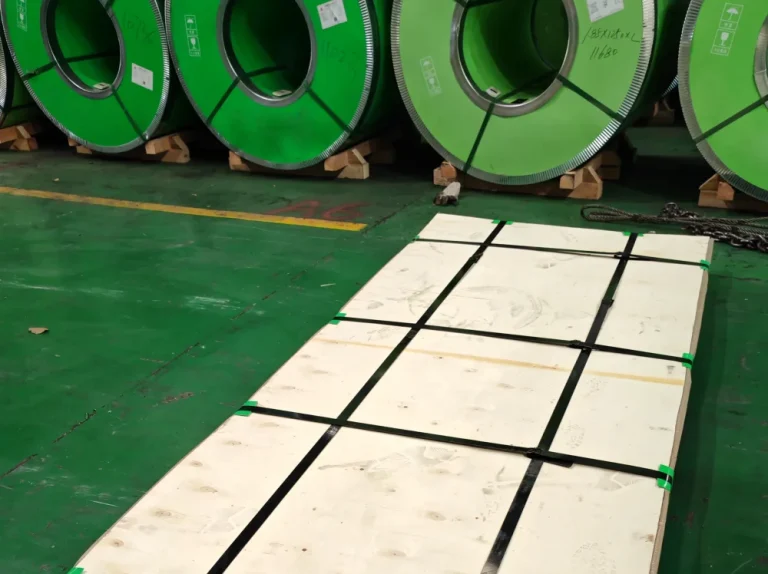
Applications of Super Duplex F55 Plate
- Subsea Pipelines
- Plataformas offshore
- Usinas de dessalinização
- Reatores químicos
- Trocadores de calor
- Vasos de pressão
- Storage Tanks
- Marine Propellers
- Cargo Tanks
- Flue Scrubbers
- Sewage Systems
- Mining Equipment
- Centrifugal Pumps
- Geothermal Wells
Chemical Composition of Super Duplex F55 Plate
| Cr | Ni | Mo | C | Cu | N | Mn | Si | C | P | S | Fe |
|---|---|---|---|---|---|---|---|---|---|---|---|
| 24,0 – 26,0 | 6,0 – 8,0 | 3,0 – 4,0 | 0.50 – 1.0 | 0.50 – 1.0 | 0.20 - 0.30 | ≤ 1,0 | ≤ 1,0 | ≤ 0.03 | ≤ 0.035 | ≤ 0,015 | Equilíbrio |
Core Metallurgy: Why F55 is Unique
The Dual-Phase Microstructure
F55 plates consist of a precisely balanced 50:50 matrix of Austenite and Ferrite.
- The Ferrite phase provides excellent resistance to chloride-induced SCC and offers high mechanical strength.
- The Austenite phase ensures high ductility,structural toughness,and clean weldability.
The Tungsten & Copper Distinction
The definitive difference between Grade F55 and other common super duplex grades like Grade F53 is the deliberate addition of Tungsten and Copper.
This combination makes F55 much more reliable in handling highly concentrated sour gas and industrial organic/mineral acids like sulfuric and hydrochloric acids.
PREN
PREN = %Cr + 3.3 (%Mo + 0.5%W) + 16 (%N)
Due to high Cr, Mo, W, and N levels,F55 guarantees a PREN ≥ 40.Any steel with a PREN over 40 is classified as a “Super” Duplex and is theoretically immune to ambient seawater corrosion.
Critical Fabrication Considerations
Temperature Limitations
- High-Temperature Embrittlement:
F55 plates must not be used for extended periods at temperatures exceeding 300℃(572℉).Exposure to high temperatures causes the rapid precipitation of brittle intermetallic phases,resulting in a dramatic loss of toughness. - Low-Temperature Toughness:
It retains good impact strength and ductility down to sub-zero service applications,often tested down to -46℃ or -50℃.
Welding Specifications
- Over-alloyed Filler Metals:
Welding must utilize a filler wire over-alloyed with Nickel to ensure the weld pool solidifies with the proper 50:50 phase balance. - Controle de entrada de calor:
Strict limits on interpass temperatures are required to prevent sigma phase formation.No PWHT is required unless a full solution anneal is performed.
Super Duplex F55 Standards & Equivalent Designations
| Super Duplex F55 Alloy | |||||
|---|---|---|---|---|---|
| Padrão / Sistema | Designação Equivalente | Formulário do produto | ASTM | ASME | SAE AMS |
| Número UNS | UNS S32760 | Plates, Sheets & Strips | ASTM A240 | ASME SA240 | – |
| DIN / Material alemão | W.Nr. 1.4501 | Bars, Rods, Wires & Shapes | ASTM A276 / A479 | ASME SA276 / SA479 | – |
| PT Nome químico | X2CrNiMoCuWN25-7-4 | Seamless Pipes & Tubes | ASTM A789 / A790 | ASME SA789 / SA790 | – |
| JIS | SUS 32760 | Welded Pipes & Tubes | ASTM A789 / A790 | ASME SA789 / SA790 | – |
| BS | Grade F55 | Forgings & Flanges / Fittings | ASTM A182 / A815 | ASME SA182 / SA815 | – |
| AFNOR | Z3CND25.06Az | ||||
| Generic Trade Name | F55, Zeron 100 | ||||
Tem um requisito?
Entre em contato conosco para obter mais informações
Mechanical Properties of Super Duplex F55 Plate
Room-Temperature Mechanical Properties
| Propriedade | Metric Units | Imperial Units |
|---|---|---|
| Resistência à tracção | 730 – 930 MPa | 106 – 135 ksi |
| 0,2% Resistência ao escoamento | ≥ 530 MPa | ≥ 77 ksi |
| 1.0% Yield Strength | ≥ 550 MPa | ≥ 80 ksi |
| Alongamento | ≥ 25 % | ≥ 25 % |
| Dureza Brinell | ≤ 290 HBW | ≤ 290 HBW |
| Rockwell C Hardness | ≤ 30 HRC | ≤ 30 HRC |
| Charpy V-Notch Impact Energy | ≥ 80 Joules (-40°C) | ≥ 59 ft-lbf (-40°F) |
Modulus and Physical Strength
- Modulus of Elasticity (Young’s Modulus):
Approximately 200 GPa (29 × 10⁶ psi) at room temperature. - Shear Modulus:
Approximately 75 GPa. - Poissons Ratio:0.3.
Impact Toughness and Sub-Zero Behavior
- Low-Temperature Testing:
According to NORSOK M-630 (MDS D55) standards for petroleum offshore piping,plates are regularly tested for impact toughness at -46°C or -50°C. - Charpy V-Notch Requirements:
The material must consistently achieve a minimum average impact energy of 80J (transverse) or 100J (longitudinal) at these freezing thresholds,proving it safe against catastrophic brittle fracturing.
Elevated Temperature Limitations & Strength De-rating
Allowable Design Strength De-rating
- At 50°C (122°F):
Tensile properties remain relatively stable near nominal room-temp baselines. - At 150°C (302°F):
Yield strength decreases to roughly 430 MPa. - At 250°C (482°F):
Yield strength drops further to around 380 MPa.
The 475°C (885°F) Embrittlement Hazard
- Between 300°C and 525°C,a phenomenon known as 475°C embrittlement occurs.
- Microscopic separation within the chromium-rich ferrite phase creates a spinodal decomposition (α’ phase).
- While this dramatically increases the hardness of the plate,it completely destroys the material’s impact toughness and ductility,rendering it as brittle as glass.
Influence of Heat Treatment on Mechanical Integrity
- Heating:
The plate is heated to a temperature between 1040°C and 1120°C (1900°F to 2050°F).This high heat dissolves any harmful secondary precipitates back into the metal matrix. - Resfriamento:
The plate is then rapidly cooled via water quenching or forced air cooling.
Our Advantages in Manufacturing Super Duplex F55 Plate
Controlled Phase Balance
We employ advanced Thermomechanical Control Processing combined with automated rolling mills.We precisely manage the deformation energy and finish-rolling temperatures.
This process creates a highly refined,uniform grain structure.It guarantees that the 50:50 phase ratio is consistent from the surface to the core of the plate,preventing localized structural weakness and ensuring predictable mechanical properties.
Sigma Free Quenching
Our solution-annealing line is integrated with a high-volume,high-pressure water quenching system capable of rapid cooling rates that far exceed standard commercial limits.
We freeze the high-temperature microstructural matrix instantly.This ensures a 100% sigma-free microstructure,allowing our plates to comfortably surpass the strict corrosion and microstructure requirements of NORSOK M-650 (MDS D55) and ASTM A923 Method C.
Elevated Pitting Resistance
Using Argon Oxygen Decarburization and refining processes,we keep tramp impurities (like sulfur and phosphorus) to ultra-low levels,while keeping Chromium,Molybdenum,and Nitrogen near the top of their specification limits.
We consistently deliver F55 plates with an actual heat analysis PREN ≥ 42.This provides an extra margin of safety against pitting and crevice corrosion in hot,chlorinated seawater and aggressive sour oilfield environments.
Severe Service Qualification
We feature an in-house, third-party accredited laboratory that subjects every production batch to rigorous NDT,including high-frequency UT and liquid penetrant inspection,alongside destructive tests (like Charpy V-Notch impact testing at -50°C).
Our plates ship with comprehensive EN 10204 3.1 material test certificates that are fully compliant with NACE MR0175/ISO 15156,ASME Section VIII Div 1,and prestigious oil and gas approvals like NORSOK.
FAQs About Super Duplex F55 Plate
Contate-nos
- RM901 No.22 Tangjiaqiao Road Wenzhou China
- +86 577 8551 1171
- [email protected]
- https://www.kaysuns.com/