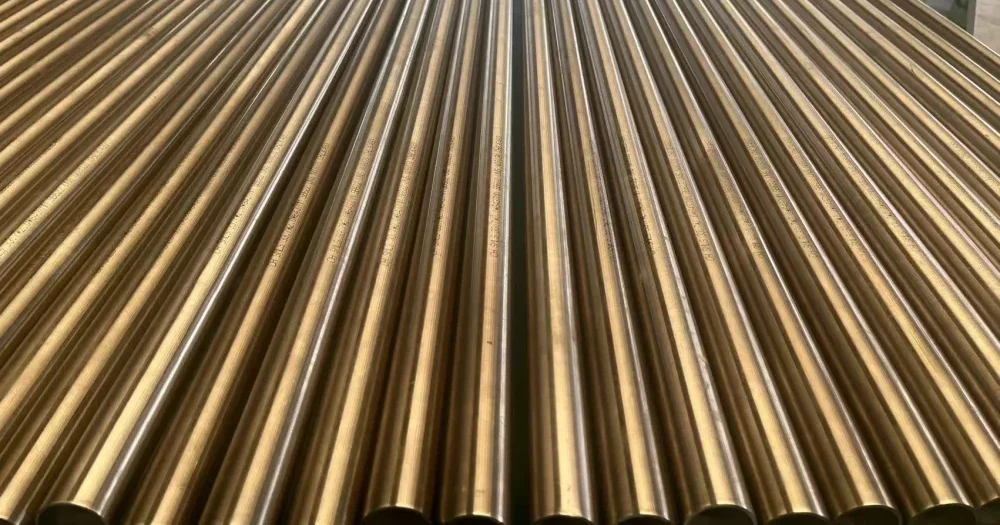
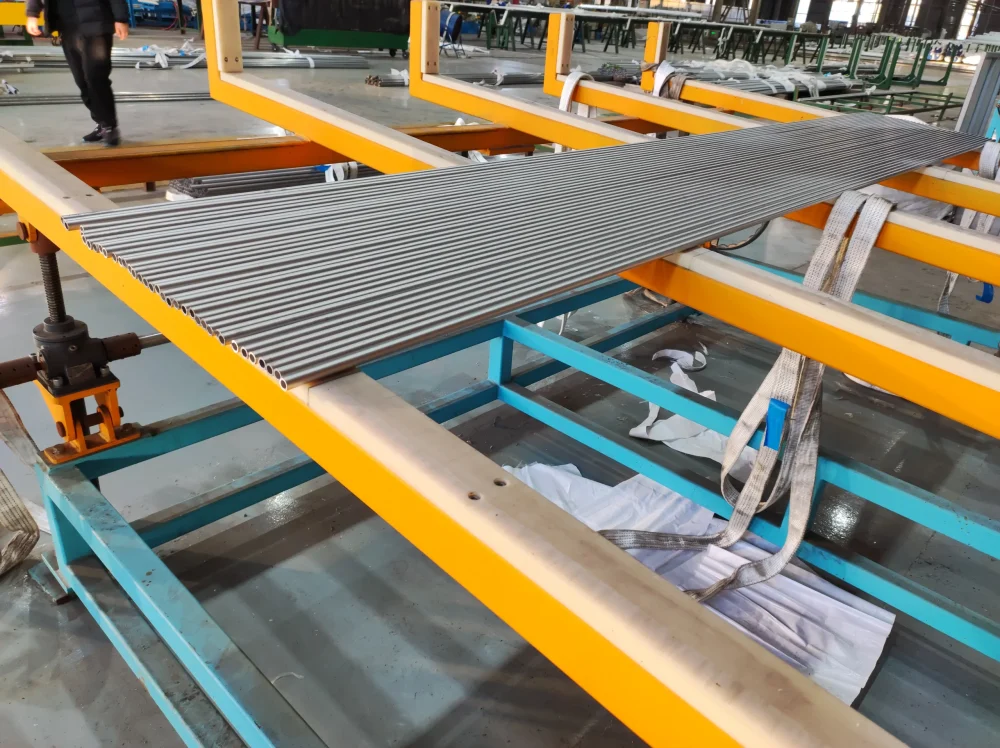
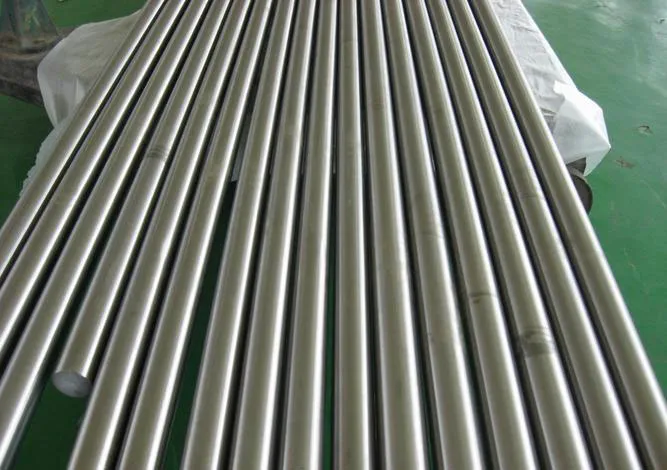
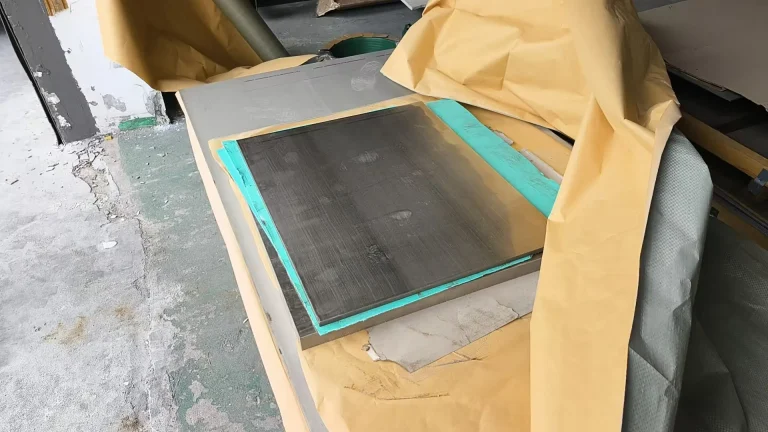
4J29 Plate
UMA 4J29 Plate is a flat-rolled sheet form of Kovar,a vacuum-melted, iron-nickel-cobalt controlled-expansion alloy.Its chemical composition consists of approximately 29% Nickel,17% Cobalt,and 54% Iron.
The defining characteristic of a 4J29 plate is its coefficient of thermal expansion,which matches the expansion rates of borosilicate glass and alumina ceramics across a wide temperature range (20°C to 450°C).This prevents stress fractures,making it the industry-standard material for creating reliable,airtight glass-to-metal and ceramic-to-metal hermetic seals.
Key Specifications & Properties
- Standard Designations:
It is equivalent to international standards like ASTM F15, UNS K94610, DIN Werkstoff Nr. 1.3981, and Chinese GB/T 15018. - Alternative Trade Names:
Commonly referred to as Kovar Alloy, Nilo K, Dilver P0, and Vacon 12. - Physical Characteristics:
Features high structural stability at low temperatures,high tensile strength,and forms a dense oxide layer that allows glass to securely wet and bond to it.
Applications of 4J29 Plate
- Glass seals
- Ceramic seals
- Transistor headers
- Lead frames
- Electronic packaging
- Microwave tubes
- X-ray tubes
- Integrated circuits
- Vacuum components
- Hermetic plugs
- Laser components
- Sensor housings
- Aerospace relays
- Power modules
- Magnetron parts
- Waveguide windows
We offer 4J29 plates and sheets in thicknesses of 0.8 – 105.We offer not only placas de aço inoxidável and sheets but also plates made of Hastelloy,Incoloy,Inconel,Monel,and other alloys.Our products comply with ASTM A240,EN 10204,ISO 9001,PED 2014/68/EU ,CE,and other standards.With over a decade of experience in manufacturing and import/export,we are your best wholesaler in China.
Chemical Composition of 4J29 Plate
The chemical composition of a 4J29 Plate is strictly controlled under standard specifications like GB/T 15018 and ASTM F15 to guarantee precise,uniform thermal expansion properties.
| Ni | Co | Fe | Mn | Si | Cr | Cu | C | P | S |
|---|---|---|---|---|---|---|---|---|---|
| 28.5 – 29.5 | 16.8 – 17.8 | Equilíbrio | ≤ 0.50 | ≤ 0,30 | ≤ 0.20 | ≤ 0.20 | ≤ 0.03 | ≤ 0,02 | ≤ 0,02 |
Impact of Composition on Performance
Phase Stability & Cryogenic Resistance
The ratio between Ni, Co, and Fe ensures that the 4J29 plate maintains a stable Face-Centered Cubic (FCC) austenite structure from extremely low temperatures up to over 400°C.If Nickel falls below 28.5%,the alloy risks transforming into body-centered cubic (BCC) martensite at sub-zero temperatures. This phase shift causes a permanent,irreversible volumetric expansion,which would rupture any glass-to-metal seal.
Formation of Interfacial Oxide Layer
Elements like Mn and Si play a crucial hidden role during the pre-oxidation heat treatment.When a 4J29 plate is heated in a controlled atmosphere before sealing,it develops a dense,tightly adhering surface oxide film (Fe3O4 and FeO matrices embedded with trace manganese).Molten borosilicate glass flows smoothly across and physically “wets” this specialized oxide layer,yielding a reliable,gas-tight hermetic bond.
Outgassing Suppression
The tight cap on Carbon is mandatory for ultra-high vacuum applications.If carbon percentages were higher,it would react with oxygen at sealing temperatures (> 900℃),generating carbon monoxide or carbon dioxide gas bubbles directly at the glass-metal interface,destroying the seal’s structural integrity.
4J29 Plate Standards & Equivalent Designations
| 4J29 / Kovar Alloy (Glass-to-Metal Sealing & Controlled Expansion) | |||||
|---|---|---|---|---|---|
| Padrão | Designação Equivalente | Formulário do produto | GB / YB | GJB | GOST |
| Chinese | 4J29 (Fe-Ni29-Co17) | Plates, Sheets & Strips | YB/T 5231 / GB/T 15018 | GJB 1950A | – |
| Russian / CIS | 29NK / 29НК | Bars & Rods | GB/T 14985 | – | GOST 14080 / 10994 |
| ISO | NiCo2918 / FeNi29Co17 | Seamless Pipes & Tubes | – | – | – |
| UNS | UNS K94610 | Welded Pipes & Tubes | – | – | – |
| ASTM | ASTM F15 / AMS 7726,7727,7728 | Forgings & Rings | – | – | – |
| W.Nr. / DIN | W.Nr. 1.3981 / DIN 17745 | Wires & Profiles | – | – | – |
| Generic Trade Name | Kovar, Pernifer 2918, Dilver P1 | All Available Forms | – | – | – |
Tem um requisito?
Kaysuns is a professional supplier of 4J29 Plates.Please feel free to contact me if you have any requirements.
Entre em contato conosco para obter mais informações
Mechanical Properties of 4J29 Plate
| Material State | Resistência à tracção | Força de rendimento | Alongamento | Dureza |
|---|---|---|---|---|
| Annealed (Soft) | 450 – 590 MPa | ≤ 340 MPa | ≥ 30% | ≤ 170 HV (160 HB) |
| Cold-Rolled (Deep-Drawn) | 590 – 780 MPa | 450 – 680 MPa | ≥ 10% | ≤ 170 – 220 HV (160 – 210 HB) |
| Hard (Full Hard) | ≥ 780 MPa | ≥ 680 MPa | ≤ 3% | ≥ 220 HV (210 HB) |
Elastic Modulus & Poisson's Ratio
- Módulo de elasticidade:
Approximately 138 GPa at room temperature. As temperature increases toward the Curie point (430 ℃), the modulus drops slightly, which helps cushion the residual stresses during the glass-to-metal cooling phase. - Poisson’s Ratio:
0.30,aligning perfectly with typical structural alloys. - Shear Modulus:Approximately 53 GPa.
Fatigue and Impact Toughness
- Resistência ao impacto:
4J29 exhibits excellent toughness,showing no sharp ductile-to-brittle transition even at cryogenic temperatures,due to its stable FCC austenite microstructure. - Machinability Rating:
Relatively low (around 35 – 40% of B1112 screw stock).It is gummy and prone to work-hardening.Sharp tools,rigid setups,and sulfur-free cutting fluids are required.
Processing and Thermal Impacts
Deep-Drawing Behavior
For 4J29 plates used to stamp or deep-draw miniature electronic housings and flat packs,grain size control is critical.
- The grain size must be held strictly between ASTM No. 7 and No. 10.
- If the grain structure is too coarse (lower than No. 7),the plate will exhibit the “orange peel” effect during forming,creating microscopic surface cracks that lead to vacuum leaks after sealing.
The Effect of Sealing Temperature on Hardness
During the glass-firing process, the 4J29 plate is exposed to high temperatures between 900℃ and 1000℃.
- This thermal cycle acts as a full recrystallization anneal.
- Any cold-work strength introduced during stamping is eliminated.
- Post-seal components automatically return to the fully annealed soft state (≈ 450 MPa tensile strength,≤ 170 HV).Designers must calculate structural loads based on these post-annealed soft values rather than the initial cold-rolled delivery state.
Microstructural Stability
Under mechanical stress or severe cold deformation combined with sub-zero temperatures,unstable chemistry can trigger a partial transition from austenite to martensite.This transformation hardens the material but critically damages the thermal expansion match,causing joint failure.Proper chemical balancing prevents this mechanical degradation.
Our Advantages in Manufacturing 4J29 Plate
Ultra-Pure Vacuum Melting
We utilize advanced vacuum induction melting combined with vacuum arc remelting.This dual-melting approach lowers gas content like carbon,oxygen,and hydrogen to absolute minimum levels.The ultra-clean chemistry guarantees a defect-free surface,entirely preventing microscopic outgassing bubbles from developing at the glass-metal junction during high-temperature glass firing.
Precise Gauge Tolerance
Our cold-rolling mill incorporates automatic gauge control systems to achieve extremely tight thickness tolerances across the entire plate.This exceptional dimensional uniformity prevents thickness variations from causing uneven heat distribution or clamping pressures.It directly translates into higher yield rates and seamless performance during automated high-speed stamping and deep-drawing lines.
Uniform Grain Structure
We enforce strict thermo-mechanical processing to control the final recrystallized grain size,holding it consistently between ASTM No. 7 and No. 10.This fine,homogeneous grain matrix completely eliminates the “orange peel” roughness or localized thinning during heavy stamping.It also guarantees a reliable,predictable rate of thermal expansion across every axis of the plate.
Optimal Oxide Control
Our specialized,tension-free annealing lines deliver a uniform,bright surface finish with zero surface contamination.This optimized surface roughness facilitates the rapid,even formation of a dense,tightly adhering interfacial oxide film (Fe₃O₄ and FeO).The balanced oxide chemistry allows liquid borosilicate glass or alumina ceramics to wet perfectly,creating absolute gas-tight seals.
FAQs About 4J29 Plate
Sim.High-quality 4J29 plates maintain a stable austenite phase down to -196°C.However,the chemical composition must be pure.If nickel falls below 28.5%,the material can transform into martensite at low temperatures,causing permanent volume expansion and rupturing the seal.
Pre-oxidation grows a controlled, dense oxide film (Fe₃O₄ and FeO) on the plate’s surface.Molten glass physically dissolves and wets into this oxide layer.Sealing raw,un-oxidized 4J29 metal will result in zero adhesion and immediate leakage.
This surface defect is caused by an overly coarse grain size (lower than ASTM No. 7).If the manufacturing annealing process is poorly controlled,the grains grow too large.When the plate is stamped or deep-drawn,these large grains deform unevenly,creating a rough surface prone to micro-cracking.
Invar 36 (4J36) plate is designed for near-zero expansion from room temperature up to 100°C (used in laser benches or metrology).
4J29 plate has a controlled,matching expansion that climbs steadily up to 450°C to mirror the expansion curve of industrial glass and ceramics.
Não,it is considered gummy and difficult to machine (machinability rating of ≈ 35%).It work-hardens rapidly.Machinists must use sharp carbide tools,slower cutting speeds,high feeds,and continuous lubrication.Sulfur-based oils must be avoided because sulfur ruins subsequent glass seals.
Contate-nos
Entre em contato
- RM901 No.22 Tangjiaqiao Road Wenzhou China
- +86 577 8551 1171
- [email protected]
- https://www.kaysuns.com/
Encontre-nos