Pular para o conteúdo
Início » What Are Stainless Steel Strips?

What Are Stainless Steel Strips?

    High-precision stainless steel strips serve as vital raw materials for modern manufacturing.Industrial plants rely on these narrow coils to fabricate electronics,automotive components,and medical instruments daily.These flat-rolled products offer superior chemical corrosion resistance and exceptional mechanical strength in tight spaces.However,selecting the right width,thickness,and temper presents complex metallurgical challenges for global procurement teams.

    What Are Stainless Steel Strips And How Are They Made?

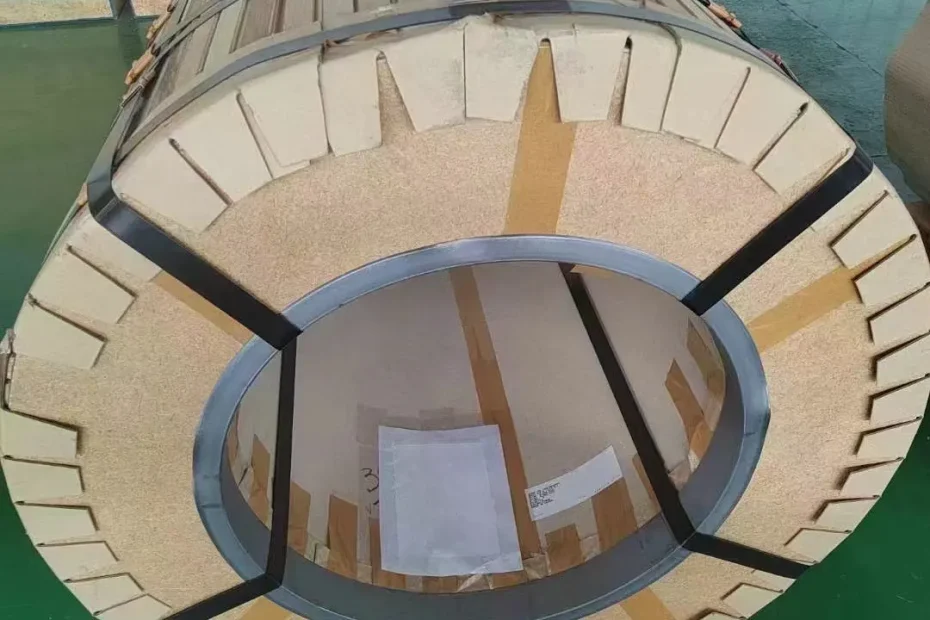
    Manufacturers produce stainless steel strips by cold-rolling or hot-rolling wide stainless steel coils into narrow,precise dimensions.Slitting machines cut the larger sheets to specific customer widths with extreme accuracy.Cold rolling increases physical hardness and creates a smooth,mirror-like surface finish.Hot rolling yields thicker dimensions suitable for heavy-duty structural industrial uses.
    Factory technicians carefully control annealing temperature cycles during processing.This precise thermal treatment restores flexibility and relieves internal mechanical stress completely.These flat coils provide consistent dimensional tolerances for high-speed automated stamping equipment.

    Chemical Composition Comparison Of Popular Grades

    Understanding chemical composition helps engineers select the right alloy for specific industrial applications.Austenitic grades like 304 and 316 remain the most popular choices globally.Grade 304 provides excellent general corrosion resistance at a competitive cost.Grade 316 includes added molybdenum to withstand severe marine and chemical environments.
    Meanwhile,Grade 430 offers a cost-effective ferritic alternative for indoor appliances.Grade 201 replaces expensive nickel with manganese for light-duty decorative uses.Comparing these chemical elements ensures maximum material performance under harsh operating conditions.
    Grau da ligaCrNiMoMnSiC
    304 / 304L17.5 – 19.58,0 – 10,5Nenhum≤ 2.0≤ 0.75≤ 0.03
    316 / 316L16,0 – 18,010,0 – 14,02,0 – 3,0≤ 2.0≤ 0.75≤ 0.03
    43016,0 – 18,0≤ 0.75Nenhum≤ 1,0≤ 1,0≤ 0.12
    20116,0 – 18,03.5 – 5.5Nenhum5.5 - 7.5≤ 1,0≤ 0.15

    Mechanical Properties Of Stainless Steel Strips

    Mechanical strength dictates how well narrow metal coils perform under heavy mechanical loads.Cold working increases tensile strength and yield strength significantly while reducing total elongation.Manufacturers supply these coils in various tempers,ranging from soft annealed to full hard.
    Soft annealed materials allow deep stamping and complex bending without cracking.Full hard tempers deliver high spring back for automotive clips and industrial springs.Engineers must balance strength and ductility when specifying materials for automated assembly lines.
    Temperamento do materialAnnealed (Soft)1/4 Hard1/2 HardFull Hard
    Resistência à tração (MPa)520 – 670750 – 880930 – 1100≥ 1250
    Resistência ao escoamento (MPa)≥ 205≥ 550≥ 750≥ 1000
    Alongamento (%)≥ 40%≥ 20%≥ 6%≥ 2%
    Hardness (HV)150 – 200220 – 270300 – 350≥ 380
    Fabrication MethodDeep drawing and
    severe bending
    Moderate forming and
    stamping
    Light bending and
    structural brackets
    Precision springs and
    retaining clips

    Key Advantages Of Using Stainless Steel Strips

    Using high-precision stainless steel strips delivers numerous structural and financial benefits to factory operations.They offer extraordinary resistance to oxidation, moisture, and harsh industrial chemicals.Narrow coils allow seamless feeding into continuous automated stamping presses.This continuous operation minimizes material handling costs and accelerates daily factory throughput.
    Precise edge slitting minimizes scrap waste during high-volume production runs.Their high strength-to-weight ratio allows engineers to design thinner,lighter components safely.And 100% recyclability makes them an eco-friendly choice for sustainable manufacturing initiatives.

    Potential Disadvantages And Operational Solutions

    Despite their advantages,working with stainless steel strips presents specific manufacturing challenges.Austenitic grades work-harden rapidly during heavy stamping operations.This rapid hardening causes excessive tool wear and premature die breakage.
    Furthermore,improper slitting leaves sharp burrs that damage automated feeding machinery.Raw material costs also fluctuate based on global nickel and chromium market prices.Fortunately,applying specialized lubricants and choosing deburred edges solves most processing problems easily.Working with experienced suppliers guarantees consistent coil quality and smooth manufacturing operations.

    Common Challenges and Immediate Engineering Solutions

    Processing ChallengeRoot Operational CauseRecommended Engineering Solution
    Rapid Work HardeningExcessive friction during deep stamping.Use high-pressure extreme lubricants.
    Edge Burr DefectsDull slitting knives at the steel mill.Specify rotary deburred or rounded edges.
    Springback VariationInconsistent coil yield strength.Request tension-leveled coils with tight tolerances.
    Surface ScratchingUnprotected metal contact during transport.Order coils with protective PE film coating.

    O que fazemos

    • Placa
    • Folha
    • Forjados
    • Barra redonda
    • Mesa
    • Tubos
    • Conexões
    • Personalizado

    Entre em contato conosco para obter mais informações 

    Industrial Applications Across Major Markets

    Global industries utilize stainless steel strips for diverse specialized products.Automotive manufacturers form them into seatbelt springs,hose clamps,and catalytic converter wraps.The electronics sector uses ultra-thin coils for smartphone connectors,battery contacts,and computer shielding.
    Medical device companies fabricate surgical blades,capillary tubes,and dental tools from high-purity grades.Additionally,construction firms install decorative trims and expansion joints made from durable metal coils.Selecting the correct grade and edge condition guarantees long-term reliability in these critical applications.

    Stainless Steel Strips Technical FAQs

    Kaysuns offers slit edges,deburred edges,rounded edges,and square edges.Deburred and rounded edges prevent worker injuries and equipment damage.

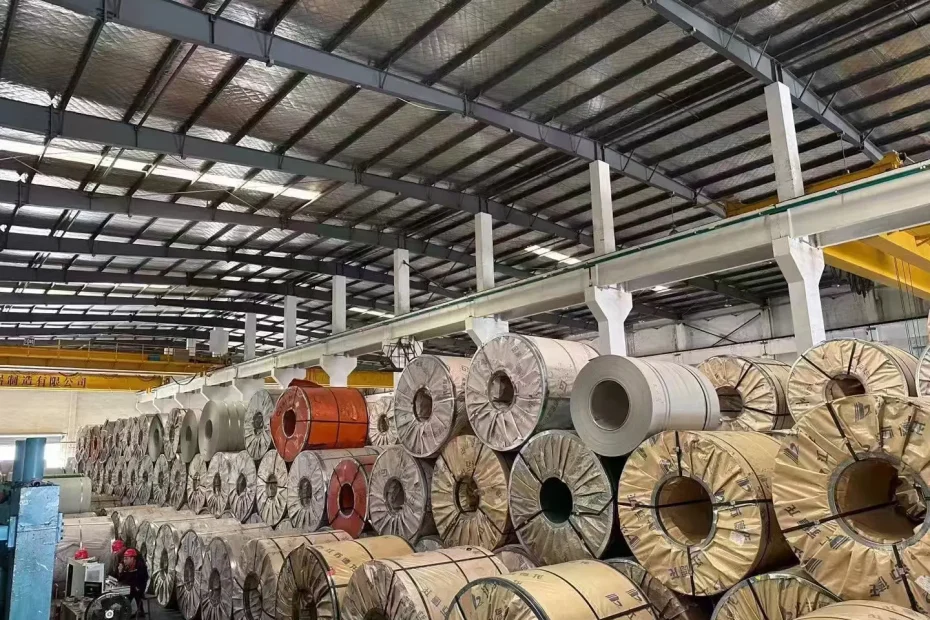
    Store metal coils in a climate-controlled warehouse with low humidity.Keep coils wrapped in protective waterproof paper until actual factory production begins.

    Sim,you can weld thin metal coils using specialized laser or micro-TIG welding.Precise heat input prevents warp distortion and melt-through defects.

    Specialized re-rolling mills can produce ultra-thin foil coils down to 0.01 mm thickness.Standard industrial applications typically use thicknesses between 0.05 mm and 3.0 mm.

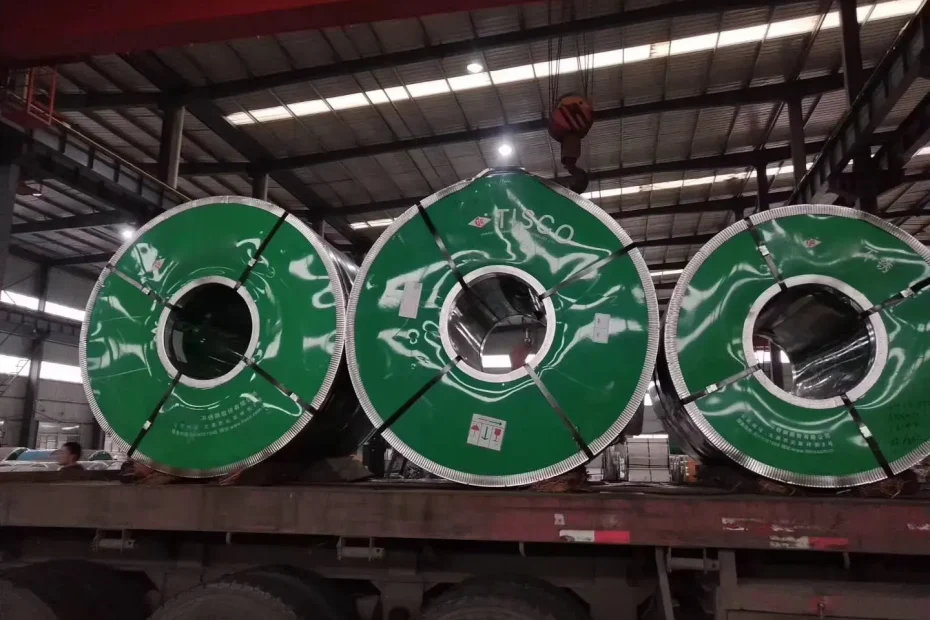
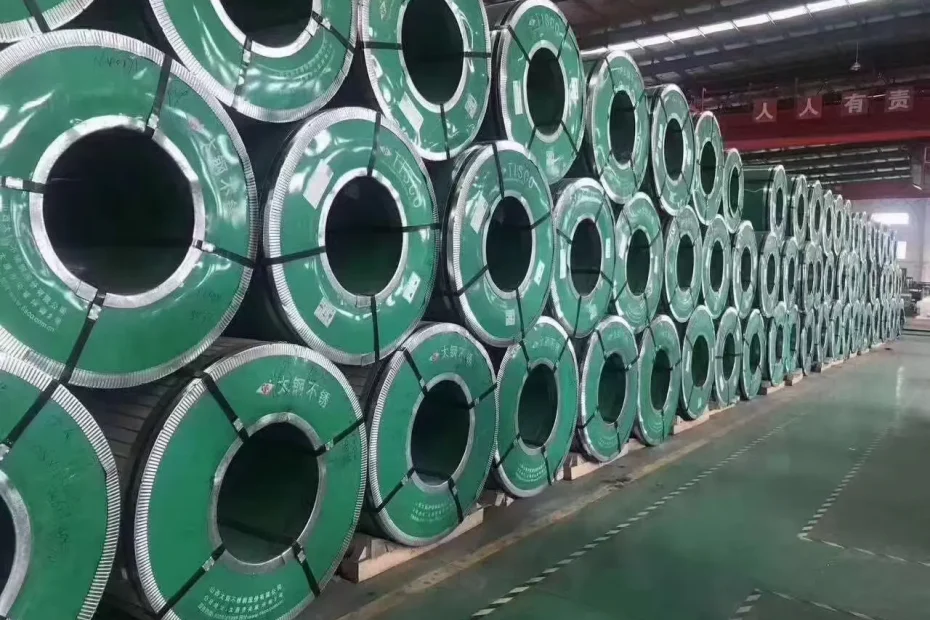
    Our stainless steel strips are packaged in fully sealed,rust-proof,and waterproof containers that comply with maritime shipping standards and are secured to wooden crates or pallets designed for easy handling by forklifts.All packaging must ensure that the products remain rust-free,free of scratches and deformation during the 30- to 45-day long-distance sea voyage,and are accompanied by the required steel product export license and MTC.

    Contate-nos

    Entre em contato
    Encontre-nos
    logotipo de Kaysuns

    Bem-vindo ao nosso contato

    Fornecimento de
    Material de tubulação inoxidável e de liga

    • Precisa de uma oferta?
    • Deseja saber a dimensão / catálogo?
    • Falar sobre os problemas técnicos?

    Sinta-se à vontade para entrar em contato conosco e teremos o maior prazer em responder a todas as suas perguntas.

    Obtenha uma cotação gratuita agora

    small_c_popup.png

    Obtenha um orçamento gratuito agora

    Deseja saber mais? Entre em contato conosco

    Responderemos dentro de 24 horas. Obrigado!