Table of Contents
Kaysuns’ customers sometimes ask which type of sulfuric acid environment alloy pipe is best.However,this question is often difficult to answer because different types of sulfuric acid environment alloy pipes are suited for different specific environments.If the wrong material is chosen,the piping system could suffer unpredictable damage.This depends largely on the acid concentration and fluid temperature.
Why Sulfuric Acid Corrodes Stainless Steel?
Sulfuric acid severely damages the chromium oxide passivation layer on stainless steel.At low to moderate concentrations,sulfuric acid acts as a strong reducing agent,stripping away this microscopic protective layer and causing the exposed metal to dissolve,which leads to rapid,uniform corrosion.Although high-concentration sulfuric acid is oxidizing and can temporarily form a stable passivation layer,high temperatures or high flow rates can destroy this passivation layer through fluid erosion.Once this protective barrier is compromised,the exposed iron and nickel react violently with the acid,leading to severe pitting corrosion,localized structural failure,and rapid pipeline degradation.
Understanding A Sulfuric Acid Environment Alloy Pipe
Since the corrosion rate and behavior of ordinary stainless steel pipes in sulfuric acid vary significantly depending on concentration and temperature,it is highly likely that using only one type of sulfuric acid environment alloy pipe will not be sufficient to handle all corrosion conditions.You will likely need to use multiple grades of sulfuric acid environment alloy pipes within the same sulfuric acid piping system.Selecting the wrong pipe can lead to rapid thinning of the pipe walls and even cause a fatal explosion.
Reference for Acid Concentration and Alloy Selection
| Acid Concentration | Operating Temperature | Recommended Alloy Grade | Corrosion Risk Level |
|---|---|---|---|
| 0% – 20% (Dilute) | Up to 60°C | 904L, Alloy 20 | Moderate |
| 20% – 70% (Intermediate) | Up to Boiling | Hastelloy B-2, Hastelloy B-3 | Extremely High |
| 70% – 98% (Strong) | Up to 80°C | Hastelloy C-276, Alloy 20 | Very High |
| > 98% (Concentrated) | Ambient | Standard Carbon Steel | Low (Forms protective film) |
What We Do
- Plate
- Sheet
- Forgings
- Round Bar
- Flange
- Pipes
- Fittings
- Customized
Contact Us For More Information
Alloy 20 Pipe: The Classic Sulfuric Acid Environment Alloy Pipe
Alloy 20 was originally designed specifically for handling high-temperature sulfuric acid,and many industry professionals affectionately refer to it as “Carpenter 20.” This high-quality alloy tubing,resistant to sulfuric acid environments,contains high levels of nickel, chromium, and copper.It performs flawlessly even at boiling temperatures and with acid concentrations as high as 40%.Chemical manufacturers specify Alloy 20 pipes for mixing tanks,heat exchangers.It offers the most balanced performance for general acid processing plants.
904L Stainless Steel: The Copper-Boosted Alternative
904L stainless steel offers excellent resistance to dilute sulfuric acid.Like Alloy 20,904L contains the necessary copper content to inhibit acid corrosion.This super austenitic stainless steel has good formability and weldability and performs well at moderate temperatures when exposed to dilute sulfuric acid with a concentration below 20%.Many fertilizer plants use 904L stainless steel pipes in their daily phosphate production lines.Compared to expensive nickel-based high-temperature alloys,it is a highly cost-effective solution.
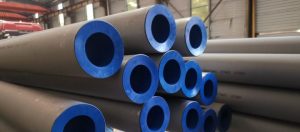
Incoloy 825: Resisting Chlorides and Sulfuric Acid
Sometimes,acidic solutions used in processing contain hazardous chloride impurities.Ordinary metals fail rapidly when exposed to a mixture of chlorides and sulfuric acid.Incoloy 825 pipe provides the perfect solution to this complex metallurgical challenge.Its high nickel and molybdenum content immediately prevents chloride stress corrosion cracking.This alloy piping, designed for sulfuric acid environments,effectively withstands extremely corrosive mixed acids.
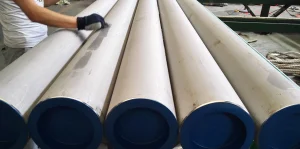
Hastelloy B-2 & B-3: Pure Sulfuric Acid Environment Alloy Pipe Heroes
Acids of moderate concentration pose the highest corrosion risk. Boiling sulfuric acid with a concentration between 40% and 70% will corrode almost all metals.However,Hastelloy B-2 and B-3 pipes remain intact within this hazardous concentration range.These nickel-molybdenum alloys are completely resistant to corrosion by pure,non-oxidizing sulfuric acid.If you need alloy piping for environments with boiling pure sulfuric acid,choose B-3.However,you must strictly avoid exposing these B-series alloys to oxidizing agents,as they will corrode Hastelloy B-3 piping within a matter of days.
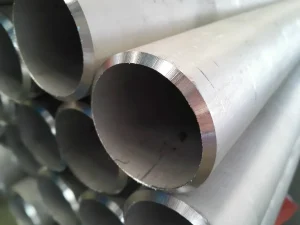
Hastelloy C-276 / C-22 / C-2000: Extreme Oxidizing Defense
Actual industrial acids typically contain strongly oxidizing contaminants,such as iron ions.These oxidizing agents can rapidly degrade Hastelloy B series alloys.In mixed environments,you must switch to Hastelloy C-276, C-22, or C-2000 tubing.
Hastelloy C-276 remains the most widely used material in heavily contaminated acidic environments. Hastelloy C-2000 contains added copper,which provides superior temperature resistance in sulfuric acid.
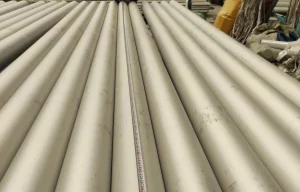
2507 Super Duplex: Low Concentration Sulfuric Acid Environment Alloy Pipe
Super duplex 2507 pipe has extremely high mechanical yield strength.Under specific conditions,it can be used as an alloy pipe in sulfuric acid environments.2507 can be safely used in dilute acid solutions with concentrations below 10%.At room temperature,it also withstands extremely concentrated acid solutions with concentrations above 90% well.However,at moderate concentrations,it is prone to catastrophic failure.2507 is primarily suitable for applications requiring extremely high structural strength and a certain degree of acid resistance.
FAQs
Yes,but only in very limited conditions.316L stainless steel pipe handles concentrations below 5% at room temperature safely.Warm or concentrated acid destroys 316L rapidly.You need a dedicated sulfuric acid environment alloy pipe instead.
Highly concentrated sulfuric acid creates an iron sulfate protective film on carbon steel.This film stops active corrosion.However,if the acid becomes diluted,the film washes away.The acid will then destroy the carbon steel immediately.
Seawater contains massive amounts of chlorides.You must use Incoloy 825 or Hastelloy C-276.These alloys resist both the acid and the extreme chloride pitting simultaneously.
Welding Hastelloy requires extremely clean conditions and strict heat control.You must use matching ERNiCrMo-4 filler wire.Poor welding techniques ruin the alloy’s chemical resistance completely.
Contact Us
Get In Touch
- RM901 No.22 Tangjiaqiao Road Wenzhou China
- +86 577 8551 1171
- [email protected]
- https://www.kaysuns.com/
Find Us