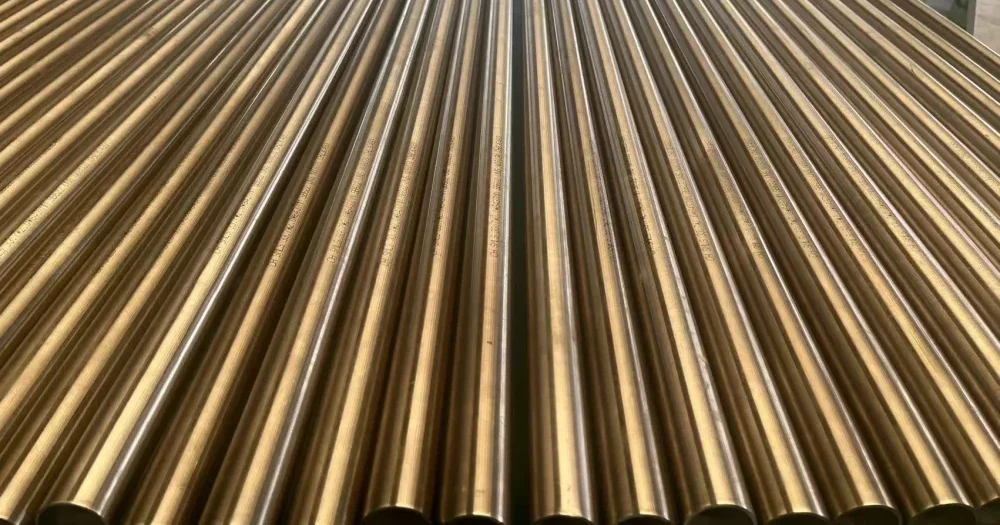
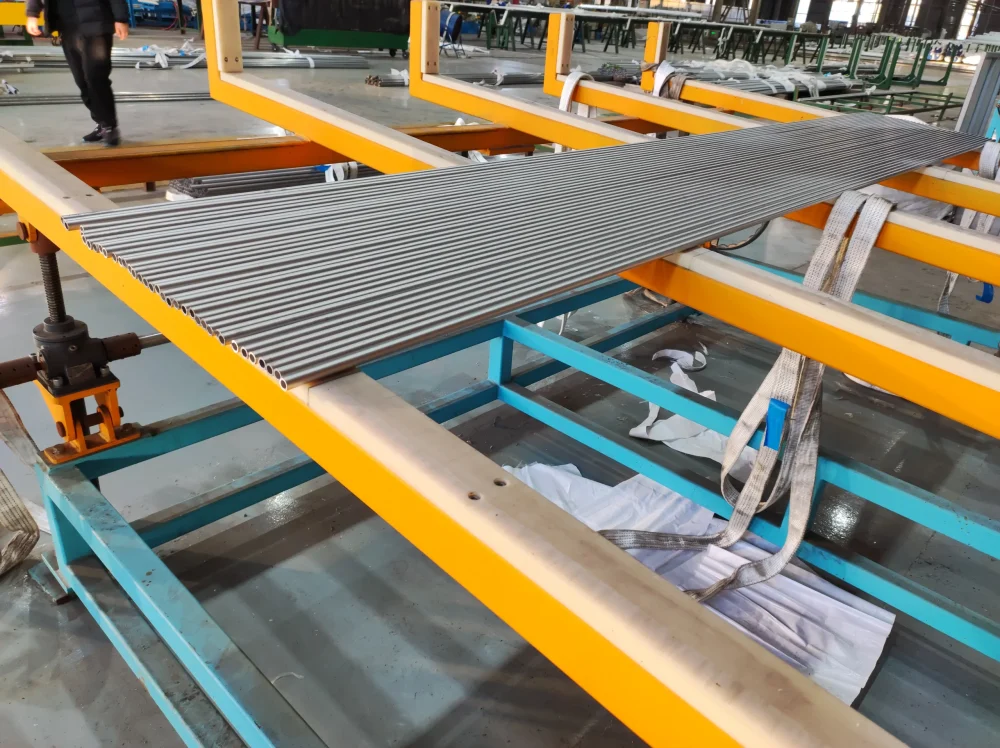
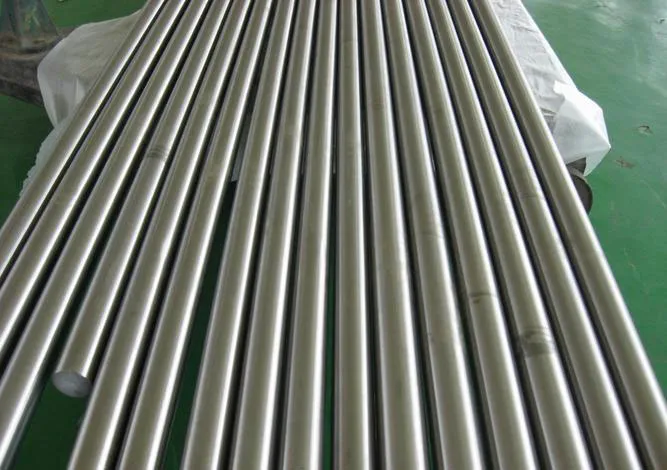
Hastelloy B3 Plate
As an upgraded third-generation variant of the B-alloy family,it replaces older grades like Hastelloy B2 by offering significantly improved thermal stability,fabricability,and stress-corrosion cracking resistance.
Key Characteristics & Material Specs
- Chemical Composition:
Primarily consists of a 65% minimum Nickel matrix and 28.5% Molybdenum.It features strictly controlled traces of Chromium,Iron,Manganese,and Cobalt to maintain microstructural integrity. - Industry Standards:
Manufactured and certified under international specifications ASTM B333 and ASME SB333. - Thermal Upgrades:
Unlike older B2 alloys that become brittle when exposed to temperatures between 540°C and 815°C,Hastelloy B3 retains excellent ductility and structural stability during thermal processing and welding.
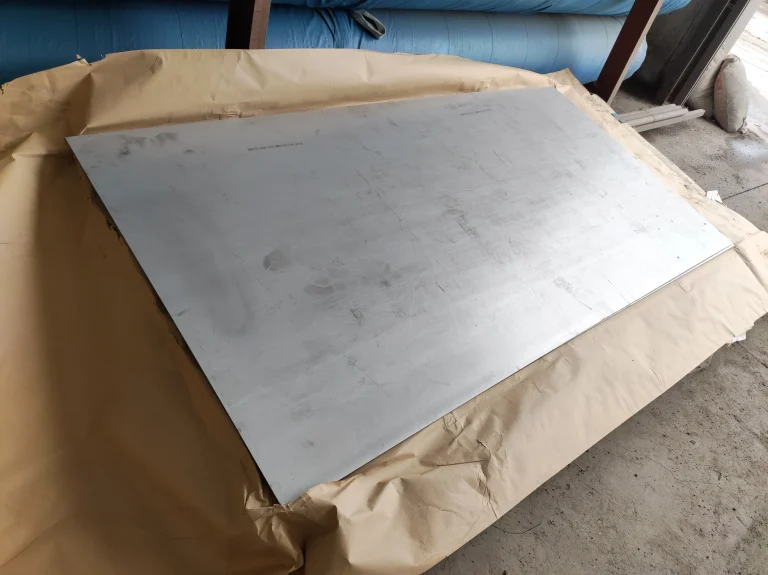
Applications of Hastelloy B3 Plate
- HCl Equipment
- Chemical Reactors
- Heat Exchangers
- Alkylation Systems
- Acid Recovery
- Valve Bodies
- Pickling Tanks
- Pharmaceutical Reactors
- Distillation Columns
- Mixer Blades
- Custom Components
- Vacuum Systems
- Catalyst Vessels
- Clad Plates
Chemical Composition of Hastelloy B3 Plate
| Ni | Mo | Cr | Fe | W | Mn | Co | Al | Ti | Si | C | P | S |
|---|---|---|---|---|---|---|---|---|---|---|---|---|
| Balance | 27.0 – 32.0 | 1.0 – 3.0 | 1.0 – 3.0 | ≤ 3.0 | ≤ 3.0 | ≤ 3.0 | ≤ 0.5 | ≤ 0.2 | ≤ 0.1 | ≤ 0.01 | ≤ 0.03 | ≤ 0.01 |
- 28.5% Average Molybdenum:
Provides unparalleled resistance to non-oxidizing acids,specifically hydrochloric acid (HCl) at all temperatures and concentrations. - 65% Nickel Base:
Ensures high ductile strength and total immunity to chloride-induced stress corrosion cracking. - Low Carbon & Silicon:
Prevents the precipitation of harmful intermetallic phases at the grain boundaries during welding,fixing the thermal embrittlement flaws found in older Hastelloy B2.
Hastelloy B3 Standards & Equivalent Designations
| Standard / System | Equivalent Designation |
|---|---|
| UNS Number | UNS N10675 |
| DIN / German Werkstoff | W.Nr. 2.4600 |
| EN Chemical Name | NiMo30Cr / Ni1067 |
| International Organization | ISO NW0675 / NiMo30Cr |
| Chinese GB | NS3203 / NS323 |
| JIS | JIS N10675 |
| AMS | AMS 5891 |
| Trade Names | Alloy B3, Hastelloy B3, Nickel Alloy B3 |
- Plates, Sheets, and Strips: ASTM B333 / ASME SB333
- Bar Stock and Rods: ASTM B335 / ASME SB335
- Seamless Pipes and Tubes: ASTM B622 / ASME SB622
- Welded Pipes: ASTM B619 / ASME SB619
- Forgings and Flanges: ASTM B564 / ASME SB564
- Wrought Welding Fittings: ASTM B366 / ASME SB366
Have a requirement?
Contact Us For More Information
Mechanical Properties of Hastelloy B3 Plate
| Mechanical Parameter | Tensile Strength | Yield Strength, 0.2% | Elongation | Hardness |
|---|---|---|---|---|
| Minimum Value | ≥ 760 MPa(110 ksi) | ≥ 340 MPa(49.3 ksi) | ≥ 40% | – |
| Typical Standard Range | 860 – 880 MPa (125 – 129 ksi) | 350 – 440 MPa (50.7 – 64.5 ksi) | 50 % – 57.5 % | ≤ 240 HBW(23 HRC) |
High-Temp Mechanical Performance
- At 200°C (392°F):
Yield strength slightly drops to ~325 MPa;elongation rises to ~59.7%. - At 425°C (797°F):
Retains a high tensile strength of ~705 MPa,making it reliable for pressurized,hot chemical vessels. - At 650°C (1202°F):
Tensile strength climbs back to ~715 MPa due to solid-solution strengthening phase responses.
Key Fabrication Advantages
- Superior Ductility:
An elongation rate consistently above 40% means the plates can be heavily cold-worked,rolled,and formed without tearing. - Work Hardening:
While it can be hardened via cold work to increase structural rigidity,its work hardening rate is moderate,reducing the need for intermediate stress-relief annealing.
4 Manufacturing Methods for Hastelloy B3 Plate
Hot Rolling
Cold Rolling
Solution Annealing & Heat Treatment
Explosive Bonding
FAQs About Hastelloy B3 Plate
No.Hastelloy B3 is a purely reductive alloy with an extremely low chromium content.If exposed to oxidizing acids such as nitric acid or chlorine gas,it will corrode rapidly.Hastelloy C276 or C22 is recommended for use in such environments.
Yes,but it is over-engineered. While it is immune to chloride stress corrosion cracking,cheaper materials like Duplex stainless steel or Hastelloy C-grade alloys are better suited for marine use. B3 should be reserved for high-temperature hydrochloric acid.
Hastelloy B3 plate contains roughly 28.5% Molybdenum and 65% Nickel.Both are costly raw commodities.Controlling the microstructural phases during hot-rolling requires precise thermal tracking,which increases mill production costs.
Usually no.Thanks to its low carbon and silicon chemistry,it resists carbide precipitation during welding.Heavy cold-formed plates or heavy-wall pressure vessels may require solution annealing at 1065°C followed by a rapid water quench to relieve stress.
Our Hastelloy B3 plates in thicknesses of 1.0, 2.0, 3.0, and 4.0 are in stock.Non-standard sizes can be customized.
Please contact us for the latest customized quote.
Contact Us
- RM901 No.22 Tangjiaqiao Road Wenzhou China
- +86 577 8551 1171
- [email protected]
- https://www.kaysuns.com/