The negative effect of rainwater on stainless steel often surprises engineers who expect total rust resistance from their pipes.Pure water does not actually damage high-quality metal alloys significantly during normal weather conditions.However,rainwater in 2026 is rarely pure because it absorbs dangerous pollutants from the atmosphere.
Consequently,these environmental chemicals transform harmless rain into a corrosive solution for many industrial materials.Therefore,you must understand how different metal grades react to moisture to prevent premature system failure.
Why the Effect of Rainwater on Stainless Steel Varies
As rain falls through the polluted air of industrial cities,it absorbs sulfur dioxide and nitrogen oxides.These chemicals form a slightly acidic solution,known worldwide as acid rain.In coastal areas,clouds often contain salt particles,which increase the chloride content of each raindrop.
In these specific environments,the corrosive effects of rainwater on stainless steel become more severe.If your project is located near a chemical plant or the coast,you will need to implement more effective material protection measures.
What We Do
- Plate
- Sheet
- Forgings
- Round Bar
- Flange
- Pipes
- Fittings
- Customized
Contact Us For More Information
Analyzing the Effect of Rainwater on Stainless Steel 300-Series
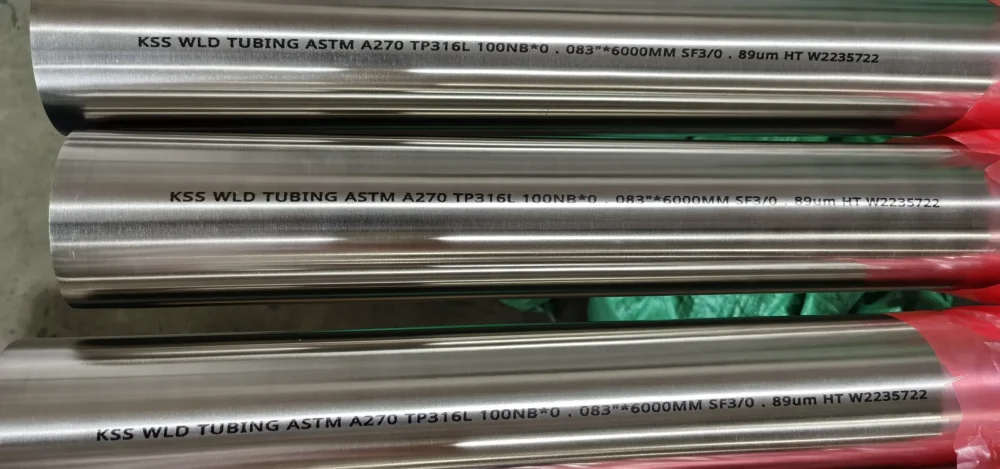
The 300 series alloys are the most commonly used materials in modern construction and piping.Among them,304 and 316 grades of stainless steel offer excellent resistance to moisture.However,the effect of rainwater on stainless steel 304 pipe is visible through “tea staining” over time.Tea stains are a brown discoloration on the surface that resembles rust but does not immediately affect the structural integrity of the material.In contrast,316L stainless steel pipe contains molybdenum,which gives it far superior resistance to chloride-laden rainwater compared to standard 304 stainless steel.Therefore,in rainy coastal cities,316L is the material of choice for outdoor architectural components.
Grade-Specific Resistance to Rainwater Damage
| Stainless Grade | Primary Alloy Element | Rainwater Resistance | Typical Application |
|---|---|---|---|
| 304 Grade | Chromium & Nickel | Moderate | Indoor or Rural Outdoor |
| 316L Grade | Molybdenum Added | High | Coastal & Industrial Pipes |
| 430 Grade | High Chromium | Low | Automotive Trim (Low Salt) |
| 2205 Duplex | Dual-Phase Structure | Extremely High | Offshore Oil & Gas |
Chemical Triggers: The Effect of Rainwater on Stainless Steel Surfaces
Surface finish plays a vital role in how moisture interacts with your metal components. A rough surface traps tiny droplets of acidic water in microscopic valleys. These trapped droplets eventually evaporate, leaving behind a highly concentrated acidic residue.
Consequently,this residue becomes the primary enemy of stainless steel by attacking the protective oxide layer.A smooth,polished surface allows rainwater to run off quickly,washing away surface dirt.Thus,choosing a mirror-polished or bright annealed finish can significantly reduce the risk of localized pitting.
Environmental Factors and the Effect of Rainwater on Stainless Steel
The geographical location of your facility determines the extent to which rainwater affects stainless steel.In rural areas with clean air,stainless steel alloys face virtually no risk.However,in industrial centers,heavy rains can create a “chemical cocktail.” In hot tropical regions,the chemical reaction between water and metal is accelerated.
Environmental Impact on Corrosion Rates
| Environment Type | Major Pollutant | Rain PH Level | Corrosion Risk |
|---|---|---|---|
| Coastal Zone | Salt (Chlorides) | Neutral to Acidic | Extremely High |
| Heavy Industrial | Sulfur/Nitrogen | Highly Acidic | High |
| Urban City | CO2/Smog | Mildly Acidic | Moderate |
| Rural/Forest | None | Neutral | Very Low |
Managing the Negative Effect of Rainwater on Stainless Steel Projects
You can successfully mitigate the effect of rainwater on stainless steel by following professional maintenance protocols.First,you should design your piping system with a slight slope.This prevents water from “pooling” on top of horizontal surfaces or flange joints.Second,you must perform regular freshwater rinses on all outdoor equipment.Rinsing removes the accumulated salts and acids before they can penetrate the chromium oxide layer.
Applying a high-quality wax or specialized metal protectant provides an extra barrier.These coatings fill the microscopic pores of the metal and repel water droplets instantly.The effect of rainwater on stainless steel is minimized because the water never touches the metal directly.
Professional Solutions for Rainwater Corrosion
When standard cleaning is not enough,you must turn to professional chemical treatments.Passivation is the most important process for restoring the metal’s natural defenses after installation.This chemical bath removes free iron from the surface and optimizes the chromium-to-iron ratio.
It makes the metal much more resilient against the harsh effect of rainwater on stainless steel.If you notice existing tea staining,use a phosphoric acid-based cleaner to remove the spots safely.Never use steel wool or carbon steel brushes,as these will cause even more rust.
Maintenance and Solution Schedule
| Problem Identified | Professional Solution | Tools Required | Frequency |
|---|---|---|---|
| Surface Staining | Phosphoric Cleaning | Microfiber & Soft Gel | As Needed |
| Localized Pitting | Mechanical Polishing | Fine Abrasive Pads | Yearly Inspection |
| Acid Rain Damage | Passivation Treatment | Nitric Acid Solution | After Installation |
| Salt Deposits | Fresh Water Rinse | Pressure Washer | Monthly (Coastal) |
Contact Us
Get In Touch
- RM901 No.22 Tangjiaqiao Road Wenzhou China
- +86 577 8551 1171
- [email protected]
- https://www.kaysuns.com/
Find Us