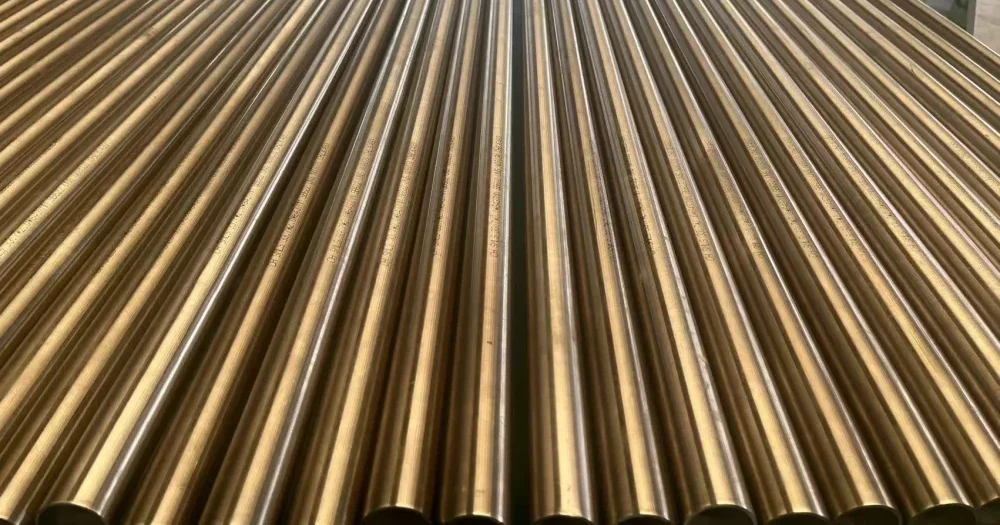
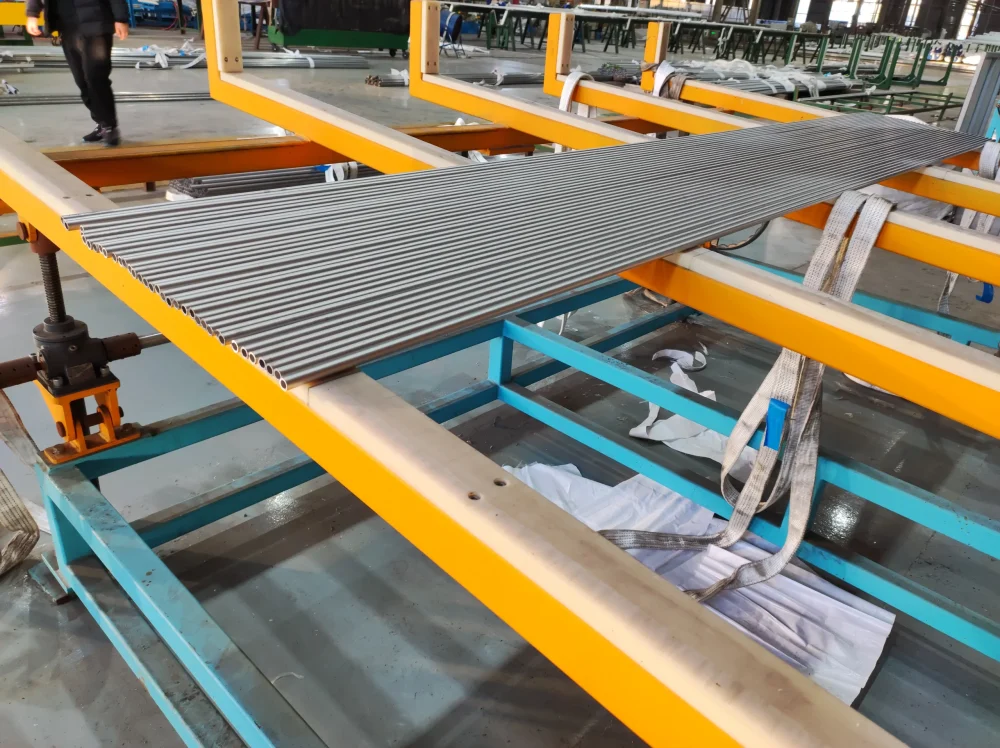
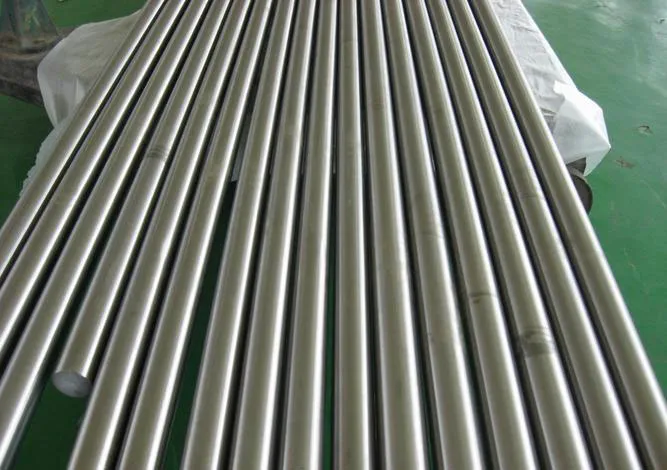
1J50 Bright Bar
1J50 bright bar refers to a cold-drawn or centerless-ground,smooth-finish round bar made of 1J50 soft magnetic alloy,a high-permeability Nickel-Iron Permalloy containing approximately 50% nickel.
This specialized material is engineered for extreme magnetic sensitivity,low energy losses,and precise dimensional tolerances rather than structural strength.
This specialized material is engineered for extreme magnetic sensitivity,low energy losses,and precise dimensional tolerances rather than structural strength.
Key Specifications
- Surface Finish:
“Bright” (smooth,peeled,polished,or centerless-ground) to ensure high dimensional accuracy and clean post-machining. - Magnetic Performance:
High initial magnetic permeability and high saturation magnetic induction (BS ≈ 1.5 T) in medium magnetic fields. - Physical Profile:
Low coercivity,minimal core losses,and a density of approximately 8.2 g/cm³. - Workability:
Excellent ductility and cold-forming capabilities,making the bright bars easy to turn,mill,or machine into complex components.
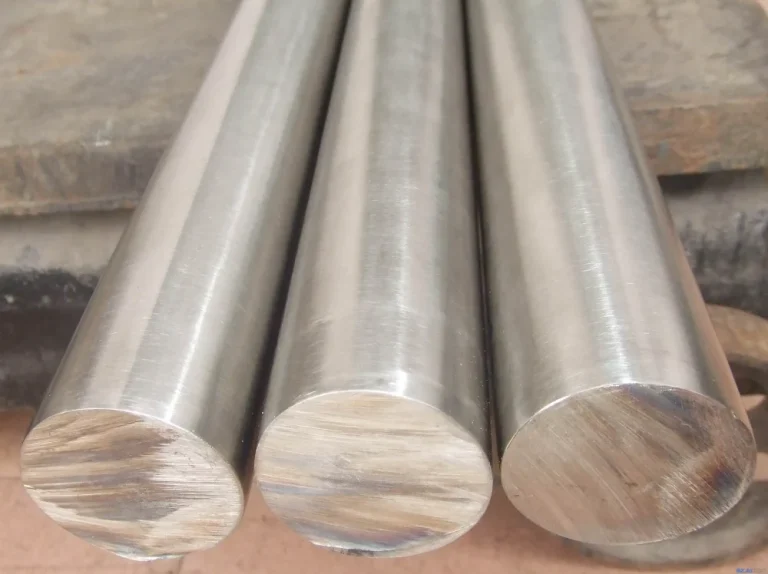
Applications of 1J50 Bright Bar
- Transformer cores
- Relay components
- Magnetic shielding
- Current sensors
- Aviation gyroscopes
- Electromagnetic clutches
- Signal couplers
- Pole pieces
- Circuit breakers
- Magnetic valves
- Transducer parts
- Audio heads
- Inductor cores
- Choke coils
We offer 1J50 bright bars in diameters ranging from OD ∮2mm to 101mm,manufactured in compliance with GB/T 14986.2 / ASTM A753.
In addition to stainless steel bright bars,we supply high-performance alloy pipes made from Hastelloy, Incoloy, Inconel, and Monel—fully compliant with PED 2014/68/EU and CE marks for pressure equipment.All our production and testing processes are certified to ISO 9001,and products are delivered with EN 10204 3.1 Mill Test Certificates.With over a decade of experience in manufacturing,import,and export,we are your most trusted wholesaler in China.
Chemical Composition of 1J50 Bright Bar
The chemical composition of a 1J50 bright bar is strictly balanced to maximize its soft magnetic capabilities.
Below is the detailed chemical breakdown under the Chinese national standard GB/T 14986.2 alongside its American equivalent ASTM A753 Type 2,followed by critical metallurgical insights.
| Element | Ni | Fe | Mn | Si | Cu | C | P | S |
|---|---|---|---|---|---|---|---|---|
| GB/T 14986.2 | 49.0 – 50.5 | Balance | 0.30 – 0.60 | 0.15 – 0.30 | ≤ 0.20 | ≤ 0.03 | ≤ 0.02 | ≤ 0.02 |
| ASTM A753 Type 2 | 47.0 – 49.0 | Balance | ≤ 0.80 | ≤ 0.50 | ≤ 0.30 | ≤ 0.05 | ≤ 0.03 | ≤ 0.01 |
Why the ~50% Nickel Ratio Matters
In the binary Iron-Nickel system, an alloy containing roughly 50% Nickel strikes the ideal metallurgical balance between high magnetic saturation induction (BS ≈ 1.5 T) and excellent magnetic permeability. It performs exceptionally well in medium magnetic fields compared to higher-nickel permalloys (like 1J79 / Mu-Metal, which has ~80% Ni but a much lower saturation induction of around 0.7T).
The Importance of Vacuum Melting
To hit these exact chemical targets and suppress detrimental impurities (C, P, S, O, N), 1J50 bright bars are manufactured using Vacuum Induction Melting (VIM), often followed by Vacuum Arc Remelting (VAR).
Minimizing dissolved gases ensures that nothing interrupts the alignment of magnetic domains inside the bar.
Non-metallic inclusions act as pinning sites for magnetic domain walls,which drastically increases coercivity and ruins soft magnetic traits.
Bright Bar Delivery VS Final Chemistry Behavior
The “bright bar” designation means the outer diameter has been centerless ground,peeled,or cold-drawn to tight tolerances with a highly reflective surface finish.However,cold-drawing introduces severe residual mechanical stresses into the crystalline lattice.
Even though the chemical composition is perfectly correct out of the box,the bar will not exhibit its advertised soft magnetic properties until the machined final parts are subjected to a final hydrogen or vacuum magnetic annealing process (typically 1100°C – 1180°C) to regrow grains and release lattice strain.
1J50 Bright Bar Standards & Equivalent Designations
| 1J50 (50% Nickel-Iron High Permeability Soft Magnetic Alloy) | |||||
|---|---|---|---|---|---|
| Standard / System | Equivalent Designation | Product Form | GB / GB/T (China) | GJB (Military) | ASTM / MIL |
| Chinese Standard | 1J50 | Bright Bars,Rods | GB/T 14986.2 | GJB 1511A | ASTM A753 Type 2 |
| US Trade Name | Permalloy 49 / Hy-Ra 49 | Cold-Drawn Wire | – | – | MIL-N-14411C Comp 3 |
| UNS System | N14052 | Hot-Rolled Bars | – | – | – |
| European / DIN | 2.4478 / NiFe50 | Forged Billets | – | – | – |
| UK Standard | Pernifer 50 / Supra 50 | Strips & Sheets | – | – | – |
| Russian / GOST Standard | 50H / 50H-VI (50Н-ВИ) | ||||
Have a requirement?
Kaysuns is a professional supplier of 1J50 Bright Bar.Please feel free to contact me if you have any requirements.
Contact Us For More Information
Mechanical Properties of 1J50 Bright Bar
The mechanical properties of a 1J50 bright bar depend largely on whether they are in the cold-drawn condition or the final magnetic annealing condition.
| Mechanical Property | Cold-Drawn / Work-Hardened | Magnetically Annealed |
|---|---|---|
| Tensile Strength | 700 – 900 MPa | 450 – 550 MPa |
| Yield Strength | 550 – 750 MPa | 150 – 250 MPa |
| Elongation | 2% – 10% | 30% – 40% |
| Hardness | 210 – 260 HBW (~20 – 26 HRC) | 120 – 140 HBW (~70 HRB) |
| Modulus of Elasticity | 160 – 170 GPa | 150 – 160 GPa |
The "Bright Bar" Machinability Paradox
Pure or fully annealed Nickel-Iron alloys are notoriously gummy and soft,leading to poor chip breaking,excessive tool wear,and built-up edge (BUE) on cutting inserts.
- The Bright Solution:
1J50 bright bars are deliberately supplied in a cold-drawn,centerless-ground,or peeled state.The mild strain-hardening raises the hardness to over 200 HBW. - The Benefit:
This hardness allows the metal to shear cleanly during turning,milling,and drilling,resulting in exceptional surface finishes and precise dimensional accuracy on CNC lathes.
Loss of Mechanical Strength Post-Anneal
When your customer performs the mandatory high-temperature magnetic anneal (1100°C – 1180°C in pure hydrogen or vacuum),a full recrystallization of the microstructure occurs.
- Grain Growth:
The cold-worked grain structures are completely wiped out,replaced by large,stress-free austenitic grains optimized for domain wall movement. - The Result:
The yield strength drops by up to 70%,and the hardness drops near the material’s floor.Machining must be 100% complete before this step,as the annealed part is too soft to alter without introducing localized stress that ruins the magnetic profile.
Fatigue and Operational Stress Constraints
Because 1J50 loses its mechanical strength after final thermal treatment,components like relay armatures,valve plungers,and sensor cores must be structurally isolated.If a 1J50 component faces cyclical mechanical fatigue,it will yield or deform long before it experiences magnetic degradation.Designers must shield these components from direct structural impact or heavy mechanical tension.
Our Advantages in Manufacturing 1J50 Bright Bar
Advanced Vacuum Melting
We utilize state-of-the-art Vacuum Induction Melting followed by Vacuum Arc Remelting to process our 1J50 alloy.This dual-vacuum metallurgy system allows us to strictly suppress harmful trace impurities like carbon,sulfur,and phosphorus while preventing gas contamination.By achieving an ultra-clean chemical matrix,we maximize the initial magnetic permeability and saturation induction of the material,ensuring a flawless response in micro-motors and transformer cores.
Strict Dimensional Tolerances
Our advanced centerless grinding and cold-drawing facilities enable us to deliver 1J50 bright bars with unparalleled dimensional precision.We regularly achieve tight tolerance fields such as h9,h10,or customized specifications across our entire outer diameter range from 2mm to 101mm.This exceptional straightness and out-of-roundness control eliminates bar vibration,guarantees seamless automated feeding into CNC lathes,and significantly reduces material waste for our clients.
Optimizing Material Hardness
We carefully manage the final cold-working and skin-pass reductions to eliminate the natural “gumminess” associated with soft magnetic alloys.By delivering our bright bars in an optimized strain-hardened window (typically 210 to 260 HBW),we ensure clean chip-breaking and superb surface finishes during turning,drilling,and milling.This tailored mechanical profile prolongs tool life on your machining floor while keeping the alloy receptive to final magnetic annealing.
Certified Traceable Quality
Every single batch of our 1J50 bright bars undergoes exhaustive non-destructive and magnetic testing certified to ISO 9001 quality management protocols.All shipments are accompanied by a comprehensive EN 10204 3.1 Mill Test Certificate detailing the exact chemical heat analysis,mechanical values,and dimensional verification.Furthermore,our dual compliance with GB/T 14986.2 and ASTM A753 Type 2 standards ensures hassle-free qualification for high-end international defense,aviation,and industrial projects.
FAQs About 1J50 Bright Bar
No.Despite its high nickel content,1J50 does not contain chromium.It behaves like high-purity iron and will rust if exposed to moisture,humidity,or aggressive environments.After final magnetic annealing,parts must be stored in volatile corrosion inhibitor packaging or treated with a light rust-preventative oil.
Components machined from 1J50 bars should operate well below its Curie temperature (Tc ≈ 500℃).Above this point, the material completely loses its ferromagnetic properties and becomes paramagnetic.For stable,predictable magnetic performance,keep the active operating environment below 350°C.
Yes, but with strict limitations.1J50 can be joined using TIG,laser,or electron beam welding.However,the extreme localized heat from welding creates massive residual stresses and alters the grain boundaries,which severely degrades magnetic permeability.Welding must always be performed prior to the final magnetic annealing cycle to restore the soft magnetic properties.
Yes,electroplating or electroless nickel plating is highly recommended for corrosion protection.However,the plating process must be done after the high-temperature magnetic anneal.Applying plating before annealing is impossible,as the 1100°C – 1180°C thermal cycle will melt or blister standard plating metals.
Our standard manufacturing length is 2m to 4m per bar,depending on the outer diameter.We can also provide precision cut-to-length services to match your automatic bar feeder limits or minimize scrap on your manufacturing floor.
Raw bars should be stored horizontally on padded racks in a temperature-controlled,dry warehouse to prevent surface corrosion and physical bowing.Avoid any heavy impacts or dropping the bars;while cold-drawn bars are physically resilient,severe mechanical shocks can introduce localized lattice damage that affects post-annealing grain growth.
Contact Us
Get In Touch
- RM901 No.22 Tangjiaqiao Road Wenzhou China
- +86 577 8551 1171
- [email protected]
- https://www.kaysuns.com/
Find Us