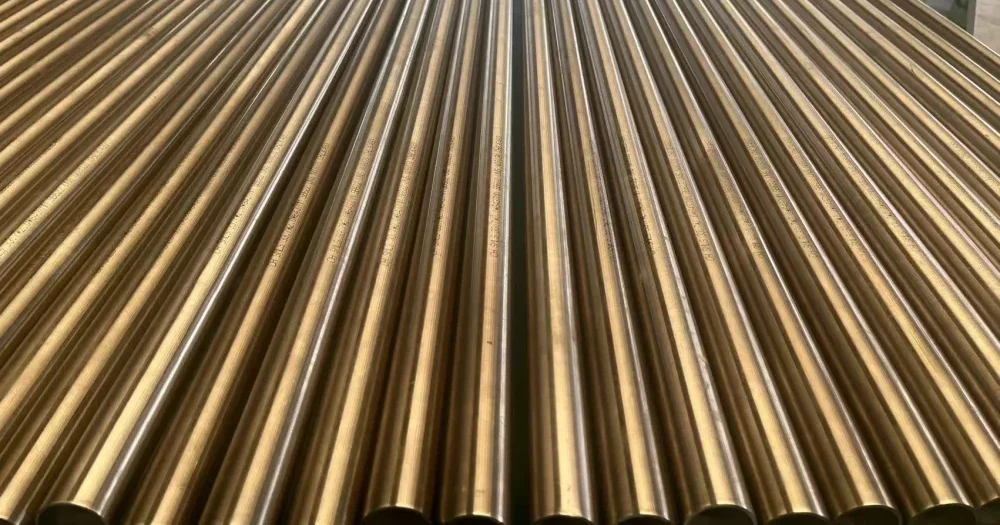
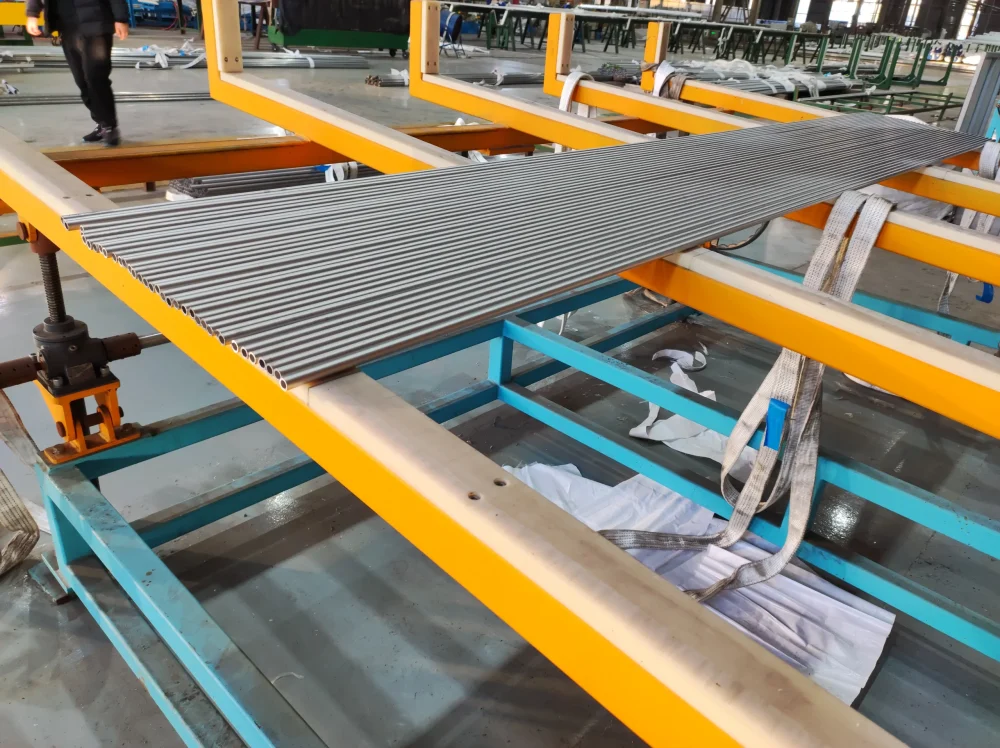
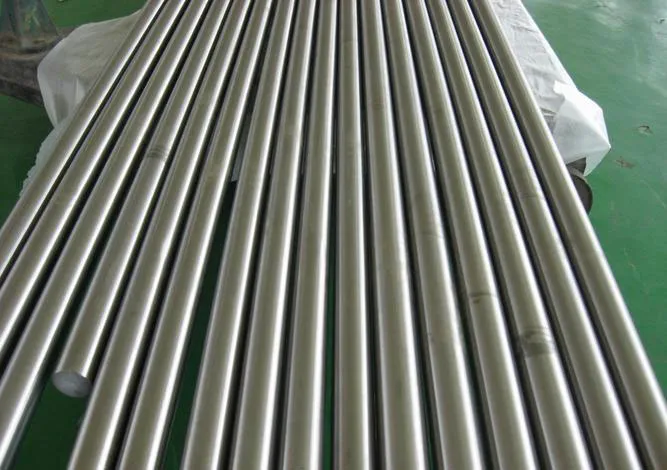
ASTM A182 F12 Flange
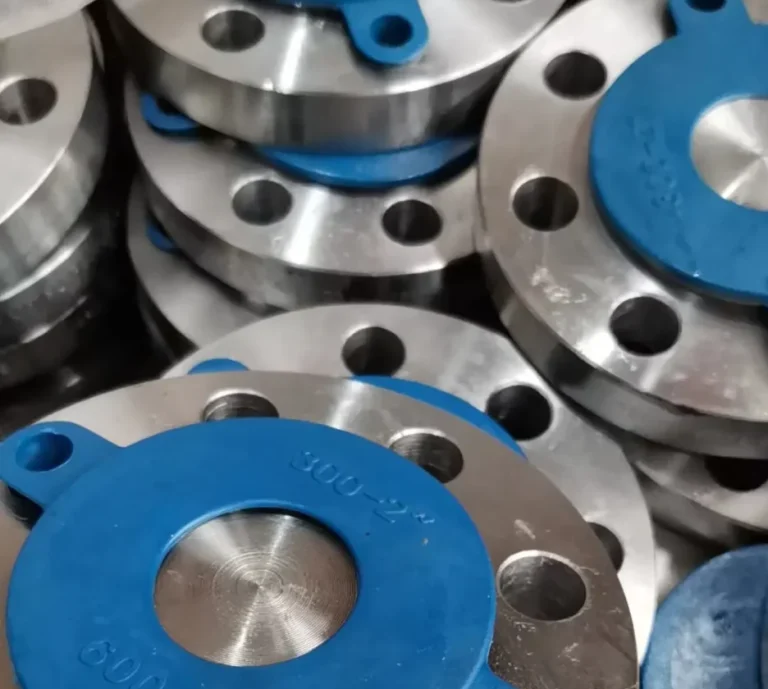
Chemical Composition of F12 Flange
| Element | C | Mn | P | S | Si | Cr | Mo |
|---|---|---|---|---|---|---|---|
| Class 1 (UNS K11562) | 0.05 – 0.15 | 0.30 – 0.60 | 0.045 Max | 0.045 Max | 0.50 max | 0.80 – 1.25 | 0.44 – 0.65 |
| Class 2 (UNS K11564) | 0.10 – 0.20 | 0.30 – 0.80 | 0.040 Max | 0.040 Max | 0.10 – 0.60 | 0.80 – 1.25 | 0.44 – 0.65 |
Key Elemental Roles
Molybdenum significantly improves “creep resistance,” preventing steel from slowly deforming under constant stress at extreme temperatures.
Class 2 has a higher carbon content and typically exhibits higher tensile strength and yield strength than Class 1.
Have a requirement?
Contact Us For More Information
Mechanical Properties of F12 Flange
| Performance Metrics | Class 1 | Class 2 |
|---|---|---|
| Tensile Strength | ≥ 415 MPa (60 ksi) | ≥ 485 MPa (70 ksi) |
| Yield Strength | ≥ 220 MPa (32 ksi) | ≥ 275 MPa (40 ksi) |
| Elongation | ≥ 20% | ≥ 20% |
| Hardness | 121 – 174 HBW | 143 – 207 HBW |
What is The Maximum Operating Temperature For An F12 Flange?
Above this temperature,the material’s oxidation resistance and creep strength decrease significantly.
If operating conditions exceed 540°C,we recommend upgrading to F22 or a higher-grade alloy.
Does F12 Require Heat Treatment?
Common processes include full annealing,isothermal annealing,or normalizing and tempering.
For F12,the minimum tempering temperature is typically required to be no lower than 620°C (1150°F).
How is The Weldability of F12?
Preheating to 150°C–250°C is typically required before welding.
To relieve residual welding stresses and prevent cracking,heat treatment at approximately 650°C is usually required after welding.
4 Manufacturing Methods for F12 Flange
Closed Die Forging
Open Die Forging / Free Forging
Rolled Ring Forging
Machining from Forged Bar
Applications of ASTM A182 F12 Flange
- Heat Exchanger Fabrication
- Petrochemical Processing
- High-Pressure Boiler Systems
- Oil Refineries
- Fossil Fuel Power Plants
- Nuclear Power Plant
- Waste-to-Energy Facilities
- Steam Distribution Networks
- Fertilizer Production
- Gas Processing Plants
FAQs About ASTM A182 F12 Flange
This is typically determined by the design pressure rating.If your engineering drawings require higher pressure resistance or thinner wall thickness,Class 2 is usually selected;if material ductility is a higher priority,Class 1 is chosen.
Technically,they are very similar,but they are not directly interchangeable.F11 has a slightly higher chromium content and a higher silicon content;F12 has a slightly lower chromium content,but its price and performance are very similar in many general-purpose high-temperature applications.
In pressure piping subject to strict ASME code requirements,the specific grade specified in the design documentation must be used;arbitrary substitutions may result in compliance issues.
The surface of a standard F12 flange must bear clear stamped markings, typically including:
Specification: ASTM A182
Grade: F12 CL1 or F12 CL2
Pressure rating: e.g., 150 lb or 300 lb
Size: e.g., 4″ SCH40
Heat No.: Corresponding to a unique Material Test Report (MTR/TC).
The four most common types are:
Weld Neck (WN): Butt-welded,used for high-pressure and extreme operating conditions.
Slip-On (SO): Flanged,easy to install,and relatively inexpensive.
Blind (BL): Blind flange,used to seal the end of a pipeline.
Socket Weld (SW): Socket-welded,typically used for small-diameter high-pressure pipelines.
Contact Us
- RM901 No.22 Tangjiaqiao Road Wenzhou China
- +86 577 8551 1171
- [email protected]
- https://www.kaysuns.com/