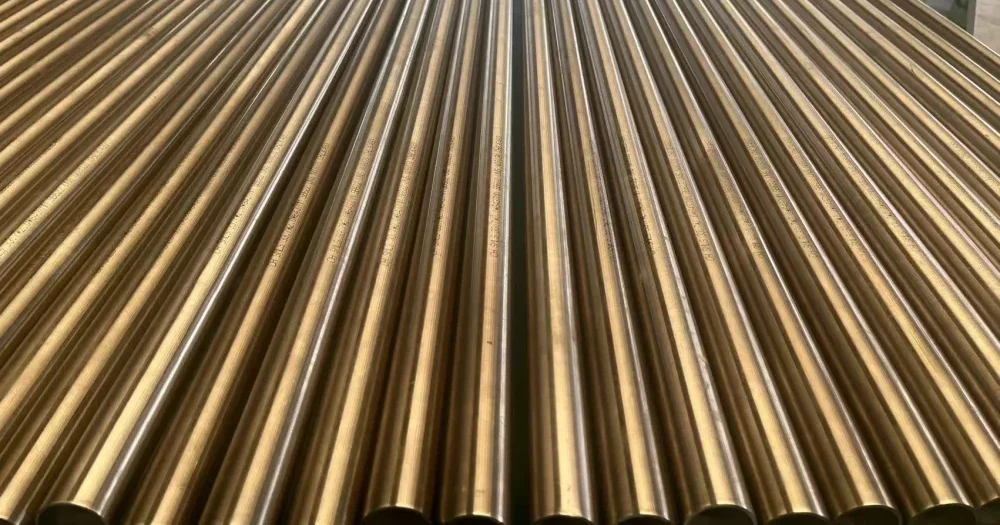
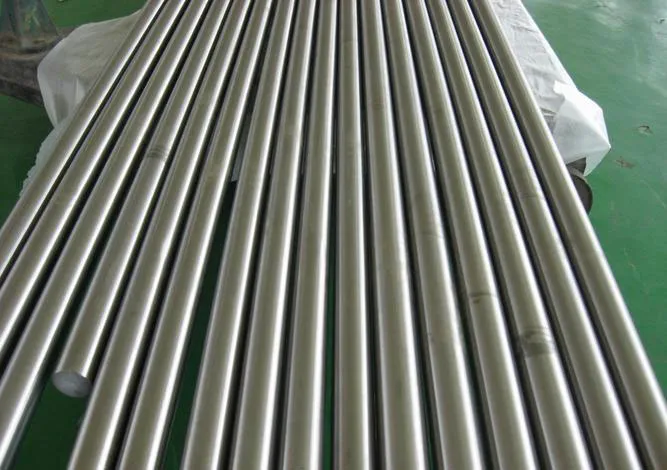
Hastelloy B2 Pipe Maker in China
Our Capacity
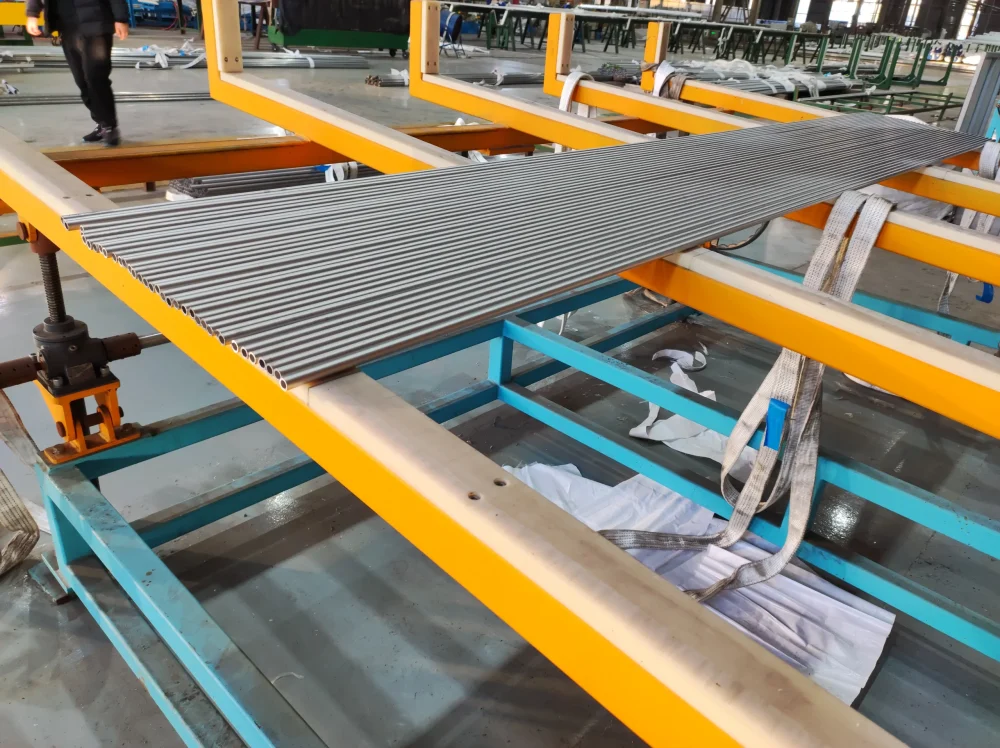
We manufacture Hastelloy B2 seamless pipes ranging from 1/2” to 24” (6 mm to 610 mm) and Hastelloy B2 welded pipes ranging from 6” to 104” (159 mm to 2800 mm).
We offer fast and flexible delivery times and can integrate these products with others to provide comprehensive solutions.Even for small-batch orders,we utilize state-of-the-art equipment to manufacture your products,drawing on our more than 10 years of manufacturing experience.
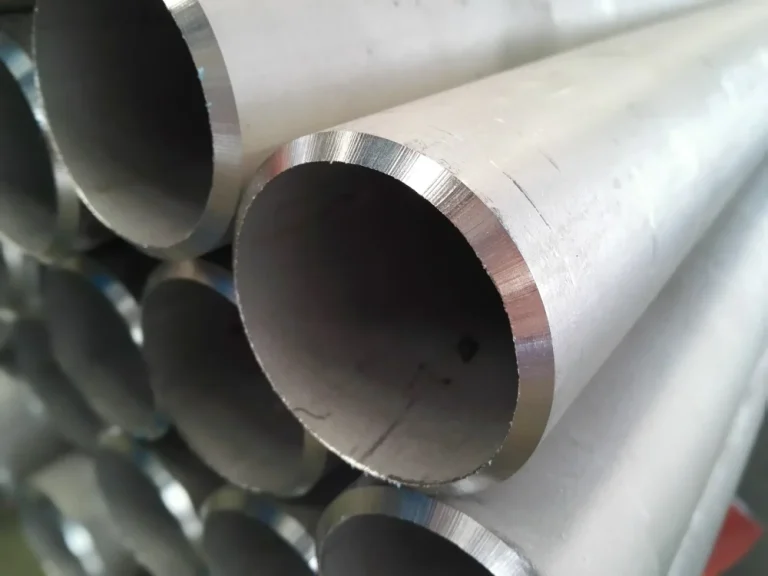
Hastelloy B2 Equivalent Designations
- UNS N10665
- W.Nr. 2.4617
- EN NiMo28
- GOST Н70М28Ф
Have a requirement?
Contact Us For More Information
Standards of Hastelloy B2 Pipe & Tube
| Product Form | ASTM Standard | ASME Standard | Description |
|---|---|---|---|
| Seamless Pipe & Tube | ASTM B622 | ASME SB622 | Standard specification for seamless nickel and nickel-cobalt alloy pipe and tube. |
| Welded Pipe | ASTM B619 | ASME SB619 | Covers welded nickel and nickel-cobalt alloy pipe produced by automatic welding. |
| Welded Tube | ASTM B626 | ASME SB626 | Specifically for welded tubes intended for heat exchangers and general service. |
Related Component Standards
- Fittings (Elbows, Tees): ASTM B366 / ASME SB366
- Forgings & Flanges: ASTM B462 / ASME SB462
- Rod & Bar: ASTM B335 / ASME SB335
- Plate & Sheet: ASTM B333 / ASME SB333
Chemical Composition of Hastelloy B2 Pipe, wt.%
| Ni | Mo | Fe | Cr | Co | Mn | Si | C | P | S |
|---|---|---|---|---|---|---|---|---|---|
| Balance | 26.0 – 30.0 | 2.0 Max | 1.0 Max | 1.0 Max | 1.0 Max | 0.10 Max | 0.02 Max | 0.04 Max | 0.03 Max |
Key Technical Notes
- High Molybdenum (26-30%):
This is the primary alloying element that provides exceptional resistance to reducing environments,particularly hydrochloric acid at all concentrations and temperatures. - Ultra-Low Carbon (≤ 0.02%):
Crucial for minimizing carbide precipitation during welding,which prevents intergranular corrosion in the heat-affected zone (HAZ). - Low Iron/Chromium:
Keeping these elements low optimizes the alloy’s stability in pure reducing acids but makes it highly susceptible to corrosion if oxidizing salts (like ferric or cupric chlorides) are present.
What Are The Main Differences in Composition Between B2 And B3?
- Similarities:
Both contain approximately 28% molybdenum and extremely low carbon and silicon content. - Differences:
B3 contains trace amounts of other elements (such as aluminum and manganese) and features a finely tuned composition designed to improve thermal stability.While B2 is prone to the precipitation of brittle phases between 538°C and 815°C,B3 significantly delays this process.
Mechanical Properties of Hastelloy B2 Pipe
| Tensile Strength | Yield Strength | Elongation | Hardness | Density |
|---|---|---|---|---|
| ≥ 760 MPa(110 ksi) | ≥ 350 MPa(51 ksi) | ≥ 40% | ≤ 241 HBW(100 HRB) | 9.22 g/cm3(0.333 lb/in3) |
Can Hastelloy B2 Pipes Be Cold-bent or Formed?
Yes.With an elongation of 40%, B2 is very ductile.
Caution:
Like most nickel alloys,it work-hardens rapidly.If the cold work exceeds 10-15% deformation,a full solution anneal is usually required to restore corrosion resistance and ductility.
How Does B2 Perform At Cryogenic (Sub-zero) Temperatures?
Thermal Properties of Hastelloy B2 Pipe
| Property | Metric Value | Imperial Value |
|---|---|---|
| Melting Range | 1330°C – 1380°C | 2426°F – 2516°F |
| Thermal Conductivity | 11.1 W/m·K | 77.0 BTU-in/hr·ft²·°F |
| Specific Heat | 373 J/kg·K | 0.0891 BTU/lb·°F |
| Coeff. of Thermal Expansion | 10.3 μm/m·°C (20–93°C) | 5.72 μin/in·°F (68–200°F) |
Heat Treatment and Fabrication
- Solution Annealing:
Typically performed at 1066°C (1950°F) followed by a rapid water quench to maintain corrosion resistance and optimize mechanical properties. - Hot Working:
The alloy can be easily forged or hot worked within the temperature range of 982°C to 1232°C (1800°F to 2250°F).
Applications of Hastelloy B2 Pipe
- Hydrochloric Acid (HCl) Processing
- Acetic Acid Production
- Herbicide and Pesticide Manufacturing
- Sulfuric Acid Alkylation
- Pharmaceutical Intermediates
- Isomerization Units
- Methyl Methacrylate (MMA) Synthesis
- Vacuum Distillation Systems
- Metal Pickling Lines
- Specialty Chemical Catalysis
FAQs About Hastelloy B2 Pipe
Its extraordinary resistance to Hydrochloric Acid (HCl).It is one of the very few metallic materials that can handle HCl at all concentrations and temperatures,even up to the boiling point,while maintaining extremely low corrosion rates.
This is a critical physical limitation.Between 1000°F and 1500°F (538°C – 815°C),B2 undergoes a phase transformation that creates brittle intermetallic compounds.This makes the pipe as fragile as glass,leading to sudden cracks under thermal or mechanical stress.
Absolutely not.Nitric acid is a strong oxidizer.Since B2 contains almost no Chromium,it will dissolve rapidly (almost violently) in nitric acid.Use hastelloy C276 pipe or stainless steel pipe for oxidizing acids instead.
Contact Us
- RM901 No.22 Tangjiaqiao Road Wenzhou China
- +86 577 8551 1171
- [email protected]
- https://www.kaysuns.com/