Pickling and passivation are essential chemical treatments for modern industrial metal systems.Manufacturers use them to prevent rapid rust and material failure.When we weld metal,the extreme heat damages the surface.This thermal damage leaves the metal highly vulnerable to severe corrosion.Therefore,we must restore the protective layer immediately after welding.This guide explains how these crucial processes protect our investments.
The Core Purpose of Pickling and Passivation
What exactly do these two industrial terms mean? They are actually two distinct and sequential chemical steps.First, pickling removes deep impurities from the raw metal surface.It aggressively strips away the dark heat tint left by welding.This step serves as a vital post-weld treatment for any construction project.
Second,passivation rebuilds the invisible protective shield on the metal.Stainless steel relies entirely on a microscopic chromium oxide layer.Passivation uses mild acids to speed up this layer’s natural formation.Consequently,a complete pickling and passivation cycle restores the metal completely.Without these steps,the raw steel will rust very quickly.
A Real Example: Skipping Pickling and Passivation
What happens if you skip this crucial chemical cleaning step?The results are often disastrous and incredibly expensive for businesses.For example,consider a well-documented failure in the US food industry.In 2012,a major beverage plant installed new liquid processing lines.They used high-quality 316/316L stainless steel pipe for the main system.However,the installation team skipped the chemical cleaning on the welds.
Within just three months,severe pitting corrosion appeared at the joints.The unremoved weld heat tint acted as a magnet for rust.Consequently,the factory had to shut down production entirely for weeks.They replaced the damaged sections at a massive financial loss.This true story proves that raw material quality is not enough.Proper pickling and passivation are absolutely mandatory for long-term operational safety.
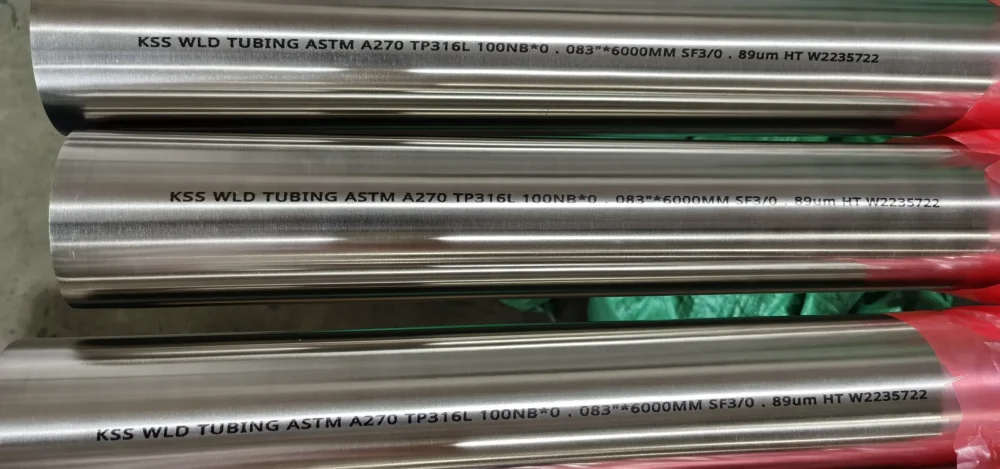
Therefore,all stainless steel pipes manufactured by Kaysuns undergo a pickling and passivation process as standard prior to shipment,unless you have specific requirements.
What We Do
- Plate
- Sheet
- Forgings
- Round Bar
- Flange
- Pipes
- Fittings
- Customized
Contact Us For More Information
The Step-by-Step Method for Metal Treatment
How do experts actually perform this necessary chemical cleaning today?The procedure requires strict temperature control and specialized safety gear.First,technicians degrease the metal to remove all surface oil.Next,they apply the strong pickling acid to eat away scale.Then,workers rinse the pipe thoroughly with highly purified clean water.Finally,they apply the passivating fluid to seal the steel surface.Following these exact steps ensures perfect pickling and passivation every time.
The Three Main Stages of Chemical Cleaning
| Stage | Action Performed | Primary Chemical Used |
|---|---|---|
| 1. Degreasing | Removes dirt, oil, and grease. | Alkaline solutions |
| 2. Pickling | Removes weld scale and heat tint. | Hydrofluoric and Nitric acid |
| 3. Passivation | Restores the chromium oxide layer. | Nitric or Citric acid |
Why Complete Pickling and Passivation is a Total Solution
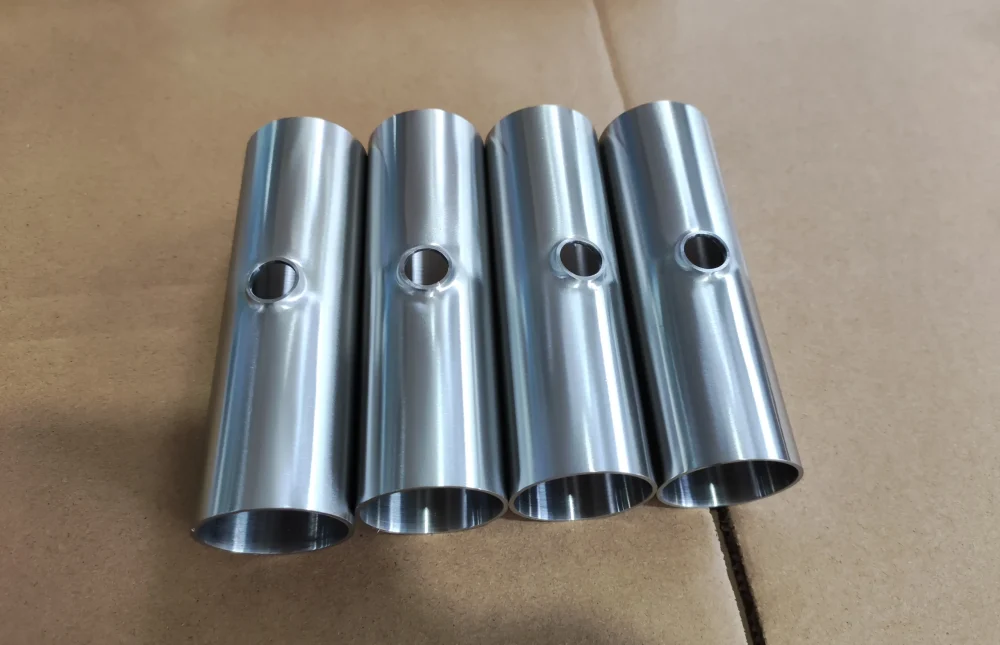
A complex piping network is only as strong as its weakest link.Therefore,treating only the straight tubes is a massive engineering mistake.You must apply pickling and passivation to every single system component.This strict rule includes all elbows,tees,and forged connecting flanges.
Furthermore, different metal grades require entirely different chemical acid concentrations. For example, treating a standard 304 pipe is relatively straightforward. However, a high-performance duplex stainless steel pipe requires specialized acid mixtures. Duplex metals have complex grain structures that demand very careful handling. We provide a fully treated package to ensure total system compatibility. This unified approach eliminates weak points in your fluid transfer lines.
Unprocessed vs. Treated Piping Components
| Feature | Unprocessed Welded System | Fully Treated System |
|---|---|---|
| Surface Color | Dark heat tint at joints | Uniform, clean silver finish |
| Rust Resistance | Very low near the welds | Extremely high globally |
| Maintenance | Requires frequent visual checks | Minimal inspection needed |
| Lifespan | Often fails within 1-3 years | Can easily last over 20 years |
Essential Equipment for Pickling and Passivation
We cannot perform this hazardous work with basic household cleaning tools.Industrial pickling and passivation requires heavy-duty,highly acid-resistant professional equipment.Our workers use large plastic immersion tanks to soak small loose parts.For massive pipelines,Kaysuns technicians use high-pressure spray pumps to apply chemicals.
Moreover,facilities need dedicated waste management systems to neutralize used acids.Proper safety gear is also a legally required part of the process.We use state-of-the-art facilities to guarantee perfect pickling and passivation results.
Required Equipment for Industrial Treatment
| Equipment Type | Purpose in the Process | Safety Requirement |
|---|---|---|
| Immersion Tanks | Holds the chemical acid baths. | Must be acid-resistant plastic |
| Spray Pumps | Applies chemicals to large pipes. | High-pressure, chemical-safe seals |
| Rinse Stations | Washes away residual acids cleanly. | High-volume clean water supply |
| PPE Gear | Protects the human technicians. | Full face shields and rubber suits |
How Do You Verify Pickling and Passivation Quality?
You cannot just trust that the chemical treatment worked properly.Engineers must scientifically verify the success of the pickling and passivation.Fortunately,several fast testing methods exist to confirm surface safety today.First,inspectors use a simple water drop test on the metal.If rust appears after a few hours,the passivation process failed.
Second,professionals use a high-tech copper sulfate chemical spot test.This liquid immediately turns copper-colored if free iron remains on top.Furthermore,specialized digital meters can now measure the actual oxide thickness.These strict verifications ensure your pickling and passivation investment is secure.
The Environmental Impact of Chemical Metal Treatments
Handling strong industrial acids presents a significant risk to the environment.Therefore,modern pickling and passivation facilities must use advanced filtration systems.Older methods dumped toxic chemical waste directly into local city drains. Today,strict EPA regulations in the United States forbid this practice entirely.
Facilities must completely neutralize the acidic wastewater before releasing it safely.In addition,many forward-thinking companies now use eco-friendly citric acid blends.Citric acid provides excellent passivation results without severe environmental hazards.We proudly utilize sustainable pickling and passivation methods in our workflows.
Contact Us
Get In Touch
- RM901 No.22 Tangjiaqiao Road Wenzhou China
- +86 577 8551 1171
- [email protected]
- https://www.kaysuns.com/
Find Us