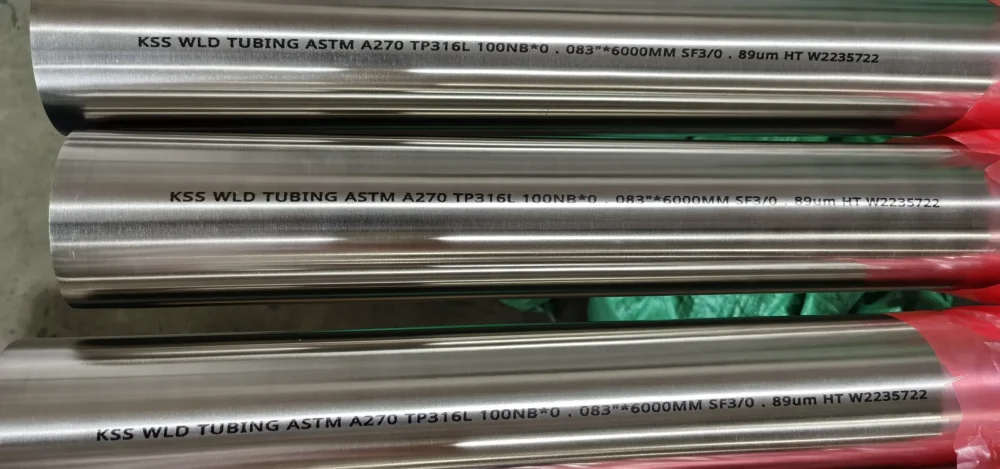
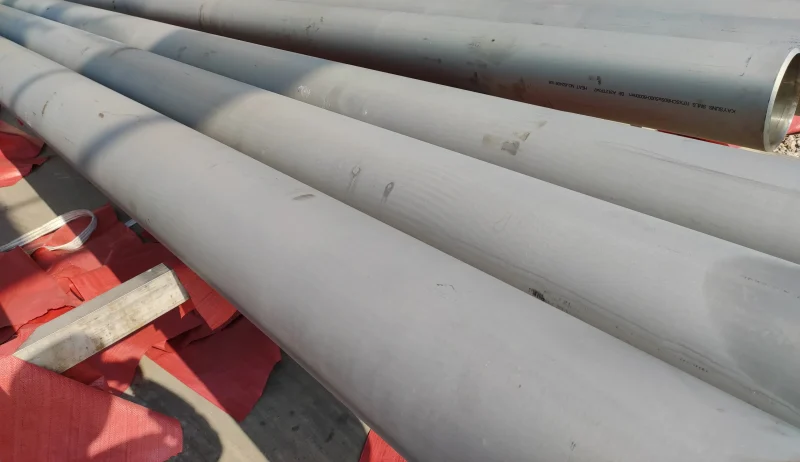
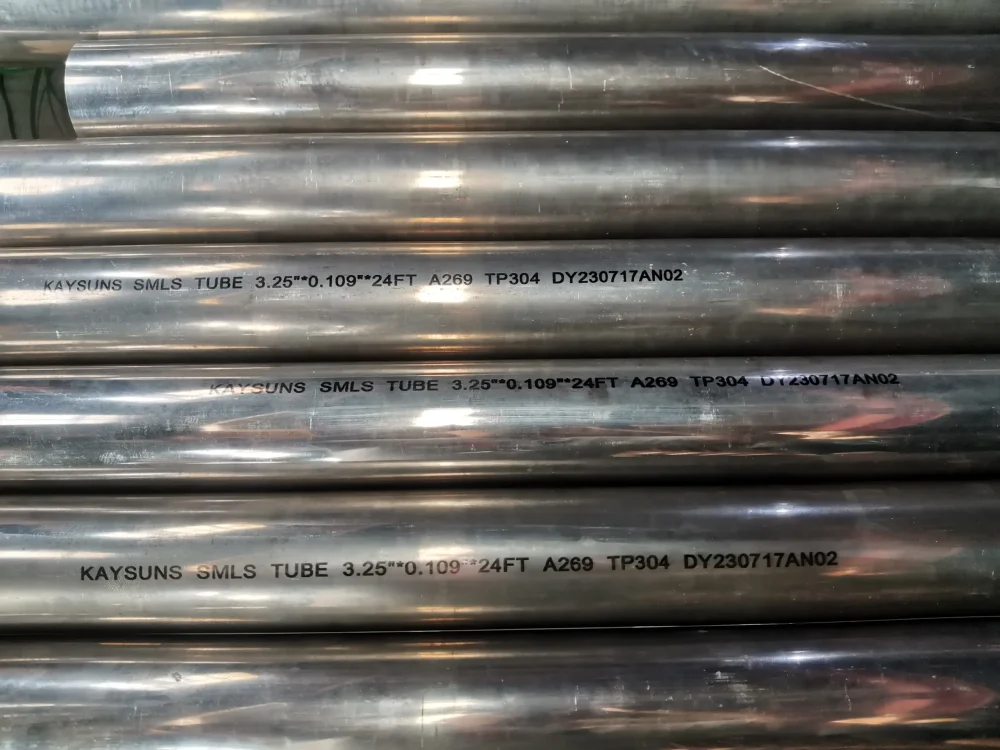
Hardness testing of SS tubes and fittings ensures that your industrial piping components can withstand high mechanical stress.Many people focus only on the chemical mix of stainless steel.However,the physical strength and “temper” of the metal are equally important for safety.Hardness refers to a material’s resistance to localized plastic deformation.In simpler terms,it measures how well the steel resists scratches,dents,or wear.
Why is Hardness Testing of SS Tubes Necessary?
The main goal of hardness testing of SS tubes is to verify proper heat treatment.During manufacturing,stainless steel undergoes processes like annealing or welding.If the cooling process happens too fast,the metal becomes brittle.Brittle pipes can crack suddenly under pressure.Conversely,if the metal is too soft,it may deform or wear out prematurely.
Moreover,different industrial environments require specific hardness levels.For example,high-pressure gas lines need a balance between strength and flexibility.By performing a hardness test,we confirm that the material meets the required ASTM or ASME standards.
- Stainless Steel Tubing:
Pay close attention to the longitudinal surfaces and ends of the tubing. - Stainless Steel Fittings:
Conduct hardness tests on stainless steel elbows and tees,as the forming process alters the metal’s grain structure. - Stainless Steel Flanges:
The hardness of the gasket contact surface on forged flanges must be uniform to ensure a perfect seal.
What We Do
- Plate
- Sheet
- Forgings
- Round Bar
- Flange
- Pipes
- Fittings
- Customized
Contact Us For More Information
Common Methods for Hardness Testing of SS Pipes
1. Rockwell Hardness Test (HRB/HRC)
This is the most common method for hardness testing of stainless steel pipes.A diamond cone or a steel ball presses into the surface.The machine measures the depth of the dent.It is fast,accurate,and provides a direct digital reading.
2. Brinell Hardness Test (HBW)
For larger fittings or heavy-wall pipes,we use the Brinell method.It uses a larger carbide ball and a higher load.This makes it ideal for testing materials with a coarse grain structure.
3. Vickers Hardness Test (HV)
Technicians use Vickers for very thin tubes or specific weld zones.It uses a pyramid-shaped diamond.Because the indentation is tiny,it provides extremely precise data for laboratory analysis.
Comparison of Hardness Testing Methods
| Method | Indenter Type | Best Used For | Industry Standard |
|---|---|---|---|
| Rockwell | Diamond Cone/Ball | Fast field testing of pipes | ASTM E18 |
| Brinell | Carbide Ball | Forgings and large flanges | ASTM E10 |
| Vickers | Diamond Pyramid | Thin-walled SS tubes | ASTM E384 |
| Leeb | Rebound Body | Large, installed systems | ASTM A956 |
Equipment for Hardness Testing of SS Fittings
To provide a total solution,a professional supplier must use calibrated,high-precision equipment.In the past,machines were bulky and stayed in the lab.Today,Kaysuns use portable digital testers for on-site hardness testing of SS pipes,fittings and flanges.
- Benchtop Testers: These provide the highest accuracy for small samples in a controlled environment.
- Portable Ultrasonic Testers: These allow us to test installed pipes without leaving a visible mark.
- Leeb Rebound Testers: These are perfect for heavy flanges.They measure how a small “impact body” bounces off the metal surface.
Strategic Benefits of Hardness Validation
| Benefit | Technical Reason | Business Impact |
|---|---|---|
| Wear Resistance | Correct hardness reduces friction damage. | Lower maintenance costs |
| Strength Verification | Confirms the material can handle the load. | Prevents system failure |
| Uniformity | Ensures all fittings match the pipe strength. | Easier installation |
| Code Compliance | Meets global safety regulations (ASME/API). | Simplified insurance audits |
| Weld Quality | Detects “Hard Zones” in the weld area. | Prevents stress cracking |
Detailed Hardness Limits for Common SS Grades
| SS Grade | Rockwell (HRB) Max | Brinell (HBW) Max | Vickers (HV) Max |
|---|---|---|---|
| 304 / 304L | 92 | 201 | 200 |
| 316 / 316L | 95 | 217 | 220 |
| 321 | 95 | 217 | 220 |
| Duplex 2205 | 30 (HRC) | 293 | 290 |
Professional Execution and Expert Trust
As an expert supplier,we understand that quality is a multi-step process.We do not just sell components;we sell reliability.Our team follows strict ISO protocols for hardness testing of SS pipes.We ensure every technician is trained to handle delicate instruments and interpret data correctly.
In addition,we perform X-ray inspections on stainless steel pipes,fittings,and flanges.Hardness testing primarily examines the surface and temper of the welds,while X-ray inspection allows for a thorough examination of the weld’s interior.By combining these inspection methods,we provide a “zero-defect” guarantee for your project.
FAQs SS Hardness Testing
Standard testing leaves tiny indentations.However,if you require “non-destructive” testing,we will use ultrasonic contact impedance (UCI) or Leeb testing.These methods leave virtually no marks.
For hardness testing of SS tubes,we usually test three spots:both ends and the middle.For fittings,we test the outer curve where the metal has been stretched.
Yes,for most stainless steels,there is a mathematical correlation.We can often estimate the strength of the pipe based on its hardness result.
Contact Us
Get In Touch
- RM901 No.22 Tangjiaqiao Road Wenzhou China
- +86 577 8551 1171
- [email protected]
- https://www.kaysuns.com/
Find Us