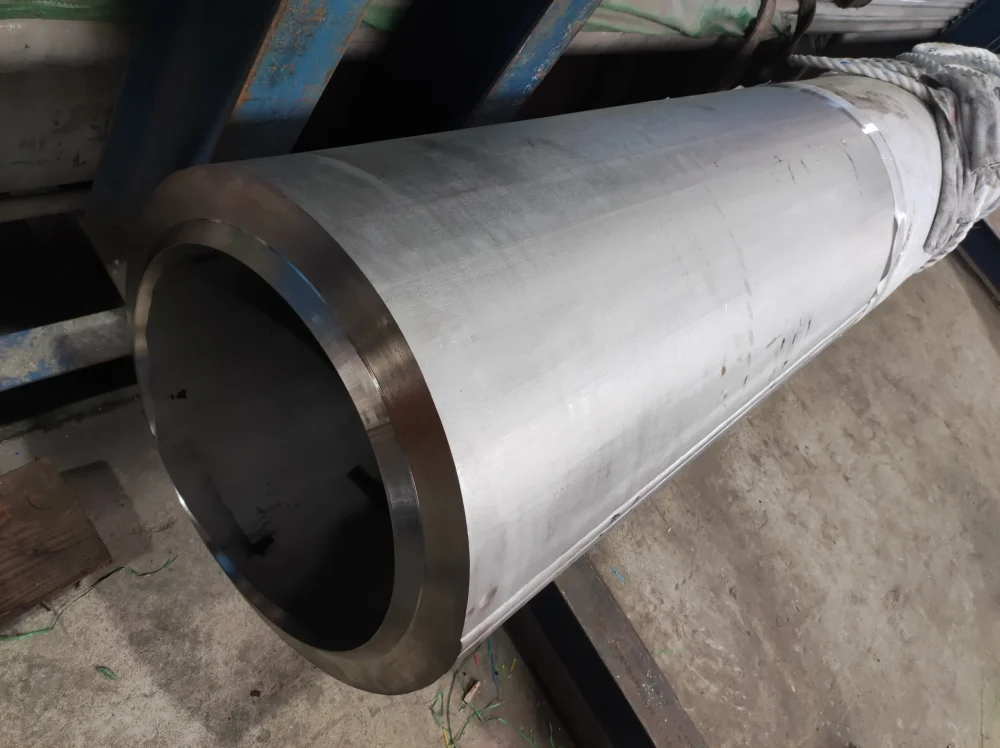
Thermal degradation refers to the phenomenon whereby stainless steel loses its beneficial properties due to prolonged exposure to high temperatures.This process poses a significant hazard to systems employing stainless steel pipes and fittings. Prolonged high-temperature exposure fundamentally alters the internal structure of the metal,a change that both diminishes mechanical strength and reduces corrosion resistance.
What is Thermal Degradation?
Thermal degradation is NOT the same as melting.Instead,it involves slow metallurgical changes within the solid metal.These changes occur primarily between 400℃ and 900℃ (750℉ and 1650℉).The high temperature causes certain elements to move and precipitate.This movement forms new,brittle phases. Consequently,the metal loses its original toughness and ductility.
What We Do
- Plate
- Sheet
- Forgings
- Round Bar
- Flange
- Pipes
- Fittings
- Customized
Contact Us For More Information
Key Mechanisms of Thermal Degradation
Multiple distinct mechanisms lead to the loss of material integrity.Under high-temperature operating conditions,these processes often occur simultaneously.
Sigma Phase Formation
The sigma(σ) phase is a brittle intermetallic compound rich in chromium and molybdenum.This phase forms slowly in austenitic and duplex stainless steels.The σ phase typically forms within a temperature range of 600°C to 900°C (1112°F to 1650°F).Its formation significantly reduces material toughness and increases the risk of impact brittle fracture.
475°C Embrittlement
This phenomenon primarily affects ferritic and duplex stainless steels.When materials are exposed for extended periods near 475°C (885°F),chromium atoms accumulate within the metal matrix.This accumulation significantly increases material hardness but simultaneously renders the steel extremely brittle at room temperature.This brittleness poses risks during maintenance and inspection operations.
Carbide Precipitation
Carbide precipitation is commonly referred to as sensitization.It primarily affects austenitic stainless steels such as 304.Within the temperature range of 450°C to 850°C,chromium carbides form along grain boundaries.This process depletes chromium from the surrounding metal,causing the chromium-depleted regions to lose their passivation layer.Consequently,the steel becomes highly susceptible to intergranular corrosion.
| Mechanism | Affected Grades | Temperature Range | Primary Effect |
|---|---|---|---|
| σ phase | Austenitic, Duplex | 600°C to 900°C (1112°F to 1650°F) | Severe brittleness |
| 475°C Embrittlement | Ferritic, Duplex | ≤ 475°C(885°F) | Hardness increase, ductility loss |
| Carbide Precipitation | Austenitic (304, 316) | 450°C to 850°C(840°F to 1560°F) | Susceptibility to intergranular corrosion |
Effects of Thermal Degradation on Piping Systems
σ-phase-induced embrittlement limits the material’s bending capacity,making stainless steel prone to cracking.Any unexpected mechanical impact may cause immediate failure.
Carbide precipitation-induced sensitization significantly reduces corrosion resistance.Affected areas become susceptible to chemical erosion,leading to premature pitting corrosion and failure in process pipelines.
Thermal degradation shortens the expected service life of equipment,necessitating premature replacement of components and significantly increasing long-term maintenance costs.
Failures in high-pressure or high-temperature lines pose safety risks.Maintaining structural integrity is essential for safe operation.
Material Selection and Mitigation
- Low-Carbon Grades:
304L and 316L grades are recommended.The letter “L” following the grade denotes low carbon content.This minimizes carbide precipitation,thereby reducing the risk of sensitization during welding or high-temperature service. - Stabilized Grades:
Grades such as 321 and 347 contain stabilizing elements(titanium or niobium).These elements preferentially form carbides,preventing the formation of harmful chromium carbides. - Duplex Steel Control:
Duplex steels require strict manufacturing control to limit ferrite content,minimizing the risk of σ-phase formation.
Prevention Strategies in High-Temperature Piping
| Strategy | Component Type | Mitigation Action |
|---|---|---|
| Material Choice | Pipe,Fittings,Flanges | Use low-carbon (“L”) or stabilized grades |
| Welding | Welded joints | Use specialized low-heat input welding methods |
| Heat Treatment | Fabricated components | Post-weld solution annealing to re-dissolve carbides |
| Design | System structure | Avoid long hold times in critical temperature ranges |
Contact Us
- RM901 No.22 Tangjiaqiao Road Wenzhou China
- +86 577 8551 1171
- [email protected]
- https://www.kaysuns.com/