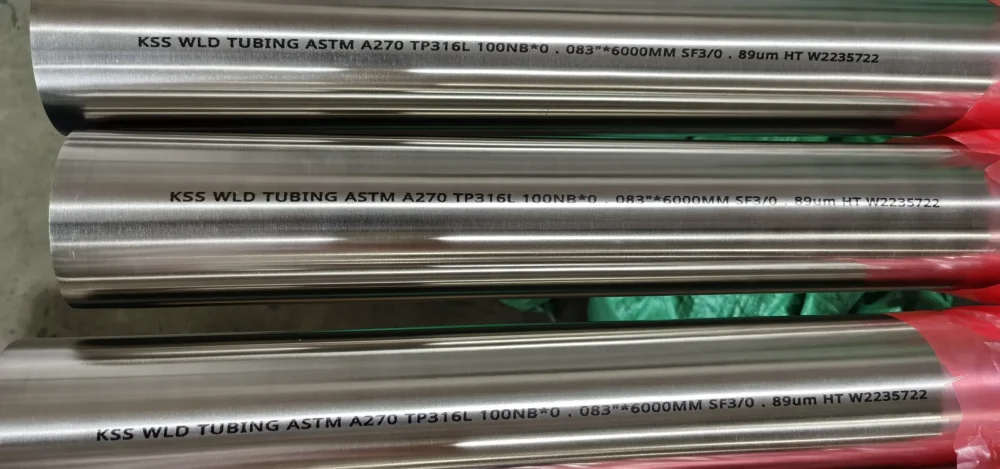
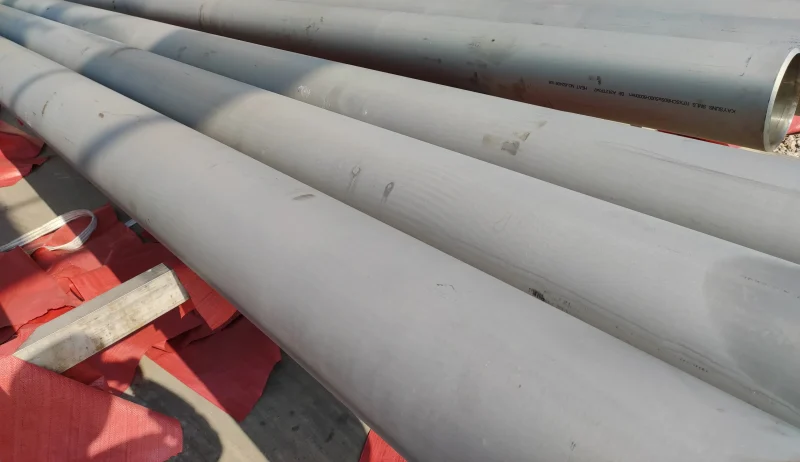
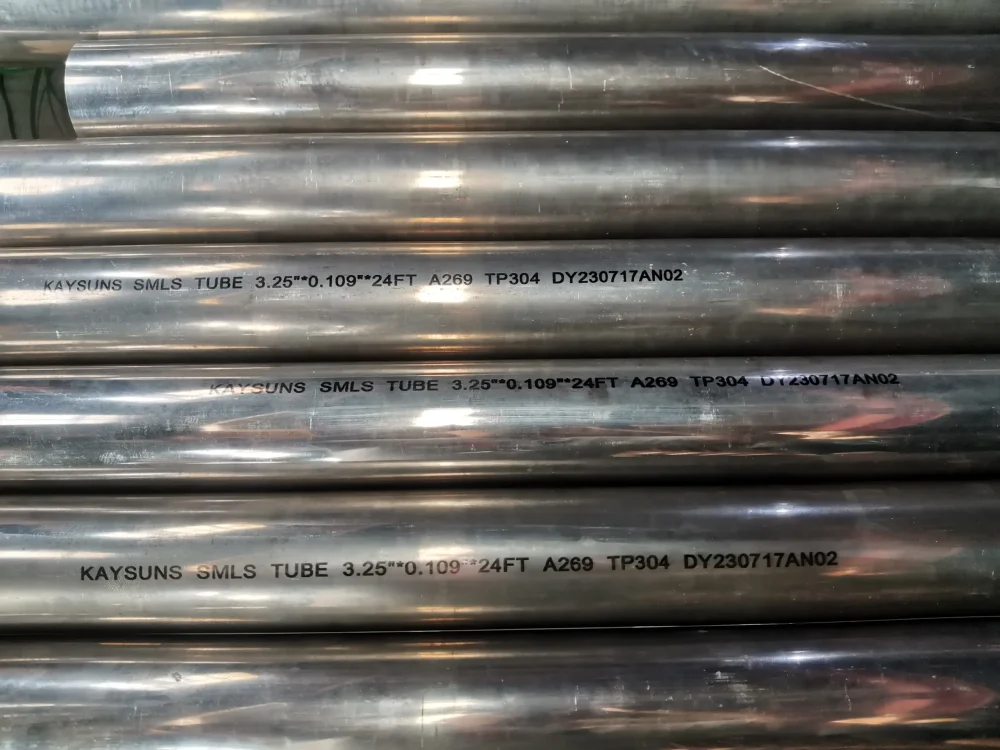
Fabricators lose millions annually when pipe bending cracks destroy expensive seamless stainless steel batches.You bend a perfect tube to 90 degrees.Suddenly,the outer radius splits open.This catastrophic mechanical failure halts production lines instantly.Why does this happen during industrial cold forming?Seamless stainless steel tubes have extremely high tensile strength,but they are also prone to rapid structural work hardening.We will conduct an in-depth investigation into the exact metallurgical causes of bending cracks in these tubes.
Metallurgical Causes of Pipe Bending Cracks
When you bend a tube 90 degrees,extreme physical forces apply.The outside wall stretches violently.The inside wall compresses tightly.Stainless steel alloys,especially 304 y 316,harden rapidly under mechanical stress.This natural work hardening reduces the material’s ductility instantly.The internal metal grains stretch and deform.If this stretching exceeds the material elongation limit,the surface tears.Standard Tubería de acero inoxidable 304 has a maximum elongation rate of roughly 40%.A very tight bend stretches the outer wall beyond 50%.This extreme physical tension guarantees a complete structural fracture.
Mechanical Triggers for Stainless Steel Fractures
Improper machinery setup ruins perfect metal tubes daily.Fabricators often skip essential internal support tools to save time.Bending a hollow tube without a mandrel causes absolute disaster.The tube flattens under heavy mechanical pressure.This flattening concentrates extreme stress on the outer curve.Pipe bending cracks form at this stress point immediately.Proper machine calibration prevents pipe bending cracks effortlessly.Furthermore,poor lubrication creates severe friction.Dry metal grinding against a hard steel die generates micro-tears.These tiny tears expand into massive structural fractures very quickly.
Tooling Setup and Defect Triggers
| Tooling Condition | Mechanical Effect on Tube | Risk of Bending Cracks |
|---|---|---|
| No Internal Mandrel | Uneven outer wall stretching and flattening | Muy alta |
| Incorrect Wiper Die | Inner wrinkles form and stress the outer wall | Alta |
| Dry Bending (No Lube) | Severe surface friction causes micro-tears | Muy alta |
| Fast Bending Speed | Metal grain structure fails to flow smoothly | Moderado |
Qué hacemos
- Plato
- Hoja
- Piezas forjadas
- Barra redonda
- Brida
- Tuberías
- Accesorios
- Personalizado
Más información
How Centerline Radius Impacts Pipe Bending Cracks
Engineers measure bend tightness using the Centerline Radius (CLR).The CLR dictates how severely the outer wall stretches during operation.Industry manufacturing standards recommend a 2D or 3D bend radius.A 2D radius equals exactly twice the outer pipe diameter.If you use a tight 1D radius,the stretch becomes too severe.This extreme tension causes severe outer wall thinning.Rapid wall thinning leads directly to pipe bending cracks.Always calculate your precise CLR before starting the hydraulic machine.
Centerline Radius (CLR) Safety Margins
| Pipe Outside Diameter | 1D Bend (High Risk Zone) | 2D Bend (Safe Zone) | 3D Bend (Optimal Zone) |
|---|---|---|---|
| 1.0 inch (25.4mm) | 1.0 inch CLR | 2.0 inch CLR | 3.0 inch CLR |
| 2.0 inch (50.8mm) | 2.0 inch CLR | 4.0 inch CLR | 6.0 inch CLR |
| 3.0 inch (76.2mm) | 3.0 inch CLR | 6.0 inch CLR | 9.0 inch CLR |
Proven Engineering Solutions to Stop Defects
You can eliminate pipe bending cracks using smart factory fabrication techniques.First,utilize rotary draw bending machines exclusively for sharp 90-degree angles.Second,insert a flexible ball mandrel inside the steel tube.The mandrel supports the internal walls perfectly during the bend.It prevents flattening and distributes the stretching forces evenly.Third,apply heavy synthetic drawing lubricants continuously.Thick liquid lubrication reduces metal die friction effectively.Finally,control your mechanical bending speed carefully.High speeds generate excess friction heat.Slow,consistent speeds allow the metal grains to flow safely.Following these specific steps stops pipe bending cracks during heavy production.
Material Preparation to Prevent Pipe Bending Cracks
Raw material quality dictates your final fabrication success absolutely.Cold-drawn seamless pipes contain heavily trapped internal mechanical stress.You must fully anneal these pipes before any cold bending begins.Solution annealing at 1040°C restores maximum metallic ductility.You should always specify “dead-soft annealed” when ordering raw materials.Hard metal snaps rapidly under pressure.Soft,annealed metal stretches cleanly without breaking.Hardness testing saves thousands of dollars in wasted factory materials.Prevent pipe bending cracks by testing every steel batch first.
Raw Material Delivery States and Bendability
| Steel Delivery State | Average Rockwell Hardness | Suitability for 90° Cold Bend |
|---|---|---|
| Cold Drawn (Hard) | > 95 HRB | Will crack immediately |
| Half-Hard Condition | 85 – 90 HRB | High risk of surface tearing |
| Solución recocida | < 80 HRB | Excellent stretching capability |
Pipe Bending Cracks FAQs
The outside curve experiences extreme tensile stress.The metal stretches and thins out rapidly.When this stretching exceeds the alloy’s elongation limit,the wall fractures.
Yes,but hot bending requires extreme precision.Heating stainless steel improperly destroys its corrosion resistance.Cold bending remains safer if you use properly annealed tubes and mandrels.
Absolutely.Very thin walls rupture much faster than thick walls.The outer wall thins naturally during bending.Thin tubes require highly specialized tooling to survive 90-degree bends safely.
You need high-pressure synthetic drawing pastes or heavy chlorinated oils.Standard motor oil burns away rapidly under extreme bending friction.Specialized pastes protect the metal surface completely.
Contacto
Póngase en contacto con nosotros
- RM901 No.22 Tangjiaqiao Road Wenzhou China
- +86 577 8551 1171
- [email protected]
- https://www.kaysuns.com/
Encuéntranos