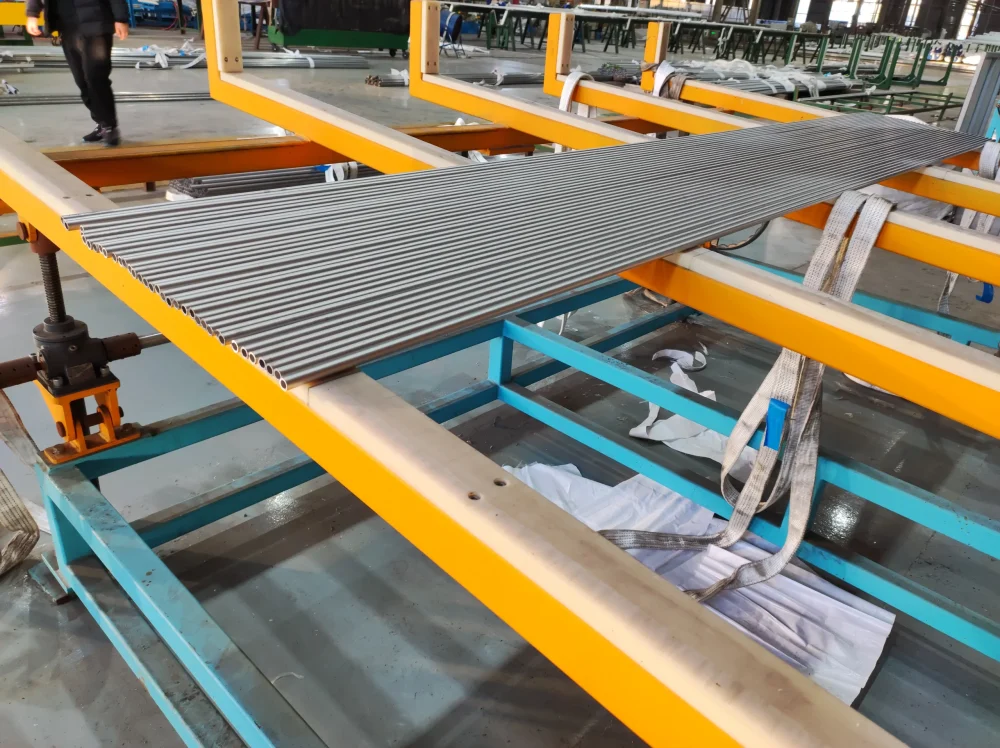
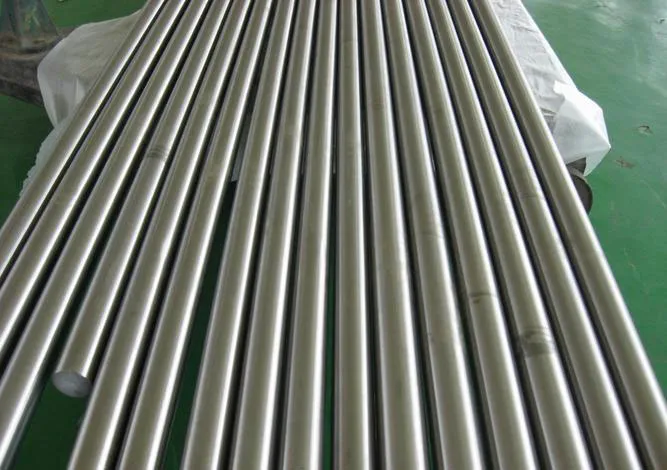
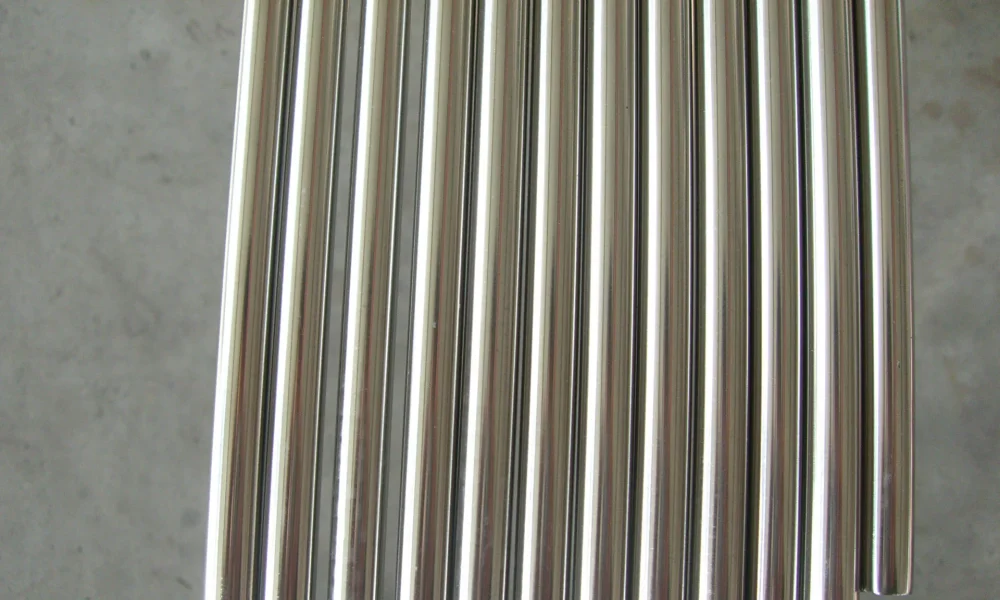
Inconel 751 Pipe
Inconel 751 pipe is a precipitation-hardenable nickel-chromium superalloy pipe.It retains the excellent corrosion and oxidation resistance of Inconel X750 but is specifically optimized for higher rupture strength and hot hardness under severe thermal stress.
Key Characteristics of Inconel 751 Pipe
- High-Temperature Strength:
Maintains exceptional mechanical strength and creep resistance at temperatures up to 1600°F (870°C). - Oxidation & Corrosion Resistance:
Rich in chromium,it effectively resists oxidation,reduction,and sulfidation in hot exhaust gas environments. - Thermal Fatigue Resistance:
Resists cracking and deformation under continuous,cyclic heating and cooling cycles.
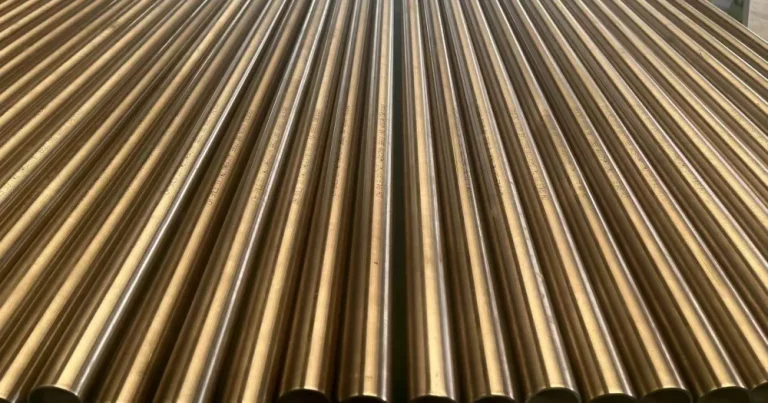
Applications of Inconel 751 Pipe
- Exhaust Valves
- Turbinas de gas
- Engine Manifolds
- Rocket Thrusters
- Reactores químicos
- Hornos industriales
- Intercambiadores de calor
- Nuclear Piping
- Turbocharger Tubing
- Aerospace Fasteners
¿Tiene alguna necesidad?
Kaysuns is a professional supplier of Inconel 751 Pipes.Please feel free to contact me if you have any requirements.
Más información
Chemical Composition of Inconel 751 Pipe
The standard chemical composition of Inconel 751 is highly regulated to guarantee its outstanding hot hardness and creep rupture strength.
| Ni | Cr | Fe | Ti | Alabama | Nótese bien | Minnesota | Si | C | S |
|---|---|---|---|---|---|---|---|---|---|
| ≥ 70.0 | 14.0 - 17.0 | 5,0 – 9,0 | 2.10 – 2.70 | 1.0 – 1.50 | 0,70 – 1,20 | ≤ 0.50 | ≤ 0.50 | ≤ 0.08 | ≤ 0.005 |
Key Metallurgy: Inconel 751 vs. Inconel X-750
Inconel 751 was specifically developed by adjusting the composition of its predecessor,Inconel X-750.
Inconel X-750 typically contains about 0.7% aluminum,whereas Inconel 751 increases the aluminum content to between 1.00% and 1.50%.
This slight adjustment increases the volume fraction of the γ’ intermetallic phase,enabling the alloy to maintain its high-temperature hardness even when subjected to severe cyclic thermal loads.
Processing & Heat Treatment
To unlock the properties dictated by its chemical composition, pipes must undergo a precise precipitation hardening process:
- Recocido de soluciones:
Heated at roughly 1177°C (2150°F) for 1 hour to homogenize the structure,followed by a rapid air or water cool. - Stabilization & Aging:
Held at 732°C (1350°F) for up to 8 hours to allow the Titanium,Aluminum,and Niobium elements to precipitate uniformly out of the Nickel matrix.
Mechanical Properties of Inconel 751 Pipe
The mechanical properties of Inconel 751 pipes are what define its status as a premium superalloy.It is specially designed to retain structural integrity,resist deformation,and withstand cyclic mechanical stresses under severe thermal conditions up to 1600°F (870°C).
To unlock these properties, the pipe must undergo a standard solution-treated and precipitation-hardened heat cycle.
| Propiedad | Temperatura ambiente | Elevated Temperature (1350°F / 732°C) | Extreme Temperature (1500°F / 815°C) |
|---|---|---|---|
| Ultimate Tensile Strength | 1,150 – 1,280 MPa (167 – 185 ksi) | 850 – 950 MPa (123 – 137 ksi) | 500 – 620 MPa (72 – 90 ksi) |
| Límite elástico (0.2% Offset) | 750 – 880 MPa (109 – 128 ksi) | 650 – 720 MPa (94 – 104 ksi) | 400 – 480 MPa (58 – 70 ksi) |
| Elongation (in 2 inches) | 18% – 25% | 12% – 18% | 15% – 22% |
| Reducción de la superficie | 25% – 35% | 18% – 28% | 22% – 35% |
| Dureza | 32 – 38 HRC | Retains ~28–32 HRC | Retains ~22–26 HRC |
Key Thermal-Mechanical Interactions
- Modulus of Elasticity (Young’s Modulus):
- At 70°F (21°C): 214 GPa (31.0 × 10⁶ psi)
- At 1400°F (760°C): 165 GPa (24.0 × 10⁶ psi)
- A higher modulus at high temperatures means the piping remains rigid and stiff under structural loads.
- Thermal Fatigue Resistance:
The combination of a relatively low thermal expansion coefficient and high yield strength prevents the piping from developing surface micro-cracks during rapid exhaust-gas heat spikes.
Stress Rupture & Creep Performance
- Stress Rupture Life:
When subjected to a constant load of 415 MPa (60 ksi) at a stabilized temperature of 1350°F (732°C),an Inconel 751 pipe exhibits a rupture life well exceeding 100 hours. - Creep Resistance:
The microstructural gamma-prime precipitates effectively block dislocations within the metal grains,minimizing dimensional distortion.
Fabricability and Machinability Properties
Due to its high mechanical strength and rapid work-hardening nature, manufacturing pipes from Inconel 751 requires specific engineering approaches:
Roughly 12% to 15% of AISI B1112 (free-machining steel).Heavy-duty,rigid tooling with positive rake angles and constant feeds is mandatory to avoid glazing the pipe surface.
While it can be cold-formed or cold-drawn into seamless pipes,it requires high power and frequent intermediate anneals due to its strong resistance to deformation.
It can be welded using gas tungsten arc welding (GTAW/TIG).However,because it is an age-hardenable alloy,it is highly susceptible to strain-age cracking during post-weld heat treatment if the heating rate is too slow.
Standards & Equivalent Designations of Inconel 751 Pipe
| Categoría | Standard Code / Designation | Product Form & Material Scope |
|---|---|---|
| Equivalent Codes | UNS N07751 | Unified Numbering System for Nickel-Chromium Precipitation-Hardenable Alloys |
| W.Nr. 2.4694 | Werkstoff Number (German Standard Designation) | |
| Estándares ASTM | ASTM B751 | Standard Specification for Nickel and Nickel Alloy Welded Tube |
| ASTM B637 | Precipitation-Hardening Nickel Alloy Bars, Forgings, and Forging Stock | |
| ASTM B163 | Seamless Nickel and Nickel Alloy Condenser and Heat-Exchanger Tubes | |
| ASME Codes | ASME SB751 | Boiler and Pressure Vessel Code (BPVC) Welded Tubing Specifications |
| ASME B31.3 | Process Piping Design for Elevated Temperature Fluid Service | |
| Aerospace Standards | SAE AMS 5710 / 5711 | Nickel Alloy Bars, Forgings, and Rings (Engine Valves Material Criteria) |
| NACE / ISO Standards | NACE MR0175 / ISO 15156 | Materials for Use in H2S-Containing Environments in Oil and Gas Production |
| Quality Compliance | EN 10204 3.1 | Material Test Certificate |
| EN 10204 3.2 | Third-Party Witness MTC |
Our Advantages in Manufacturing Inconel 751 Pipe
Advanced Vacuum Melting
Our manufacturing process begins with Vacuum Induction Melting followed by Electro-slag Remelting.This advanced dual-melting technique strictly eliminates trace impurities like sulfur and lead, ensuring a highly homogenous chemical matrix.By precisely controlling the distribution of titanium and aluminum,we guarantee the structural uniformity required for heavy-duty thermal applications.
Precision Thermal Processing
We implement computer-controlled multi-stage solution annealing and precipitation age-hardening processes.Our precise thermal cycles optimize the uniform distribution of gamma-prime precipitates throughout the nickel matrix.This exact metallurgical execution unlocks maximum high-temperature rupture strength, excellent hot hardness,and reliable resistance against cyclic thermal fatigue.
Rigorous Quality Control
Every single batch of Inconel 751 piping undergoes thorough non-destructive testing,including ultrasonic,eddy current,and hydrostatic inspections.We strictly verify mechanical boundaries through elevated-temperature tensile and creep-rupture tests up to 1600°F (870°C).This stringent quality protocol ensures full compliance with international standards and guarantees zero-defect performance in critical systems.
Tailored Dimensional Flexibility
We offer extensive customization capabilities across both seamless and welded piping formats to match specific engineering loads. Utilizing high-power cold drawing and precision sizing mills,we achieve tight dimensional tolerances on custom wall thicknesses and non-standard outer diameters.This manufacturing flexibility allows us to supply ready-to-install components that fit perfectly into specialized industrial exhaust and turbine systems.
FAQs About Inconel 751 Pipe
The safe limit for continuous operation is 1600°F (870°C).Exceeding this temperature for long periods will degrade the alloy’s internal structure and reduce its long-term strength.
Yes,but only in the solution-annealed state.Because the metal hardens rapidly during forming,trying to bend or shape an already age-hardened pipe will cause immediate cracking.
Its high chromium content forms a tight protective layer that strongly resists sulfur corrosion.However,it needs a small amount of oxygen in the environment to keep this layer active.
Inconel 718 or Inconel 625 filler metals are recommended.Welders must use low heat to avoid hot cracking,followed by full heat treatment to restore joint strength.
Inconel 751 is age-hardened,making it much harder and more resistant to wear and stretching under heavy heat and pressure than solid-solution alloys like Inconel 625.
Yes.Machining creates high surface stress.A stress-relief anneal is required before the pipe enters high-temperature service to prevent early cracking or distortion.
Contacto
Póngase en contacto con nosotros
- RM901 No.22 Tangjiaqiao Road Wenzhou China
- +86 577 8551 1171
- [email protected]
- https://www.kaysuns.com/
Encuéntranos