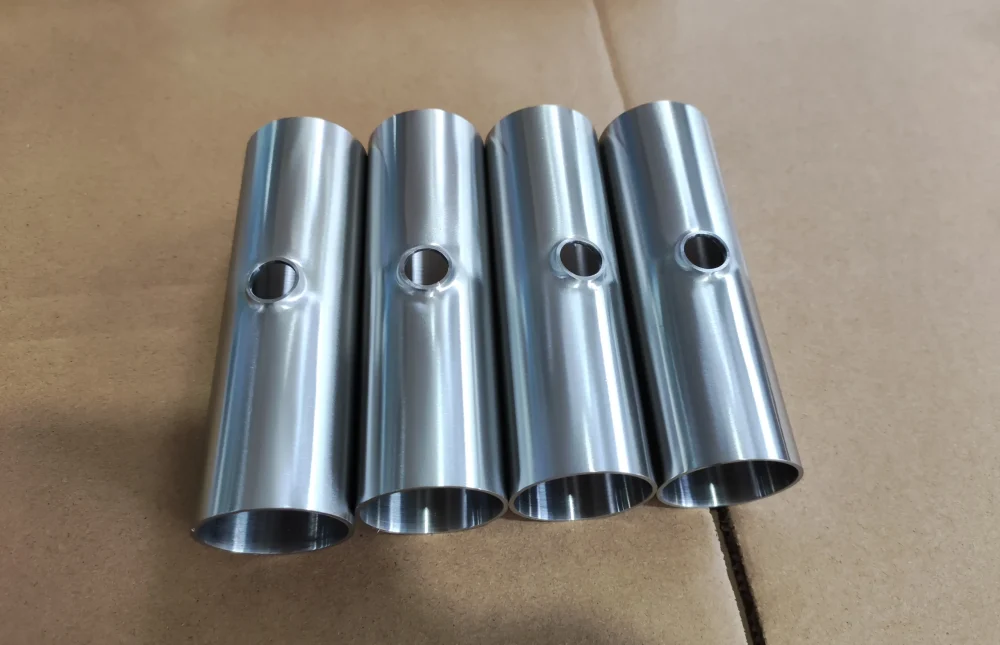
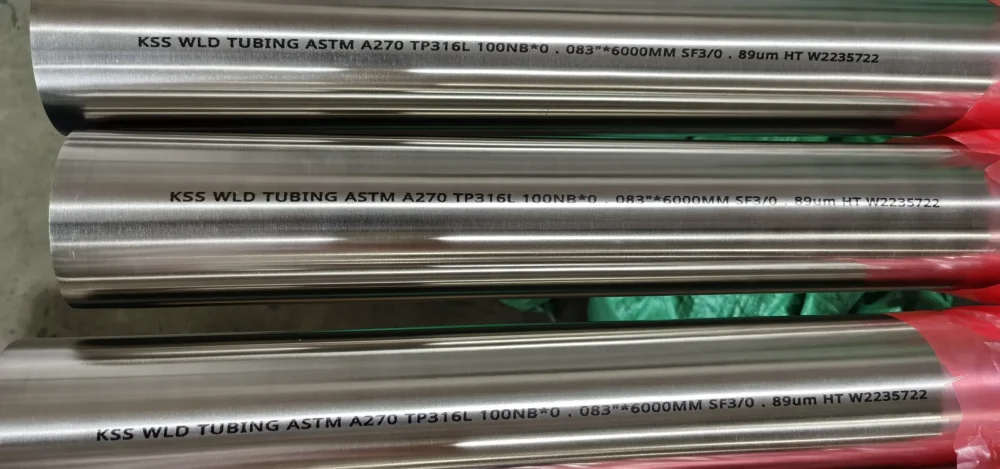
Sulfide Stress Cracking (SSC) represents a catastrophic failure mechanism for stainless steel components in “sour” environments.These environments contain hydrogen sulfide (H2S) and moisture,which frequently appear in oil and gas production.When SSC occurs,it causes sudden,brittle fracture without any visible warning.This phenomenon is particularly dangerous for critical infrastructure like stainless steel pipes, valves, fittings and flanges.
What Exactly is Sulfide Stress Cracking?
What We Do
- Plate
- Sheet
- Forgings
- Round Bar
- Flange
- Pipes
- Fittings
- Customized
Contact Us For More Information
Factors That Trigger Sulfide Stress Cracking
Three specific conditions must exist simultaneously for sulfide stress cracking to occur.If you remove any of these three, you eliminate the risk of cracking.
- Susceptible Material:
Not all metals are prone to SSC. High-hardness materials are generally much more vulnerable. - Tensile Stress:
This includes both applied operational pressure and residual stresses from welding or cold forming. - Sour Environment:
The presence of H2S is the defining catalyst. Factors like low pH (acidity) and specific temperatures (typically below 80°C / 176 ℉) accelerate the damage.
Impact on Piping Components and Fittings
In a complex piping network,certain areas are more prone to failure.Stainless steel pipe fittings,such as elbows and tees,often experience higher turbulence and stress concentrations.Flanges are also at risk due to the high bolt-load required for sealing.If the material exceeds a certain hardness threshold (typically 22 HRC),the risk of SSC increases exponentially.
Standards for Mitigation:NACE MR0175/ISO 15151
The industry relies on the NACE MR0175/ISO 15151 standard to manage Sulfide Stress Cracking.This standard provides strict guidelines on material selection for sour service.
| Material Type | Typical Grade | SSC Resistance Level | Hardness Limit (HRC) |
|---|---|---|---|
| Austenitic | 316L | High (in annealed state) | Not explicitly limited |
| Duplex | 2205 | Very High | ≤ 28 |
| Super Duplex | 2507 | Excellent | ≤ 32 |
| Martensitic | 410 | Low (Very Sensitive) | ≤ 22 |
How to Effectively Avoid Sulfide Stress Cracking
Rigorous Material Selection
Choose corrosion resistant alloys specifically designed for sour service.Austenitic stainless steels like 316L offer good resistance when properly annealed.For higher pressures,Duplex and Super Duplex Alloys provide the necessary strength and chemical stability.
Control Hardness Levels
Hardness is the most reliable predictor of SSC susceptibility.Ensure that all piping components undergo proper heat treatment.For example,solution annealing restores the microstructure and lowers hardness.This makes the pipes and fittings much more resilient to hydrogen penetration.
Manage Residual Stress
Welding introduces significant internal stress.Always perform Post-weld treatment where the standard requires it.Furthermore,avoid over-tightening flanges or using excessive force during pipe alignment.
Use Corrosion Inhibitors
| Strategy | Effectiveness | Initial Cost | Maintenance Need |
|---|---|---|---|
| Using Low-Carbon Grades | Moderate | Low | Low |
| Hardness Control (Annealing) | High | Moderate | Low |
| Selecting Super Duplex CRA | Very High | High | Very Low |
| Chemical Inhibition | Moderate | Low | High (Ongoing) |
The Relationship Between SCC and Sulfide Stress Cracking
Sulfide stress cracking is a unique sub-type of stress corrosion cracking.While standard SCC often involves anodic dissolution,SSC is driven by hydrogen cathodic charging.In simple terms,H2S acts as a “poison” that prevents hydrogen atoms from forming gas bubbles outside the metal.This forces the atoms to move inside the pipe wall.Therefore,while all SSC is a form of stress cracking,not all SCC involves the deadly presence of sulfides.
Contact Us
- RM901 No.22 Tangjiaqiao Road Wenzhou China
- +86 577 8551 1171
- [email protected]
- https://www.kaysuns.com/