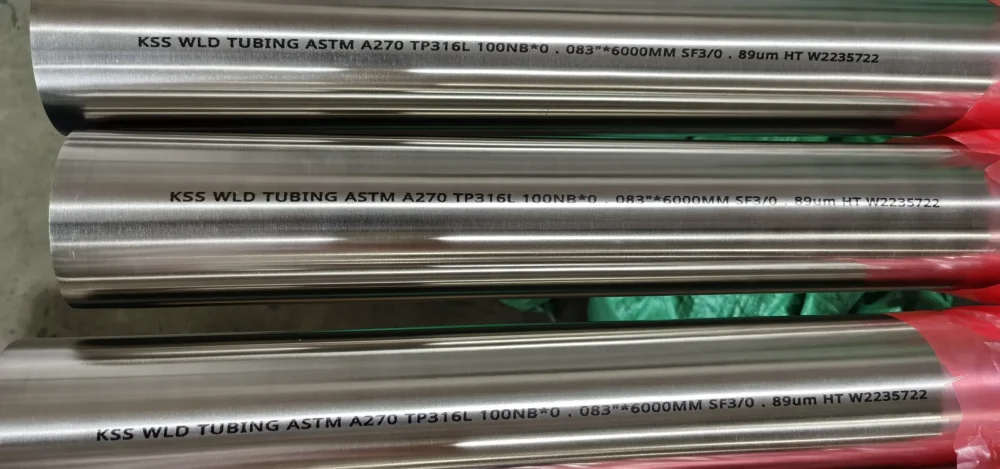
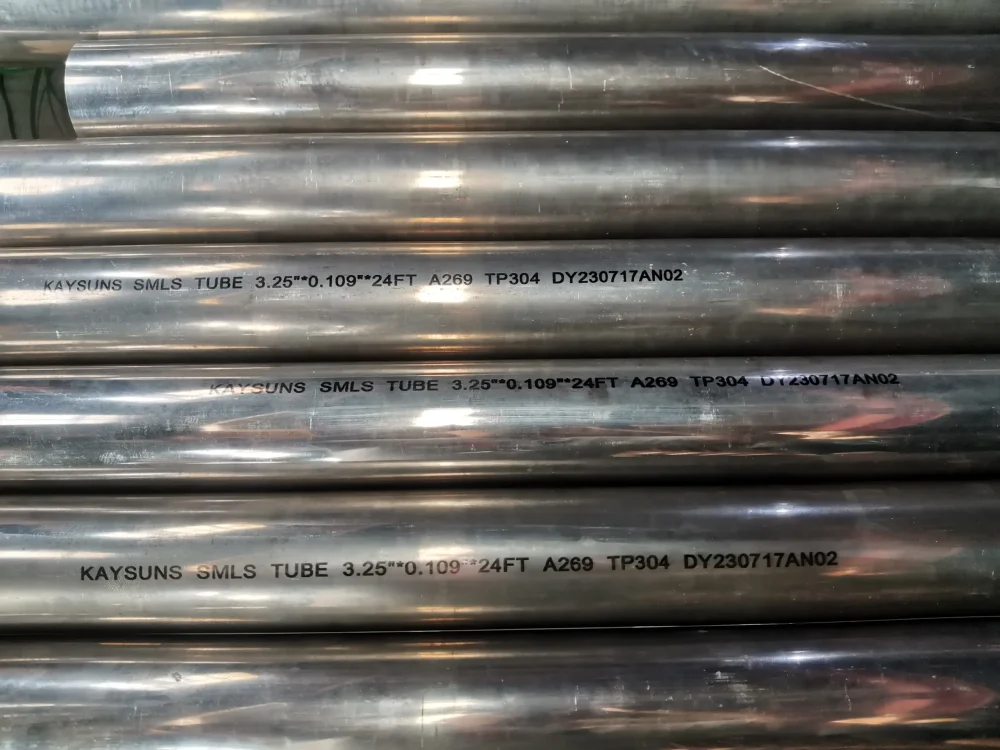
SCH 40 VS SCH 40S:At first glance,these two terms appear nearly identical.However,that single letter “S” carries significant implications regarding material standards and wall thickness dimensions.Selecting the wrong specification may lead to compatibility issues between stainless steel pipes,flanges,and valves.This guide will clarify the relationship between these specifications,helping you maintain a high-performance piping infrastructure.
SCH 40 VS SCH 40S:The "S" in Pipe Schedules
The “S” stands for “Stainless Steel” according to ASME B36.19 standards.Conversely,schedules without the “S” typically follow the ASME B36.10 standard,which covers carbon steel pipes.
Historically,engineers created the “S” schedules to save costs on expensive alloys.Since stainless steel offers superior corrosion resistance,it does not require the same “corrosion allowance” as carbon steel.Therefore,many “S” schedules feature thinner walls than their carbon steel counterparts.However,for schedule 40 specifically,the dimensions often overlap depending on the pipe size.
What We Do
- Plate
- Sheet
- Forgings
- Round Bar
- Flange
- Pipes
- Fittings
- Customized
Contact Us For More Information
SCH 40 VS SCH 40S:Dimensional Comparison
When comparing SCH 40 Pipe and SCH 40S Pipe,you must look at the nominal size (NPS).For many common sizes,the wall thickness for both schedules is exactly the same.For example,a 2-inch pipe has a wall thickness of 0.154 inches in both categories.
However,the dimensions begin to diverge as the pipe size increases.In larger diameters,SCH 40 (Carbon Steel) usually becomes thicker than SCH 40S (Stainless Steel).This distinction is vital when you are welding a flange joint.If the pipe wall is thinner than the flange hub,you will face alignment challenges during welding stainless steel procedures.
Wall Thickness Data Table (NPS 1/2 to 12)
| Nominal Pipe Size (NPS) | Outside Diameter (OD) | SCH 40 Wall Thickness | SCH 40S Wall Thickness |
|---|---|---|---|
| 1/2″ | 0.840″ | 0.109″ | |
| 2″ | 2.375″ | 0.154″ | |
| 8″ | 8.625″ | 0.322″ | |
| 10″ | 10.750″ | 0.365″ | 0.312″ |
| 12″ | 12.750″ | 0.406″ | 0.312″ |
Pressure Ratings and Material Strength
The wall thickness directly affects the pressure-bearing capacity of your system.Even if the dimensions match,a stainless steel pipe in SCH 40S might have a different pressure rating than a carbon steel pipe in SCH 40.
This difference occurs because stainless steel and carbon steel have different allowable stress values at various temperatures.For high-pressure steam or chemical transport,you must verify the specific grade,such as 304L or 316L.Thinner walls in larger SCH 40S sizes mean you must be careful with vacuum conditions or external pressure loads.Always cross-reference your stainless steel pipe fittings to ensure they match the schedule of the pipe.
Impact on Fittings, Flanges, and Valves
Your choice between SCH 40 and SCH 40S ripples through the entire hardware chain.If you order a SCH 40 flange for a 12-inch SCH 40S pipe,the internal diameters will not match.This creates a “lip” or “shoulder” inside the pipe.
This mismatch causes two major problems:
- Turbulence:The uneven surface disrupts fluid flow and causes erosion.
- Hygienic Issues:In food or pharma lines,the gap traps bacteria and prevents proper cleaning.
Therefore,when ordering SS pipe fittings,be sure to specify the “S” designation.Taking this step ensures smooth transitions throughout the system,thereby safeguarding the integrity of each flanged joint.
Application Summary
| Requirement | Preferred Schedule | Reason |
|---|---|---|
| High Corrosion Resistance | SCH 40S | Utilizes Stainless Steel alloys (304/316) |
| Weight Sensitive Projects | Thinner walls in large sizes reduce total weight | |
| Large Diameter Pressure | SCH 40 | Offers thicker walls in sizes above NPS 10 |
| General Structural Use | Standardized dimensions for carbon steel |
SCH 40 vs SCH 40S:Welding Challenges
Welding stainless steel on SCH 40S requires a different approach than welding carbon steel.Stainless steel retains heat longer and expands more rapidly.Since SCH 40S pipes can be thinner in larger sizes,the risk of “burn-through” increases.
Kaysuns technicians must use lower heat input and specialized shielding gases like Argon.Furthermore,the root pass must be perfect to maintain the passive layer inside the pipe.If you are joining a SCH 40S pipe to a SCH 40 component,you must use specialized transition pieces or buttering layers to manage the metallurgical and dimensional differences.
Contact Us
Get In Touch
- RM901 No.22 Tangjiaqiao Road Wenzhou China
- +86 577 8551 1171
- [email protected]
- https://www.kaysuns.com/
Find Us