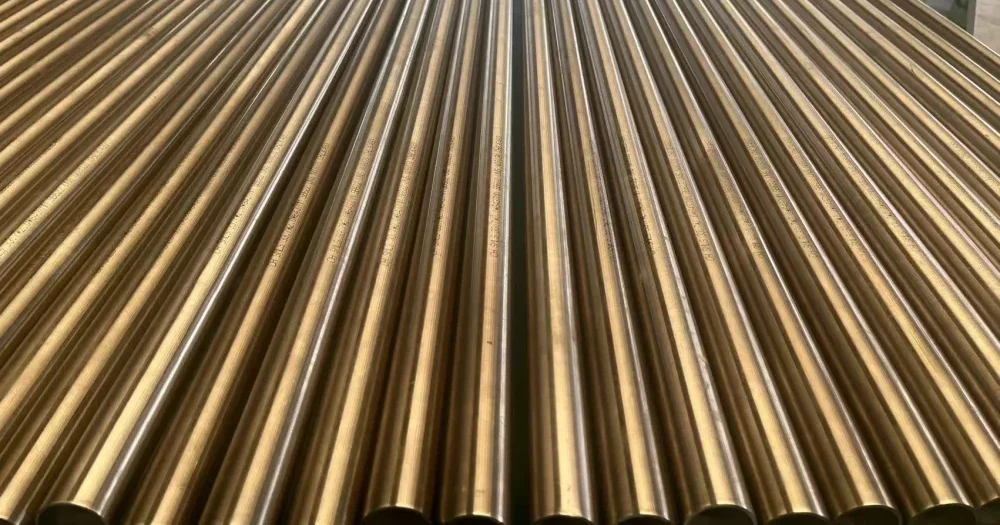
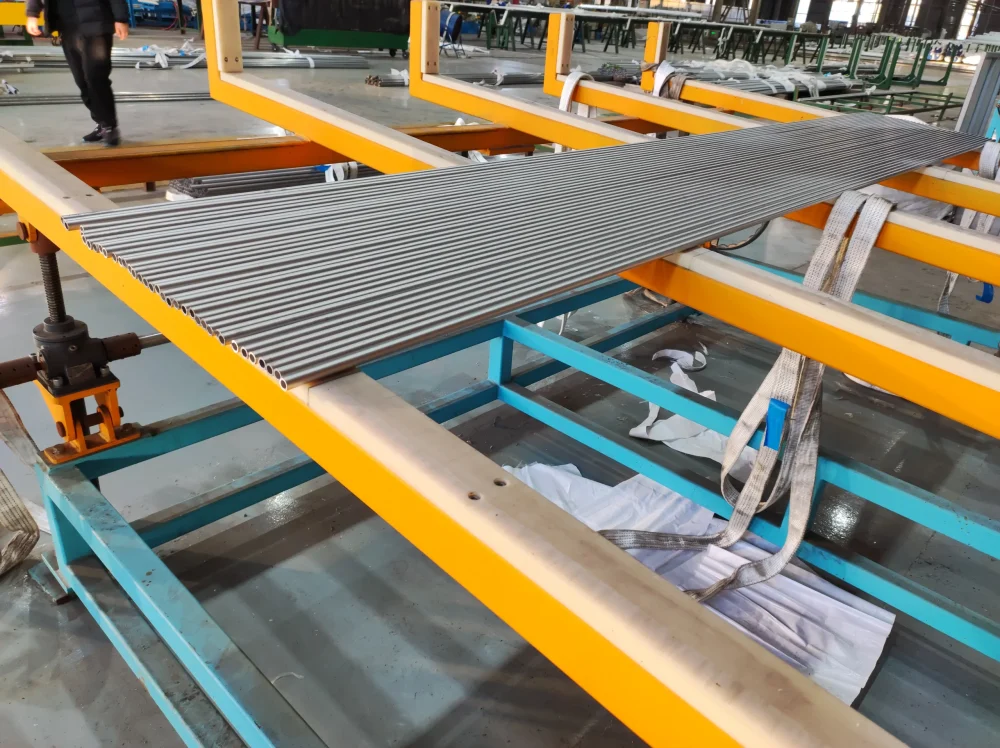
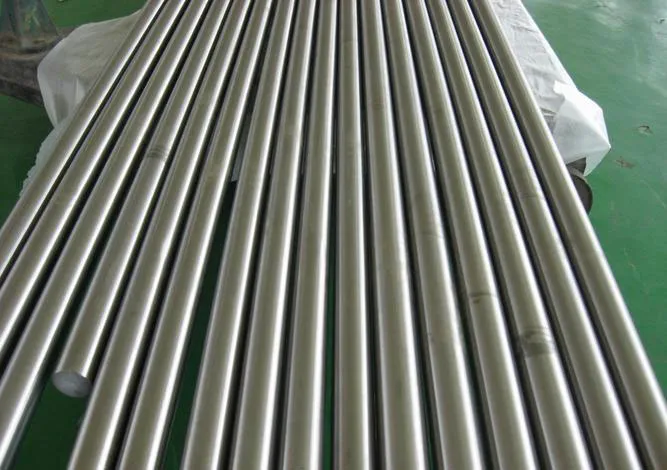
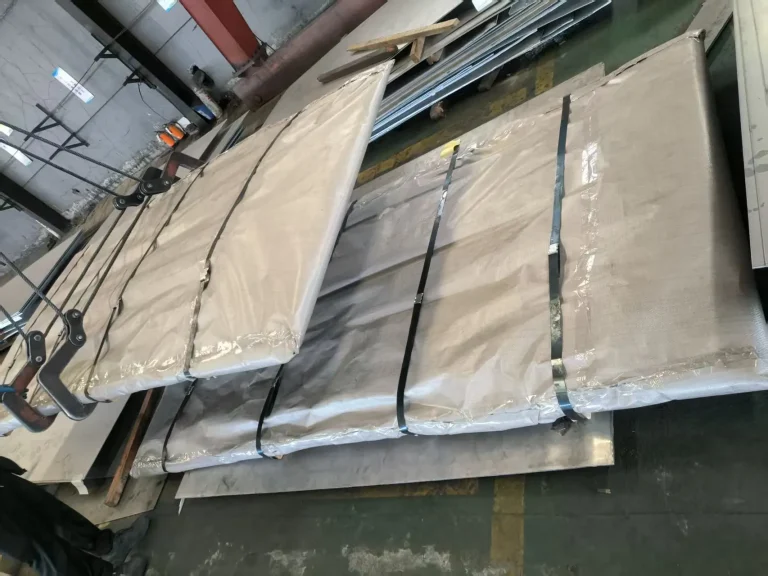
Haynes 188, placa
Core Technical Specifications
- Standard Specifications:
Commonly manufactured and supplied to meet AMS 5608 (for sheet, strip, and plate). - Composição química:
Primarily composed of 39% Cobalt,22% Nickel,22% Chromium,and 14% Tungsten,with a minor but crucial addition of 0.03% Lanthanum to form a highly protective surface scale. - Key Properties:
Superior creep resistance,excellent thermal fatigue cracking resistance,and high post-aging ductility.It also provides robust resistance to sulfate-deposit hot corrosion and molten chloride salts.
Applications of Haynes 188 Plate
- Combustor liners
- Flame holders
- Transition ducts
- Afterburner components
- Turbine shrouds
- Exhaust nozzles
- Fuel nozzles
- Furnace muffles
- Trocadores de calor
- Chemical reactors
- Rocket nozzles
- Silencer components
- Ducting systems
- Fixturing hardware
Chemical Composition of Haynes 188 Plate
| Co | Cr | Ni | C | Fe | Mn | Si | C | La | B | P | S |
|---|---|---|---|---|---|---|---|---|---|---|---|
| Equilíbrio | 20,0 – 24,0 | 20,0 – 24,0 | 13.0 – 16.0 | ≤ 3,0 | ≤ 1.25 | 0.20 – 0.50 | 0,05 – 0,15 | 0.02 – 0.12 | ≤ 0,015 | ≤ 0,02 | ≤ 0,015 |
Engineering Function of Key Elements
Acts as the matrix foundation,offering inherently superior thermal stability and melting point characteristics compared to iron or nickel bases.
Work in tandem to provide outstanding oxidation and sulfidation resistance.Chromium forms a tightly adhering chromia scale,while silicon enhances scale protection at high temperatures.
Stabilizes the face-centered cubic (FCC) austenitic crystal structure,optimizing post-aging ductility and improving the material’s general fabricability and weldability.
Functions as a massive solid-solution strengthener.Its large atomic radius distorts the cobalt matrix,severely hindering dislocations and maximizing high-temperature creep resistance.
Chemically modifies the protective oxide scale.By securing the chromium oxide firmly to the metal substrate,it prevents the scale from spalling (peeling off) during severe cyclic thermal shock.
Intentionally paired with elements to precipitate M6C and M23C6 carbides,which lock grain boundaries and elevate high-temperature structural integrity.
Metallurgical & Fabricability Context
- Phase Stability:
The precise balance of Nickel and Carbon avoids the formation of brittle intermetallic phases (like the A2B Laves phase) after thousands of hours of high-temperature service.This prevents mid-temperature embrittlement. - Reabilitação por esforço:
Because of the solid-solution strengthening from Tungsten,Haynes 188 plate work-hardens exceptionally fast during cold forming. - Heat Treatment Requirements:
To restore ductility during deep draws or complex forming, components must be solution annealed at 2150°F (1175°C) followed by rapid air cooling or water quenching.
Haynes 188 Standards & Equivalent Designations
| Haynes 188 Alloy | |||||
|---|---|---|---|---|---|
| Padrão / Sistema | Designação Equivalente | Formulário do produto | ASTM | ASME | SAE AMS |
| Número UNS | UNS R30188 | Plates, Sheets & Strips | ASTM B435 | ASME SB435 | AMS 5608 / 5609 |
| DIN / Material alemão | W.Nr. 2.4683 | Bars, Rods, Wires & Shapes | ASTM B572 | ASME SB572 | AMS 5772 / 5796 |
| PT Nome químico | CoCr22Ni22W14 | Seamless Pipes & Tubes | ASTM B622 | ASME SB622 | – |
| JIS | – | Welded Pipes & Tubes | ASTM B619 / B626 | ASME SB619 / SB626 | – |
| BS | – | Forgings & Flanges / Fittings | ASTM B564 | ASME SB564 | AMS 5772 |
| AFNOR | K13C20N22W14Aa | ||||
| Generic Trade Name | Haynes 188, Alloy 188 | ||||
Tem um requisito?
Entre em contato conosco para obter mais informações
Mechanical Properties of Haynes 188 Plate
Propriedades mecânicas típicas
| Temperatura | Resistência à tracção | Força de rendimento | Alongamento |
|---|---|---|---|
| 75℉ (24℃) | 946 MPa (137,200 psi) | 464 MPa (67,300 psi) | 53% |
| 1000℉ (540℃) | 772 MPa (112,000 psi) | 283 MPa (41,100 psi) | 58% |
| 1400℉ (760℃) | 610 MPa (88,500 psi) | 274 MPa (39,800 psi) | 65% |
| 1600℉ (870℃) | 380 MPa (55,100 psi) | 248 MPa (36,000 psi) | 71% |
| 1800℉ (980℃) | 204 MPa (29,600 psi) | 127 MPa (18,400 psi) | 77% |
| 2000℉ (1095℃) | 99 MPa (14,300 psi) | 56 MPa (8,100 psi) | 60% |
Crucial High-Temperature Behaviors
Resistência à fluência e à ruptura por tensão
Creep is the tendency of a solid material to move slowly or deform permanently under the influence of persistent mechanical stresses. Haynes 188 excels here due to solid-solution strengthening from tungsten:
- At 1500℉(815℃):A stress of approximately 12,000 psi (83MPa) is required to cause rupture in 1,000 hours.
- At 1800℉(980℃):Even at this extreme temperature, the material can withstand 2,800 psi (19 MPa) for 1,000 hours before rupture.
Post-Aging Ductility (The Alloy's Greatest Asset)
Many high-temperature superalloys become extremely brittle after exposure to service temperatures (1200℉ – 1600℉) due to the precipitation of deleterious phases.
- Haynes 188 is uniquely engineered to resist this.
- After exposure to 1400℉(760℃) for 8,000 continuous hours,it still retains a room-temperature elongation of over 10% to 15%.This ensures the plate components can withstand maintenance handling and operational shocks without catastrophic fracturing.
Resistência à fadiga térmica
Hardness and Physical Properties Linked to Mechanics
- Hardness: Typical room-temperature hardness for a fully solution-annealed Haynes 188 plate falls in the range of 95 to 100 HRB or roughly 210 HV.
- Modulus of Elasticity:
The Young’s Modulus measures the stiffness of the material.It drops predictably as temperature rises,which helps alleviate localized thermal stresses:
At 75℉:33.6 × 10⁶ psi (232 GPa)
At 1600℉:24.2 × 10⁶ psi (167 GPa)
How Fabrication Impacts Mechanical Properties
- Cold Working:
Haynes 188 work-hardens very rapidly.Cold forming can drive the hardness up significantly while drastically reducing ductility.Intermediate annealing is mandatory if the plate undergoes severe forming. - Recozimento de solução:
To fully restore the nominal mechanical properties listed above,the plate must be heat treated at 2150℉(1175℃),followed by rapid air cooling or water quenching to prevent carbide precipitation along grain boundaries.
Our Advantages in Manufacturing Haynes 188 Plate
Vacuum Induction Melting
Precision Gauge Rolling
Homogeneous Microstructure Control
Rigorous Thermal Testing
FAQs About Haynes 188 Plate
Lanthanum is a rare-earth trace element added specifically to modify and stabilize the protective chromium oxide scale.It acts as a metallurgical “glue” that prevents the oxide scale from spalling when the plate undergoes rapid heating and cooling cycles.
Yes,easily.It possesses excellent weldability using conventional methods such as TIG,MIG,and Electron Beam welding.For optimum high-temperature strength,matching chemistry filler wires like Haynes 188 welding wire must be used.Oxyacetylene welding is not recommended as it introduces carbon contamination.
Generally,no.Haynes 188 is typically put into service in the as-welded condition because it retains high ductiluty near the heat-affected zone.However,if the component undergoes severe cold forming prior to welding,a full solution anneal may be required to relieve residual manufacturing stresses.
It is a staple material in aerospace engineering,commercial gas turbine manufacturing,and land-based power generation.Common components machined or formed from this plate include burner liners,flame holders,transition ducts,exhaust nozzles,and afterburner assemblies.
It can be cold-formed,but it work-hardens exceptionally fast due to the solid-solution strengthening effect of tungsten.Fabricators must account for high springback and utilize high-powered tooling.For deep draws or complex shapes,intermediate annealing is mandatory.
Contate-nos
- RM901 No.22 Tangjiaqiao Road Wenzhou China
- +86 577 8551 1171
- [email protected]
- https://www.kaysuns.com/