Pular para o conteúdo
Início » Electropolished Pipe Supplier in China

Electropolished Pipe Supplier in China

    What is An Electropolished Pipe
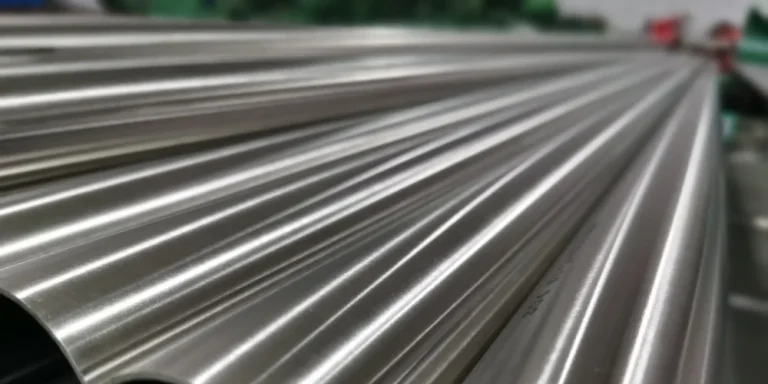
    An electropolished pipe is a high-purity metal pipe that has undergone an electrochemical process to achieve an ultra-smooth,mirror-like finish.Unlike mechanical polishing,which uses abrasives to sand down the surface,electropolishing is a non-mechanical “reverse plating” process that removes material at the ion level.
    Tubo de aço inoxidável 316L is the preferred choice for biopharmaceutical and semiconductor applications due to its low carbon content and exceptional corrosion resistance.For environments with less stringent hygiene requirements,Tubo de aço inoxidável 304L offers a cost-effective alternative while maintaining good polishability.In high-performance systems,specialty grades such as 904L or Hastelloy C22 are used to prevent pitting corrosion.These materials comply with ASTM A270 or ASME BPE standards,ensuring contamination-free conditions in critical fluid handling environments.
    High-Quality Electropolished Pipe in Stock

    Common Grades of Electropolished Pipe

    Common Grades and Their Chemical Composition

    Here are the common grades of electropolished (EP) stainless steel pipes and their typical chemical compositions based on ASTM A270 and ASME BPE standards.
    GrauCrNiMoCMnOutros elementos
    316L16.0 - 18.010.0 - 14.02,0 – 3,0≤ 0.030≤ 2.0S: 0.005–0.017
    304L18.0 - 20.08.0 - 12.0≤ 0.030≤ 2.0Si: ≤ 0.75
    904L19.0 - 23.023.0 – 28.04.0 – 5.0≤ 0.020≤ 2.0Cu: 1.0–2.0
    Duplex 220522.0 – 23.04.5 – 6.53.0 – 3.5≤ 0.030≤ 2.0N: 0.14–0.22
    Hastelloy C2220.0 - 22.5Equilíbrio12.5 - 14.5≤ 0,015≤ 0.50W: 2.5–3.5; Fe: 2.0–6.0

    Why is 316L The "Industry Standard" Grade For Electropolishing?

    It offers the best balance of weldability and chemical stability.The “L” (low carbon) prevents sensitization during welding,while the 2-3% Molybdenum content provides superior resistance to pitting.When electropolished,316L creates a more robust and uniform chromium-rich passive layer compared to standard 304 stainless steel.

    Can 304L Achieve The Same Mirror Finish As 316L?

    Sim.Visually,304L and 316L are indistinguishable after electropolishing.However,304L lacks Molybdenum,meaning it will not perform as well in environments exposed to chlorides or aggressive cleaning agents.It is typically reserved for food,dairy,and cosmetic applications where extreme corrosion resistance is less critical.

    When Should I Choose Specialty Grades Like Hastelloy C22 or 904L?

    904L is used for high-concentration sulfuric acid services.
    Hastelloy C22 is used in semiconductor gas delivery or chemical processing involving highly aggressive media where even 316L might fail.These alloys require specialized electrolyte baths to achieve a proper EP finish.

    Common Grades and Their Mechanical Properties

    While electropolishing primarily enhances surface chemistry and smoothness,the mechanical properties of the pipe remain defined by its base alloy grade.These properties are critical for determining the pressure ratings,structural integrity,and fabrication limits of your system.
    The table below summarizes the typical mechanical properties of the most common EP steel pipe grades in the annealed condition,based on the ASTM A240/A269/B622 standards.
    GrauResistência à tracçãoForça de rendimentoAlongamentoDurezaElastic Modulus
    316L≥ 485 MPa (70 ksi)≥ 170 MPa (25 ksi)≥ 40%≤ 90 HRB193 GPa
    304L≥ 485 MPa (70 ksi)≥ 170 MPa (25 ksi)≥ 40%≤ 90 HRB193 GPa
    904L≥ 490 MPa (71 ksi)≥ 220 MPa (25 ksi)≥ 35%≤ 90 HRB190 GPa
    Duplex 2205≥ 655 MPa (95 ksi)≥ 450 MPa (65 ksi)≥ 25%≤ 31 HRC200 GPa
    Hastelloy C22≥ 690 MPa (100 ksi)≥ 310 MPa (45 ksi)≥ 45%≤ 100 HRB206 GPa

    Does The Electropolishing Process Weaken The Pipe Wall?

    Technically,electropolishing removes a very thin layer of metal (typically 10 to 30 microns or 0.0004″ to 0.0012″).While this technically reduces the wall thickness slightly,it is almost always within the standard manufacturing tolerances of the pipe For standard pressure ratings,this material removal is considered negligible.

    Can Electropolishing Improve The Fatigue Life of These Pipes?

    Sim.Mechanical polishing creates micro-scratches and introduces “tensile stress” on the surface,which can act as starting points for cracks.Electropolishing is a stress-free process that removes these surface defects and micro-cracks,effectively improving the fatigue resistance and structural longevity of the pipe.

    Does Electropolishing Affect The "Hardness" of The Pipe?

    Electropolishing does not change the bulk hardness of the pipe.However,it removes the “work-hardened” surface layer created during the tube-drawing or mechanical polishing process.This results in a surface that is more representative of the material’s natural annealed state,which can be beneficial for certain sealing interfaces.

    Tem um requisito?

    Kaysuns is a professional supplier of electropolished pipes. Please feel free to contact me if you have any requirements.

    Entre em contato conosco para obter mais informações 

    4 Main Steps for Manufacturing A Electropolished Pipe

    Material Selection and Pre-Cleaning

    The process begins with high-quality stainless steel, typically 316L or 304L,that meets ASTM A270 or ASME BPE standards.Before any polishing occurs,the pipe must undergo rigorous degreasing to remove all manufacturing lubricants,oils,and residues.
    This step is critical because any organic contaminants left on the surface will interfere with the electrical conductivity during the EP process,leading to uneven finishes or “black spots.”

    Mechanical Pre-Polishing

    Because electropolishing only removes a very thin layer of metal, the pipe’s internal surface is often mechanically polished first to achieve a baseline roughness.Rotating abrasive heads or honing tools are used to smooth out major pits and drawing marks until the internal roughness reach a specific level,such as Ra ≤ 0.5–0.8 μm.This ensures that the subsequent electrochemical step can successfully achieve the final mirror-like finish required for high-purity applications.

    Electrochemical Polishing

    This is the core stage where the pipe is submerged in or filled with a specialized electrolyte bath,usually a mixture of phosphoric and sulfuric acids.The pipe acts as the anode,while a cathode rod is centered inside it.When a high DC current is applied,the “peaks” of the surface profile dissolve faster than the “valleys” at an ionic level.This process simultaneously levels the surface to a microscopic smoothness and enriches the surface with chromium,creating a superior passive oxide layer.

    Final Passivation & Ultra-Pure Cleaning

    Immediately following electropolishing,the pipe is rinsed with a nitric acid solution to remove residual electrolytes and further strengthen the passive film.The final step takes place in a cleanroom environment,where the pipe is flushed with 18MΩ deionized (DI) water to eliminate all microscopic particles and chemical traces.Once cleaned,the pipe is dried with high-purity nitrogen,capped at both ends,and double-bagged to maintain its purity during transit.

    Applications of Electropolished Pipe

    FAQs About Electropolished Pipe

    Bacteria thrive in “micro-crevices” found on mechanically polished surfaces.Electropolishing eliminates these microscopic hiding places by leveling the surface at the ionic level.This makes CIP and SIP procedures significantly more effective,as there are no valleys for biofilms to attach to.

    You can weld it using Automatic Orbital Welding with high-purity Argon shielding gas.However,the heat-affected zone near the weld will lose its electropolished properties and specific chromium enrichment.In critical applications,the weld area is often chemically passivated after welding to restore corrosion resistance.

    To maintain their “Ultra-High Purity” (UHP) status,EP pipes should remain capped,nitrogen-purged,and double-bagged until the moment of installation.Exposure to ambient air can lead to surface contamination by moisture or airborne particles,requiring a re-cleaning process.
    All of Kaysuns’ EP stainless steel pipes are stored in accordance with the above requirements.

    It is the ratio of Chromium to Iron on the pipe’s surface.Electropolishing dissolves Iron faster than Chromium,leaving a surface rich in Chromium oxide.A ratio of 1.5 or higher is typically required for high-purity applications,as this indicates a robust passive layer that is highly resistant to rust and chemical attack.

    Kaysuns offers EP pipes in grades including,but not limited to,the 316L, 304L, 904L, 2205 and Hastelloy C22 mentioned above.If you require EP pipes in other materials,please feel free to entre em contato conosco at any time.Our product range includes:

    • Seamless Pipes: 1/2” – 24” / 6 mm to 610 mm
    • Welded Pipes: 6” – 104” / 159 mm to 2800 mm

    In addition to steel pipes, we also supply plates,forgings,flanges,ingots,and various fasteners (bolts,nuts,flat washers,spring washers).Customized non-standard products are available.Some products can be supplied in small batches.

    Contate-nos

    Entre em contato
    Encontre-nos
    logotipo de Kaysuns

    Bem-vindo ao nosso contato

    Fornecimento de
    Material de tubulação inoxidável e de liga

    • Precisa de uma oferta?
    • Deseja saber a dimensão / catálogo?
    • Falar sobre os problemas técnicos?

    Sinta-se à vontade para entrar em contato conosco e teremos o maior prazer em responder a todas as suas perguntas.

    Obtenha uma cotação gratuita agora

    small_c_popup.png

    Obtenha um orçamento gratuito agora

    Deseja saber mais? Entre em contato conosco

    Responderemos dentro de 24 horas. Obrigado!