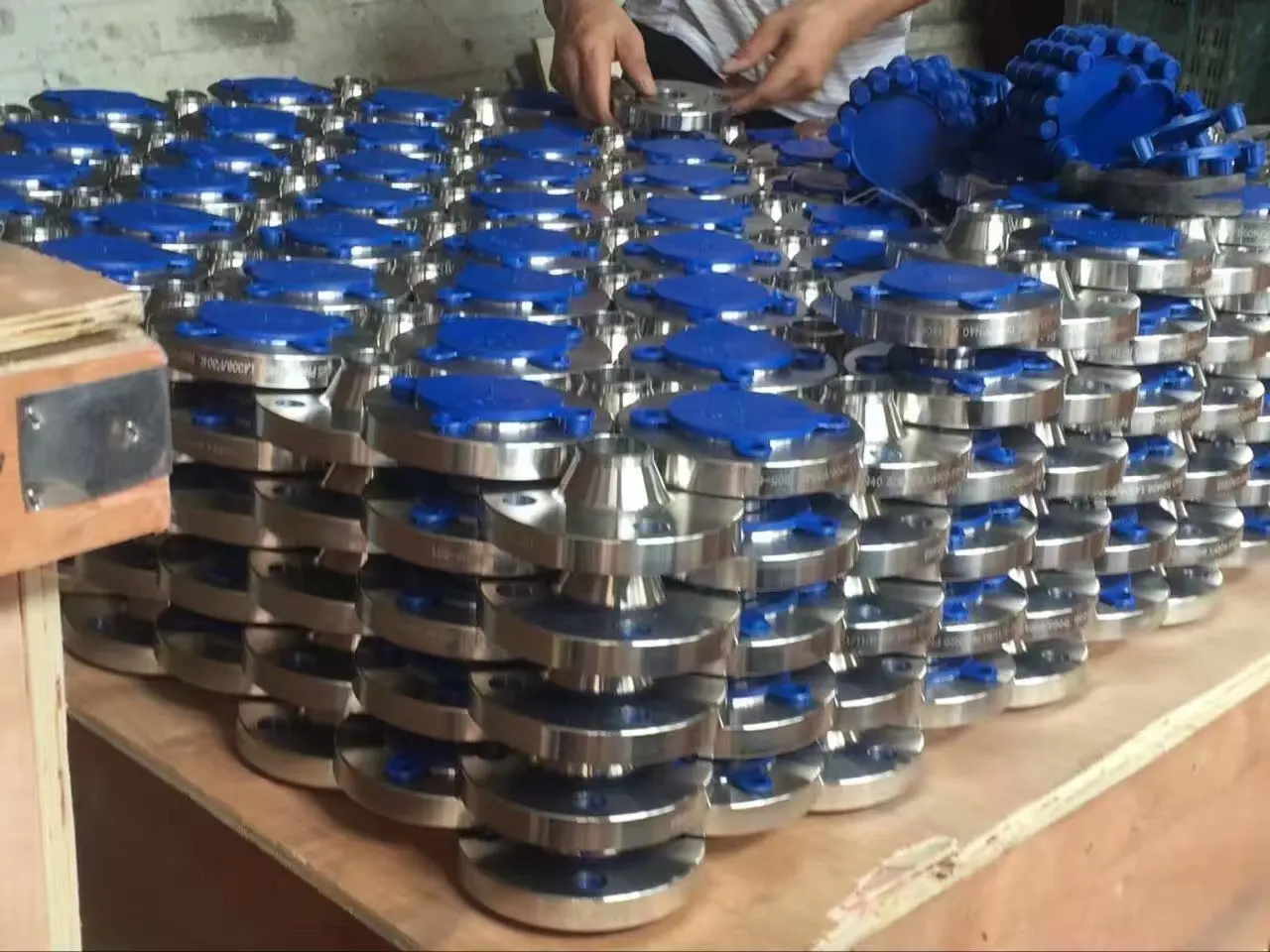
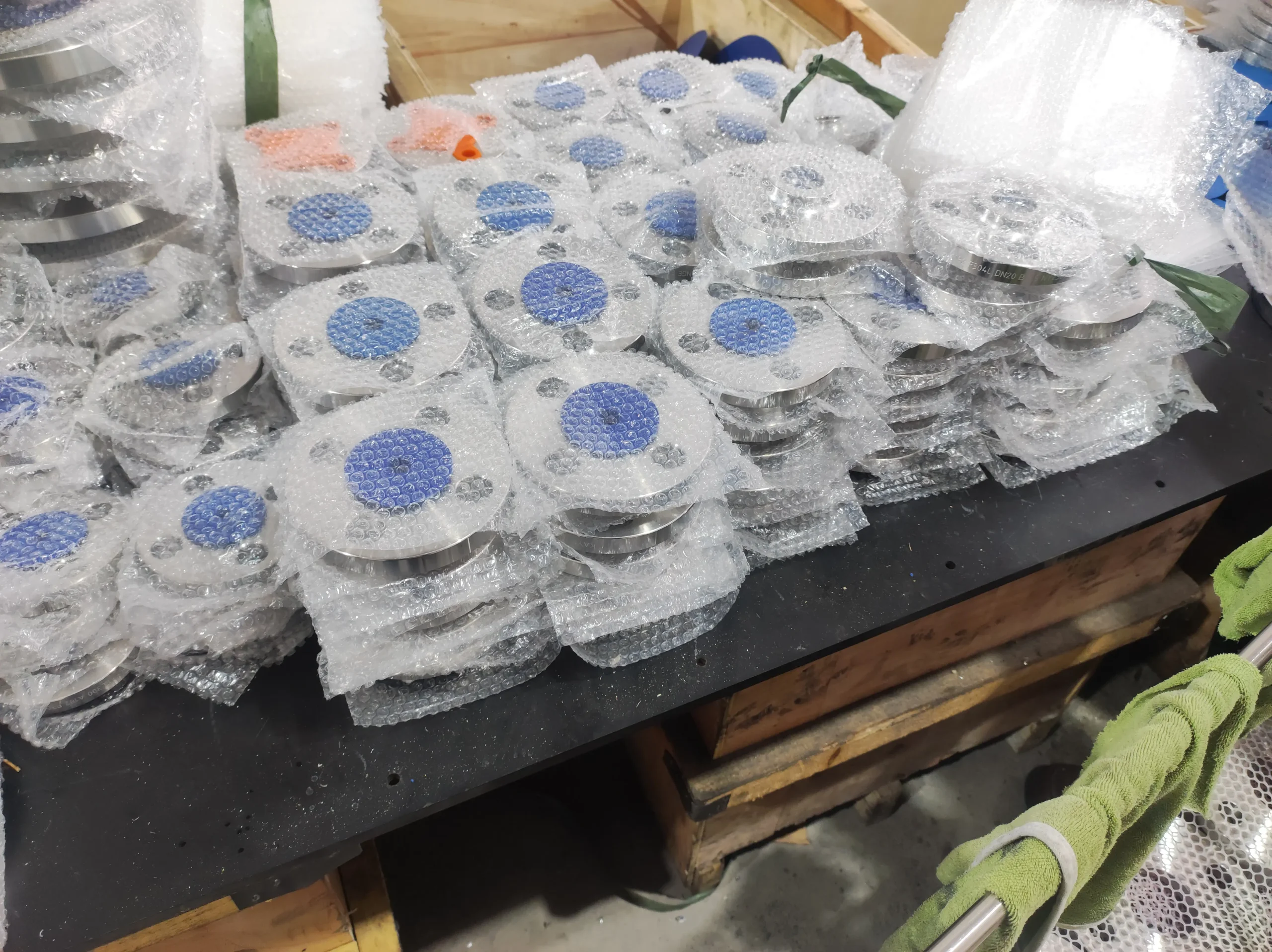
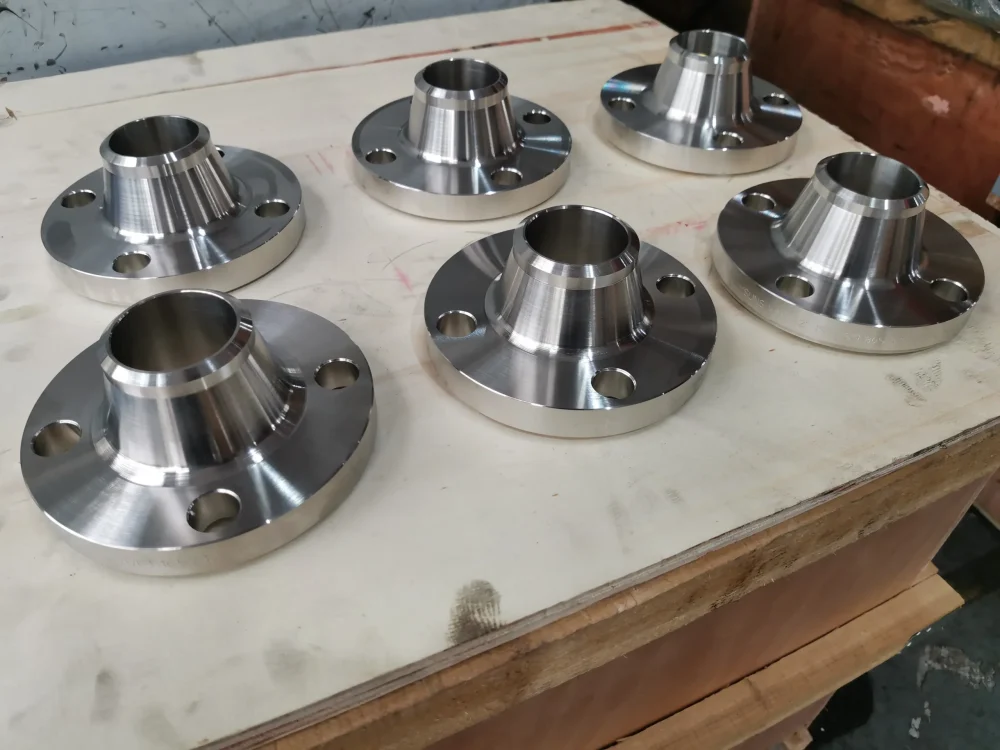
Alloy 20 Flanges Wholesaler
Core Advantages in Piping Systems
- Sem tratamento térmico pós-soldagem:
The addition of Niobium stabilizes the alloy,preventing carbide precipitation during the welding process. Flanges can be safely welded onto pipes in the field without losing corrosion resistance. - Chloride Stress Crack Immunity:
Standard 316 stainless steel flanges often fail when exposed to chlorides due to stress cracking.Alloy 20’s high nickel matrix protects the flange face from this risk. - Cost Efficiency:
They fill a vital economic gap,providing near-identical chemical resistance to premium metals like Hastelloy in sulfuric environments,but at a significantly lower cost.
Manufacturing Standards
| Parâmetro | Padrão | Details |
|---|---|---|
| Especificação do material | ASTM B462 ASME SB462 | For forged or rolled nickel alloy pipe flanges & fittings. |
| Alternative Material | ASTM B463 | Utilized when flanges are machined directly from heavy plates. |
| Dimensions & Sizes | ASME B16.5 | Standardizes sizes ranging from 1/2″ to 24″ nominal bore. |
| Large Dimensões | ASME B16.47 | Standardizes large diameter flanges ranging from 26″ up to 48″ |
Nossa capacidade
- It is about 400 tons/month for every type flanges.We produce and supply the flanges from Class 150 to Class 2500,stainless steel and duplex steel flange are our strength.
- Rate: 150 LBS, 300 LBS, 600 LBS, 900 LBS, 1500 LBS, 2500LBS
- Dimension: 1/2” to 72” (DN15 ~DN1800)
Alloy 20 Equivalent Designations
| Padrões | UNS | W.Nr. | PT | AFNOR | GB/T |
|---|---|---|---|---|---|
| Liga 20 | N08020 | 2.4660 | NiCr20CuMo | Z2NCUD31-20AZ | NS143 |
Tem um requisito?
Entre em contato conosco para obter mais informações
Chemical Composition of Alloy 20 Flanges, wt.%
| Elemento | Fe | Ni | Cr | Cu | Mo | Mn | Si | Nb + Ta | C | P | S |
|---|---|---|---|---|---|---|---|---|---|---|---|
| Liga 20 | Equilíbrio | 32.0 - 38.0 | 19,0 – 21,0 | 3,0 – 4,0 | 2,0 – 3,0 | ≤ 2.0 | ≤ 1.0 | 8 × C – 1.0 | ≤ 0.07 | ≤ 0.045 | ≤ 0.035 |
Functional Roles of the Core Elements
- Nickel & Iron:
The high nickel concentration provides nearly complete immunity to chloride-induced SCC.This makes it vastly superior to standard 316/316L stainless steel flanges in hot chloride environments. - Chromium & Molybdenum:
This combination forms a robust,self-healing passive oxide surface layer.It provides deep protection against pitting and crevice corrosion when exposed to localized reducing acids or sour industrial solutions. - Cobre:
This is the hallmark addition to Alloy 20.Copper specifically targets and drastically retards the rate of material decomposition when dealing with dilute or highly concentrated sulfuric acid. - Niobium Stabilization:
By binding with free carbon atoms,niobium prevents chromium carbides from forming along grain boundaries during welding.This preserves the flange’s metallurgical structure and prevents intergranular corrosion next to the weld seam.
Mechanical Properties of Alloy 20 Flanges
| Propriedade mecânica | Resistência à tracção | Força de rendimento | Alongamento | Dureza |
|---|---|---|---|---|
| Liga 20 | ≥ 551 MPa(80 ksi) | ≥ 241 MPa(35 ksi) | ≥ 30% | ≤ 217 HBW(95 HRB) |
Temperature Limits and ASME Boiler Code Factors
- Maximum Service Temperature:
Under ASME Section VIII,Division 1,the maximum temperature limit for Alloy 20 components is 538°C (1000°F). - Elevated Temperature Behavior:
Above 427°C (800°F),the allowable design stress drops significantly due to the risk of microstructural phase changes over long-term exposure.
Key Mechanical Performance Characteristics
- Alta ductilidade:
A minimum elongation of 30% ensures that Alloy 20 flanges can withstand dynamic thermal expansion,physical pipe vibrations,and high bolt-tightening loads without cracking. - No Hardenability by Heat Treatment:
Like other austenitic alloys,Alloy 20 cannot be hardened through standard thermal processes.Mechanical strength can only be increased via cold-working,though flanges are typically supplied in the fully solution-annealed condition to optimize corrosion resistance. - Resistência ao impacto:
It exhibits excellent cryogenic toughness and does not experience a sharp ductile-to-brittle transition temperature like carbon steel.
Applications of Alloy 20 Flanges
- Sulfuric Acid Production & Processing
- Chemical Mixing Tanks & Reactors
- Pharmaceutical & Bio-Tech Processing
- Food, Beverage, & Dye Industries
- Petrochemical Refining & Distillation
- Plastics & Synthetic Rubber Manufacturing
- Fertilizer & Agricultural Chemical Production
- Metal Pickling & Acid Cleaning Lines
- Dessulfurização de gás de combustão
- Offshore Oil & Gas Infrastructure
Our Core Capabilities in Manufacturing Alloy 20 Flanges
Precision Forging & Solution Annealing
- Controlled Heating:
Forging must occur within a tight window of 1150°C to 1200°C (2100°F to 2200°F).Forging below 980°C (1800°F) can cause material tearing. - Thermal Treatment:
Post-forging requires mandatory solution annealing at 980°C to 1100°C (1800°F to 2010°F) followed by a rapid water quench. - Grain Integrity:
This precise thermal cycle recrystallizes the grain matrix,eliminates internal mechanical stresses,and dissolves any trace chromium carbides.
High-Stability CNC Machining
- Work-Hardening Management:
Alloy 20 work-hardens rapidly during machining.Advanced CNC setups utilize rigid,high-torque machines with positive rake angles to cut beneath the work-hardened surface layer. - Tooling Optimization:
Machining relies on specialized tungsten carbide tooling and heavy,constant feed rates to prevent tool rubbing or glazing. - Precision Facing:
CNC programming ensures exact gasket seating finishes (such as a 125–250 AARH serrated finish) to guarantee leak-free piping joints.
Comprehensive NDT
- PMI:
XRF testing to verify that the Nickel and Copper chemical weight percentages match ASTM B462. - Intergranular Corrosion Testing:
Conducting ASTM A262 Practice A or E tests to prove the Niobium stabilization successfully prevented intergranular attack. - Defect Detection:
Utilizing LPT on machined faces and UT on high-pressure forged hubs to ensure zero internal voids or cracks.
Custom Engineering & Standard
- Global Standard Manufacturing:
Machining standard configurations ranging from 1/2″ to 24″ and large diameters up to 48″ across all pressure classes. - Bespoke Engineering:
Designing custom-tailored dimensions,unique face profiles,or heavier wall thicknesses for highly specific chemical reactor systems. - Traceability Integration:
Ensuring full material traceability by hard-stamping heat numbers directly onto the flange rim,completely backed by MTC matching EN 10204 3.1.
FAQs About Alloy 20 Flanges
Gaskets must match or exceed the chemical resistance of the flange. Common choices include:
PTFE / Teflon:Excellent for lower temperature and pressure acid lines.
Filled PTFE:Provides better resistance to cold flow and creep.
Spiral Wound Gaskets with Alloy 20 winding and PTFE filler:Required for high-pressure,high-temperature ASME Class 300 or Class 600 applications.
Cost efficiency.While exotic nickel alloys like Hastelloy C276 offer broader chemical resistance,they are significantly more expensive.Alloy 20 provides targeted,top-tier performance in sulfuric acid environments at a fraction of the cost of high-nickel superalloys.
Sim.Alloy 20 flanges can be welded to 316L stainless steel using an over-alloyed filler metal such as Alloy 22 (ERNiCrMo-10) or ER320LR.This prevents dilution of the corrosion-resistant elements at the weld joint.However,the entire system’s chemical resistance will be limited by the lower-grade 316L pipe.
Não.Alloy 20 is stabilized with Niobium.This element binds with carbon during welding to prevent chromium carbide precipitation.Because the weld zone retains its intergranular corrosion resistance naturally,post-weld annealing is not required.
Contate-nos
- RM901 No.22 Tangjiaqiao Road Wenzhou China
- +86 577 8551 1171
- [email protected]
- https://www.kaysuns.com/