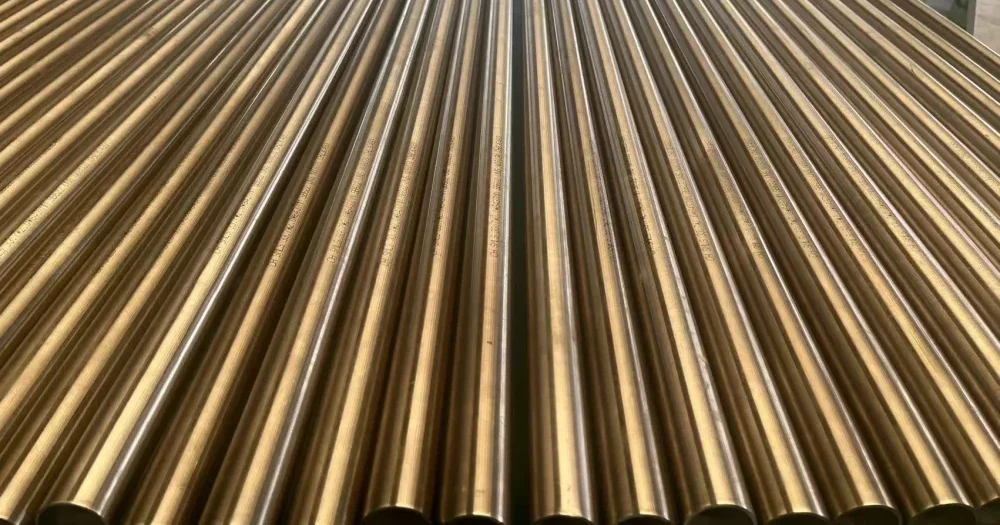
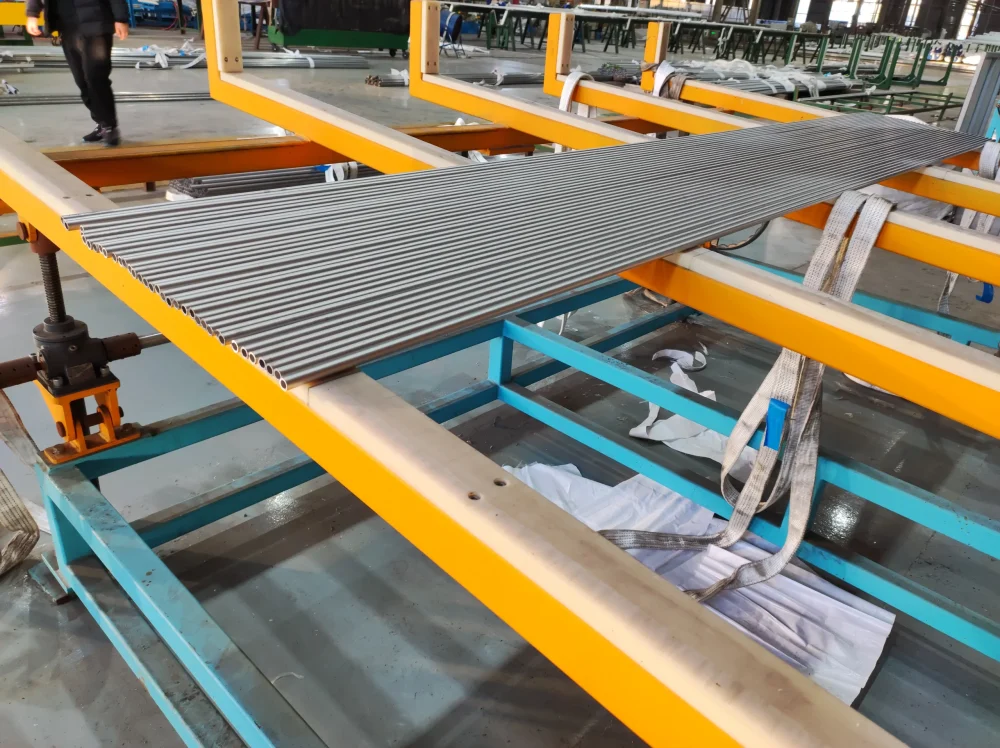
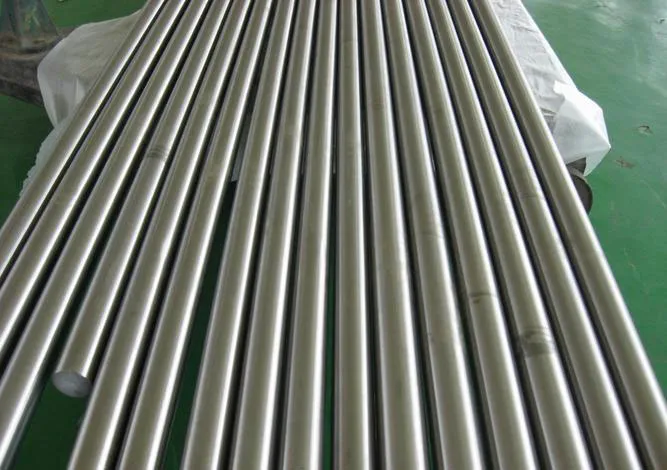
Haynes 188, planche
Caractéristiques techniques principales
- Caractéristiques techniques standard :
Généralement fabriqués et fournis conformément à la norme AMS 5608 (pour les tôles, les bandes et les plaques). - Composition chimique :
Composé principalement de 39% de cobalt, 22% de nickel, 22% de chrome et 14% de tungstène, avec un ajout mineur mais essentiel de 0,03% de lanthane afin de former une couche superficielle hautement protectrice. - Caractéristiques principales :
Résistance supérieure au fluage, excellente résistance à la fissuration par fatigue thermique et ductilité élevée après vieillissement. Il offre également une résistance élevée à la corrosion à chaud due aux dépôts de sulfates et aux sels chlorés fondus.
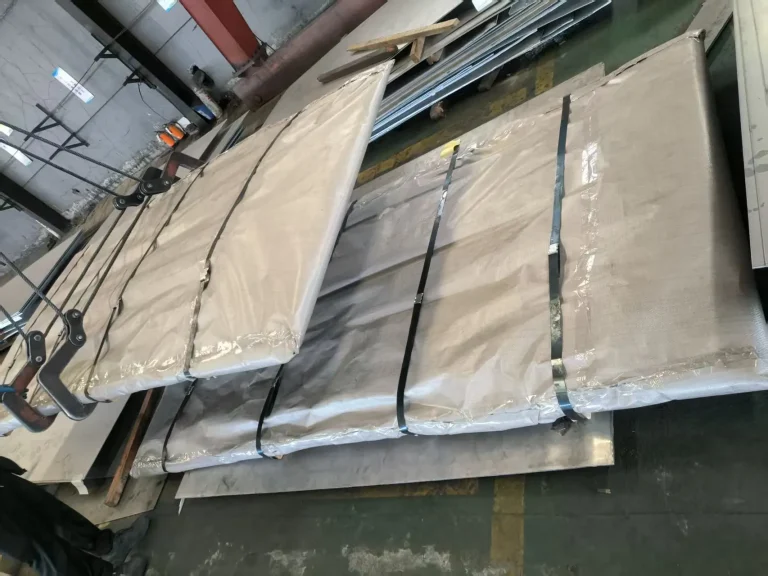
Applications de la plaque Haynes 188
- Revêtements de chambre de combustion
- Porte-flammes
- Conduits de transition
- Composants du post-brûleur
- Enveloppes de turbine
- Buses d'échappement
- Buses d'injection de carburant
- Manchons de four
- Échangeurs de chaleur
- Réacteurs chimiques
- Tubes d'éjection de fusée
- Composants du silencieux
- Systèmes de conduits
- Matériel de fixation
Composition chimique de la tôle Haynes 188
| Co | Cr | Ni | W | Fe | Mn | Si | C | La | B | P | S |
|---|---|---|---|---|---|---|---|---|---|---|---|
| Équilibre | 20,0 – 24,0 | 20,0 – 24,0 | 13,0 – 16,0 | ≤ 3,0 | ≤ 1,25 | 0,20 – 0,50 | 0,05 – 0,15 | 0,02 – 0,12 | ≤ 0,015 | ≤ 0,02 | ≤ 0,015 |
Fonction technique des éléments clés
Il sert de matrice de base et offre une stabilité thermique et des caractéristiques de point de fusion intrinsèquement supérieures à celles des alliages à base de fer ou de nickel.
Ils agissent en synergie pour offrir une résistance exceptionnelle à l'oxydation et à la sulfuration. Le chrome forme une couche de chromie solidement adhérente, tandis que le silicium renforce la protection offerte par cette couche à haute température.
Stabilise la structure cristalline austénitique cubique à faces centrées (FCC), ce qui optimise la ductilité après vieillissement et améliore l'aptitude générale à l'usinage et la soudabilité du matériau.
Il agit comme un puissant agent de renforcement en solution solide. Son grand rayon atomique déforme la matrice de cobalt, ce qui entrave considérablement les dislocations et optimise la résistance au fluage à haute température.
Modifie chimiquement la couche d'oxyde protectrice. En fixant solidement l'oxyde de chrome au substrat métallique, ce procédé empêche la couche de s'écailler (se décoller) lors de chocs thermiques cycliques intenses.
Associé délibérément à des éléments visant à précipiter M6C et M23C6 des carbures, qui bloquent les joints de grains et améliorent l'intégrité structurelle à haute température.
Contexte métallurgique et de fabricabilité
- Stabilité de phase :
L'équilibre précis entre le nickel et le carbone permet d'éviter la formation de phases intermétalliques fragiles (telles que l'A2(phase B Laves) après des milliers d'heures de fonctionnement à haute température. Cela permet d'éviter la fragilisation à température intermédiaire. - Renforcement par l'effort :
En raison du renforcement par solution solide apporté par le tungstène, les tôles Haynes 188 subissent un durcissement par déformation exceptionnellement rapide lors du formage à froid. - Exigences en matière de traitement thermique :
Pour rétablir la ductilité lors d'opérations d'emboutissage profond ou de formage complexe, les pièces doivent subir un recuit de mise en solution à 2 150 °F (1 175 °C), suivi d'un refroidissement rapide à l'air ou d'une trempe à l'eau.
Normes Haynes 188 et désignations équivalentes
| Alliage Haynes 188 | |||||
|---|---|---|---|---|---|
| Norme / Système | Désignation équivalente | Forme du produit | ASTM | ASME | SAE AMS |
| Numéro UNS | UNS R30188 | Plaques, feuilles et bandes | ASTM B435 | ASME SB435 | AMS 5608 / 5609 |
| DIN / Matériau allemand | N° de série 2.4683 | Barres, tiges, fils et profilés | ASTM B572 | ASME SB572 | AMS 5772 / 5796 |
| FR Nom chimique | CoCr22Ni22W14 | Tubes sans soudure | ASTM B622 | ASME SB622 | – |
| JIS | – | Tubes et tuyaux soudés | ASTM B619 / B626 | ASME SB619 / SB626 | – |
| BS | – | Pièces forgées et brides / Raccords | ASTM B564 | ASME SB564 | AMS 5772 |
| AFNOR | K13C20N22W14Aa | ||||
| Nom commercial générique | Haynes 188, Alliage 188 | ||||
Vous avez un besoin ?
Contactez-nous pour plus d'informations
Propriétés mécaniques de la tôle Haynes 188
Propriétés mécaniques typiques
| Température | Résistance à la traction | Limite d'élasticité | Élongation |
|---|---|---|---|
| 75 °F (24 °C) | 946 MPa (137 200 psi) | 464 MPa (67 300 psi) | 53% |
| 1 000 °F (540 °C) | 772 MPa (112 000 psi) | 283 MPa (41 100 psi) | 58% |
| 1 400 °F (760 °C) | 610 MPa (88 500 psi) | 274 MPa (39 800 psi) | 65% |
| 1 600 °F (870 °C) | 380 MPa (55 100 psi) | 248 MPa (36 000 psi) | 71% |
| 1 800 °F (980 °C) | 204 MPa (29 600 psi) | 127 MPa (18 400 psi) | 77% |
| 2 000 °F (1 095 °C) | 99 MPa (14 300 psi) | 56 MPa (8 100 psi) | 60% |
Comportements essentiels à haute température
Résistance au fluage et à la rupture sous contrainte
Le fluage est la tendance d'un matériau solide à se déplacer lentement ou à se déformer de manière permanente sous l'effet de contraintes mécaniques persistantes. L'alliage Haynes 188 se distingue particulièrement dans ce domaine grâce au renforcement par solution solide apporté par le tungstène :
- À 1 500 °F (815 °C) : une contrainte d'environ 12 000 psi (83 MPa) est nécessaire pour provoquer une rupture au bout de 1 000 heures.
- À 1 800 °F (980 °C) : même à cette température extrême, le matériau peut supporter une pression de 2 800 psi (19 MPa) pendant 1 000 heures avant de se rompre.
Ductilité après vieillissement (le principal atout de l'alliage)
De nombreux superalliages résistants aux hautes températures deviennent extrêmement fragiles après avoir été exposés à des températures de service (1 200 ℉ – 1 600 ℉) en raison de la précipitation de phases nuisibles.
- Le Haynes 188 a été spécialement conçu pour y résister.
- Après une exposition à une température de 1 400 ℉ (760 ℃) pendant 8 000 heures consécutives, elle conserve toujours un allongement à température ambiante compris entre 101 TP4T et 151 TP4T. Cela garantit que les composants en tôle peuvent résister aux manipulations liées à la maintenance et aux chocs liés à l'exploitation sans subir de rupture catastrophique.
Résistance à la fatigue thermique
Dureté et propriétés physiques liées à la mécanique
- Dureté : La dureté typique à température ambiante d'une plaque en Haynes 188 ayant subi un recuit de mise en solution complet se situe entre 95 et 100 HRB, soit environ 210 HV.
- Module d'élasticité :
Le module de Young mesure la rigidité du matériau. Il diminue de manière prévisible lorsque la température augmente, ce qui contribue à atténuer les contraintes thermiques localisées :
À 75 °F : 33,6 × 10⁶ psi (232 GPa)
À 1 600 °F : 24,2 × 10⁶ psi (167 GPa)
Influence du procédé de fabrication sur les propriétés mécaniques
- Usinage à froid :
L'acier Haynes 188 subit un durcissement par déformation très rapide. Le formage à froid peut augmenter considérablement sa dureté tout en réduisant drastiquement sa ductilité. Un recuit intermédiaire est obligatoire si la tôle est soumise à un formage intense. - Recuit de la solution :
Pour rétablir pleinement les propriétés mécaniques nominales indiquées ci-dessus, la plaque doit subir un traitement thermique à 2 150 ℉ (1 175 °C), suivi d'un refroidissement rapide à l'air ou d'une trempe à l'eau afin d'empêcher la précipitation de carbures le long des joints de grains.
Nos atouts dans la fabrication de la plaque Haynes 188
Fusion par induction sous vide
Laminage de précision
Contrôle de la microstructure homogène
Essais thermiques rigoureux
Foire aux questions sur la plaque Haynes 188
Le lanthane est un oligo-élément de terre rare ajouté spécifiquement pour modifier et stabiliser la couche protectrice d'oxyde de chrome. Il agit comme une “ colle ” métallurgique qui empêche cette couche d'oxyde de s'écailler lorsque la tôle est soumise à des cycles rapides de chauffage et de refroidissement.
Oui, sans problème. Il présente une excellente soudabilité avec les méthodes conventionnelles telles que le soudage TIG, MIG et par faisceau d'électrons. Pour obtenir une résistance optimale à haute température, il convient d'utiliser des fils d'apport de composition chimique adaptée, comme le fil de soudage Haynes 188. Le soudage à l'oxyacétylène n'est pas recommandé, car il entraîne une contamination par le carbone.
En règle générale, non. L'acier Haynes 188 est généralement mis en service à l'état tel que soudé, car il conserve une ductilité élevée à proximité de la zone affectée thermiquement. Toutefois, si la pièce subit un formage à froid intense avant le soudage, un recuit de mise en solution complet peut s'avérer nécessaire pour éliminer les contraintes résiduelles de fabrication.
Il s'agit d'un matériau incontournable dans l'ingénierie aérospatiale, la fabrication de turbines à gaz commerciales et la production d'électricité terrestre. Parmi les composants courants usinés ou formés à partir de cette tôle, on trouve notamment les chemises de brûleur, les stabilisateurs de flamme, les conduits de transition, les buses d'échappement et les ensembles de postcombustion.
Il peut être formé à froid, mais il subit un écrouissage exceptionnellement rapide en raison de l'effet de renforcement par solution solide du tungstène. Les fabricants doivent tenir compte d'un fort retour élastique et utiliser des outils très puissants. Pour les emboutissages profonds ou les formes complexes, un recuit intermédiaire est obligatoire.
Nous contacter
- RM901 No.22 Tangjiaqiao Road Wenzhou Chine
- +86 577 8551 1171
- [email protected]
- https://www.kaysuns.com/