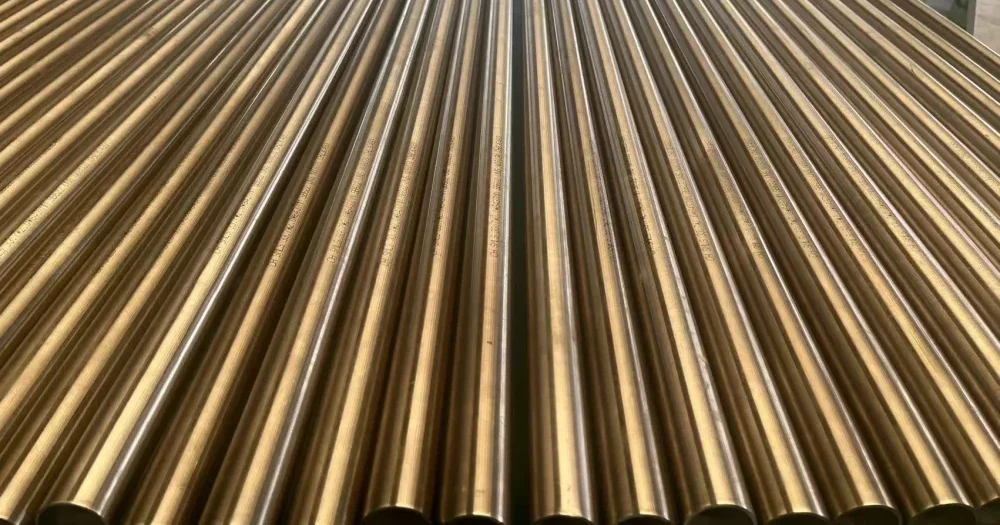
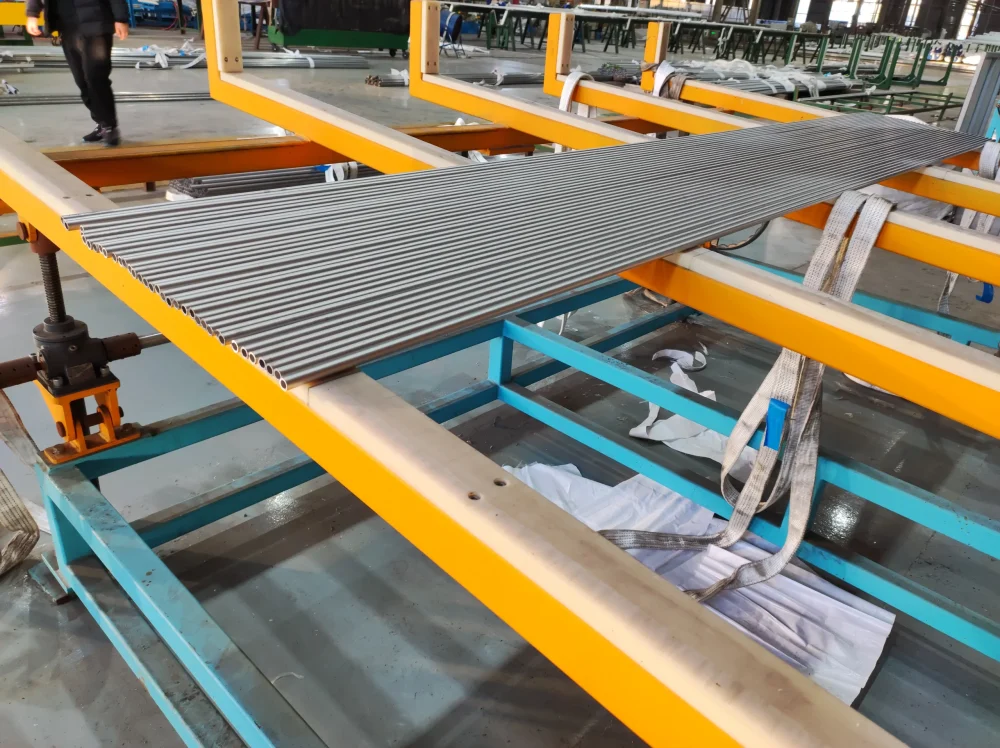
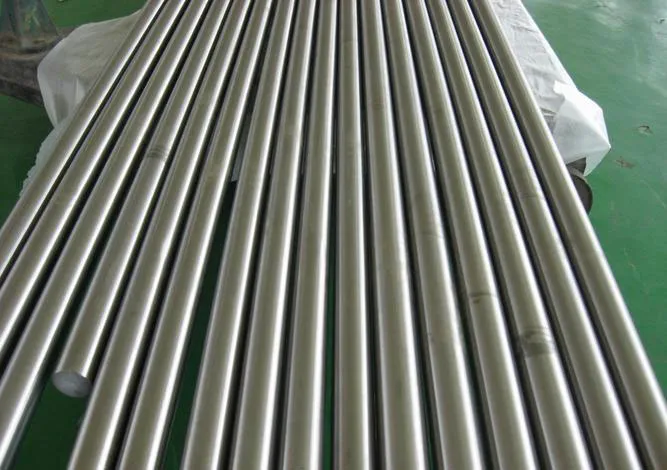
Fabricant de tubes Hastelloy B3 en Chine
Notre capacité
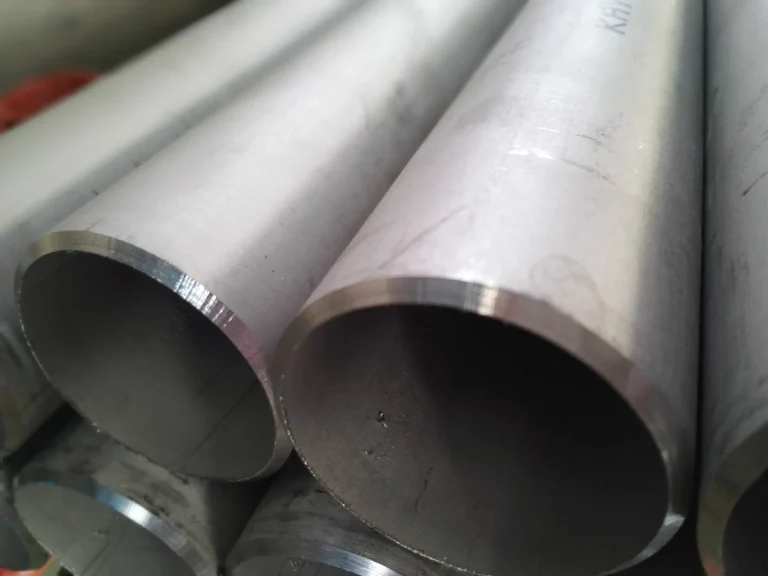
Désignations équivalentes Hastelloy B3
- UNS N10675
- W.Nr. 2.4600
- FR NiMo30Cr
- GB NS3203
- ASTM B622 / SB622
- ASTM B619 / SB619 / B626 / SB626
Vous avez un besoin ?
Contactez-nous pour plus d'informations
Normes des tubes et tuyaux en Hastelloy B3
| Forme du produit | Norme ASTM | Norme ASME | Description / Application |
|---|---|---|---|
| Tubes et tuyaux sans soudure | ASTM B622 | ASME SB622 | Tuyaux et tubes à haute pression sans soudure. |
| Tuyau soudé | ASTM B619 | ASME SB619 | Tuyauterie de process de grand diamètre pour les usines chimiques. |
| Tube soudé | ASTM B626 | ASME SB626 | Spécifiquement pour les échangeurs de chaleur et les condenseurs. |
Normes relatives aux composants
- Raccords de tuyauterie : ASTM B366 / ASME SB366. (Raccords corroyés tels que les coudes, les tés et les réducteurs).
- Pièces forgées et brides : ASTM B564 / ASME SB564 (pièces forgées, brides et pièces usinées sur mesure).
- Tiges et barres : ASTM B335 / ASME SB335 (barres rondes pour attaches, boulons et tiges de vannes).
- Plaques et tôles : ASTM B333 / ASME SB333 (matière première pour les coques de navires et les structures soudées).
Composition chimique du tube en Hastelloy B3, wt.%
| Ni | Mo | Cr | Fe | W | Mn | Co | Si | C | Al | Ti | P | S |
|---|---|---|---|---|---|---|---|---|---|---|---|---|
| Équilibre | 27.0 - 32.0 | 1,0 – 3,0 | 1,0 – 3,0 | 3.0 Max | 3.0 Max | 3.0 Max | 0.10 Max | 0,01 Max | 0.50 Max | 0.20 Max | 0,03 maximum | 0,01 Max |
Notes techniques clés
- Haute teneur en molybdène (Mo) :
La teneur en molybdène de 28,5% (moyenne) est la principale raison de sa résistance exceptionnelle à l'acide chlorhydrique, quelles que soient les concentrations et les températures. - Faible teneur en chrome (Cr) :
En raison de sa faible teneur en chrome, cet alliage ne convient pas aux environnements oxydants (par exemple, l'acide nitrique) ou en présence de sels oxydants tels que les chlorures ferriques ou cuivriques. - Stabilité thermique :
L'équilibre spécifique des éléments dans le B3 empêche la précipitation de phases intermétalliques nuisibles pendant le soudage, ce qui était un problème courant avec l'ancienne nuance Hastelloy B2.
Pourquoi les tuyaux B3 ne peuvent-ils pas être utilisés pour l'acide nitrique ?
Propriétés mécaniques du tube en Hastelloy B3
| Résistance à la traction | Limite d'élasticité | Élongation | Dureté | Densité |
|---|---|---|---|---|
| ≥ 760 MPa(110 ksi) | ≥ 350 MPa(51 ksi) | ≥ 40% | ≤ 100 HRB | 9,24 g/cm3(0,334 lb/in3) |
Le soudage réduit-il la résistance des tubes B3 ?
Propriétés thermiques du tube en Hastelloy B3
| Biens | Valeur métrique | Valeur impériale |
|---|---|---|
| Plage de fusion | 1370 - 1418°C | 2500 - 2585°F |
| Conductivité thermique | 11,2 W/m-°C (à 25°C) | 78 Btu-in/ft²-h-°F |
| Chaleur spécifique | 397 J/kg-°C (à 25°C) | 0,095 Btu/lb-°F |
| Moyenne CTE | 10,6 μm/m-°C (25-100°C) | 5,9 μin/in-°F |
Pourquoi B3 met-il l'accent sur la “stabilité thermique” ?
Quelle est la température maximale de fonctionnement de cet alliage ?
Comment effectuer un recuit de mise en solution pour restaurer les propriétés thermiques ?
Taux de corrosion de l'Hastelloy B3 dans l'acide chlorhydrique (HCl)
| Concentration de HCl (wt.%) | Température | État | Taux de corrosion (mm/an) |
|---|---|---|---|
| 5% | 70°C(158°F) | Chaud | < 0.02 |
| 101°C (214°F) | Ébullition | 0.41 | |
| 10% | 70°C(158°F) | Chaud | 0.13 |
| 102°C(216°F) | Ébullition | 0.46 | |
| 15% | 70°C(158°F) | Chaud | 0.23 |
| 104°C (219°F) | Ébullition | 0.51 | |
| 20% | 70°C(158°F) | Chaud | 0.28 |
| 108°C (226°F) | Ébullition | 0.58 | |
| 30% | 50°C(122°F) | Chaud | 0.15 |
| 37% | 50°C(122°F) | Chaud | 0.25 |
Principales conclusions et recommandations en matière de conception
- Couverture complète de la concentration :
L'Hastelloy B3 est l'un des rares matériaux métalliques capables de maintenir un faible taux de corrosion dans toute la gamme de concentration (de 0% à 37%) et jusqu'au point d'ébullition.
- Caractéristiques de la courbe d'isocorrosion :
Dans la courbe d'isocorrosion à 0,1 mm/an, la plage de température du B3 est significativement plus élevée que celle de l'acier inoxydable ou des alliages typiques à base de nickel (tels que le C276). - Avertissement - Oxydant :
- Les données ci-dessus sont basées sur l'hypothèse que la substance est de l'acide chlorhydrique pur.
- Si l'acide chlorhydrique contient plus de 5 ppm d'ions fer (Fe³⁺) ou d'ions cuivre (Cu²⁺), la vitesse de corrosion peut instantanément être multipliée par dix, car le B3 est extrêmement sensible à l'attaque des ions oxydants.
- Effets de la soudure :
En raison de l'excellente stabilité thermique du B-3, le taux de corrosion dans sa zone affectée thermiquement (HAZ) est généralement comparable à celui du matériau de base, de sorte qu'il n'y a pas lieu de s'inquiéter de la corrosion préférentielle au niveau de la soudure.
Applications du tube en Hastelloy B3
- Production et manipulation de HCl
- Traitement de l'acide acétique
- Récupération d'acide sulfurique
- Unités d'alkylation
- Production de pesticides et d'herbicides
- Intermédiaires pharmaceutiques
- Systèmes de chloration
- Traitement des déchets acides
- Composants de l'épurateur de gaz de combustion
- R&D et usines pilotes
FAQ sur les tuyaux en Hastelloy B3
Milieux oxydants.Le B3 ne contient pratiquement pas de chrome (Cr) et ne doit donc jamais être utilisé dans l'acide nitrique ou dans des solutions contenant des ions de fer (III) (Fe³⁺) ou de cuivre (II) (Cu²⁺).Dans ces milieux oxydants,le B3 se corrodera extrêmement rapidement.
Cela dépend des circonstances spécifiques.
Pour les acides purement réducteurs (tels que l'acide chlorhydrique pur), le B3 est nettement plus performant que le C276.
Si le milieu contient des impuretés oxydantes (telles que de l'oxygène dissous, du chlore gazeux ou des ions de fer), il faut utiliser du C276.
Sauf exigences particulières ou si le matériau a subi un traitement à froid sévère, un traitement thermique local n'est pas recommandé, car un chauffage inadéquat peut en fait nuire aux performances.
Nous contacter
- RM901 No.22 Tangjiaqiao Road Wenzhou Chine
- +86 577 8551 1171
- [email protected]
- https://www.kaysuns.com/