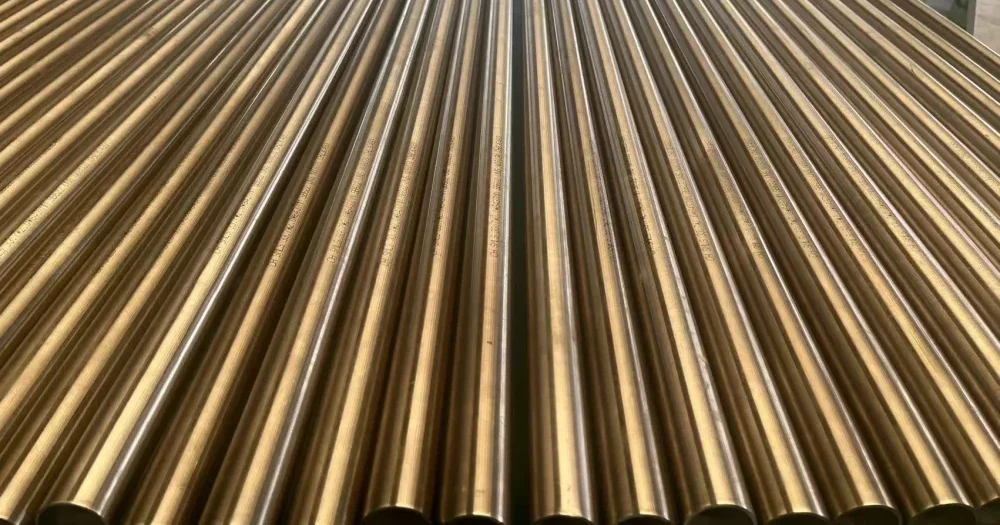
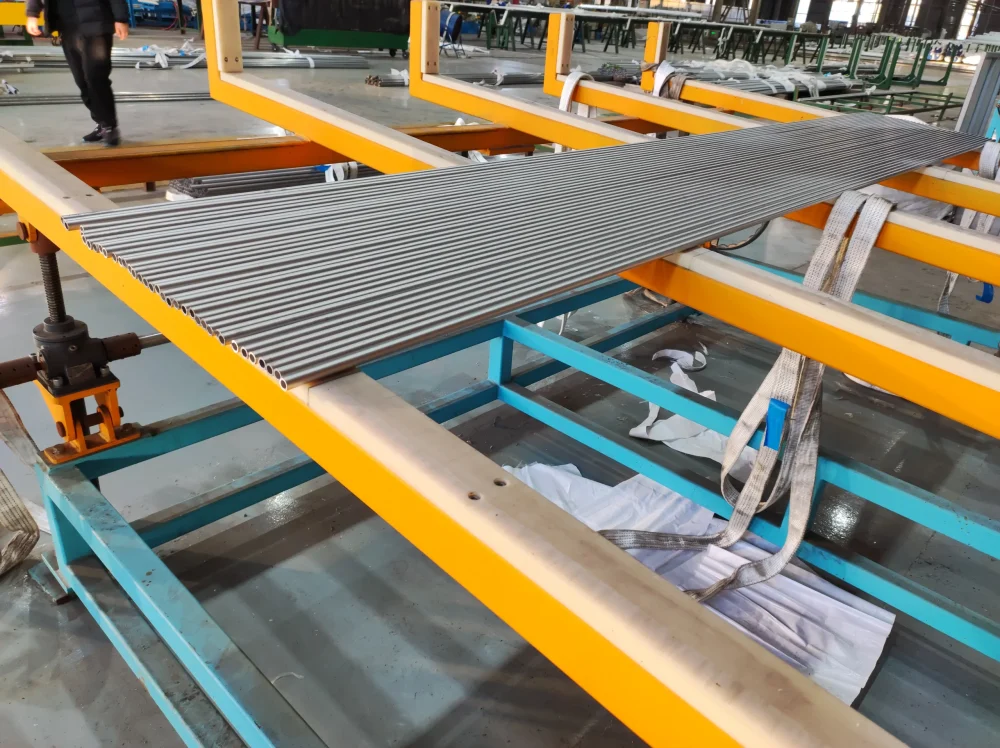
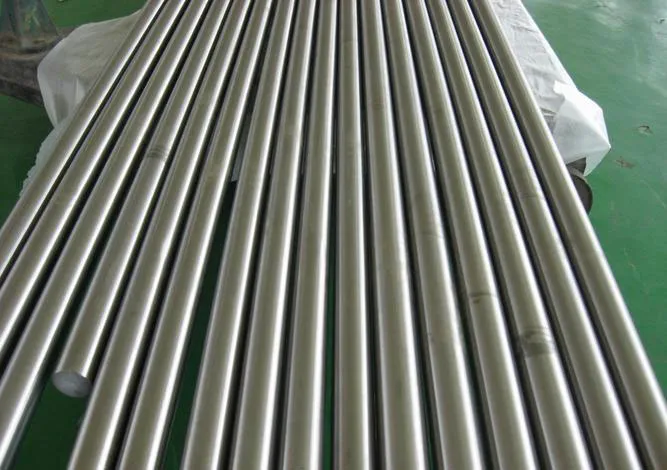
Plaque 1J85
A 1J85 plate is a sheet or flat piece of a high-performance soft magnetic iron-nickel alloy,commonly referred to as Permalloy 80, Mumetal, or Ni80Mo5.It is primarily engineered for applications that require extreme magnetic permeability and excellent magnetic shielding in weak magnetic fields.
Key Performance Features
- High Magnetic Permeability:
It conducts magnetic flux up to 100,000 times more effectively than standard structural steel,making it incredibly sensitive to weak fields. - Low Coercivity & Hysteresis Loss:
It magnetizes and demagnetizes effortlessly with almost zero energy loss,ensuring high signal sensitivity. - Near-Zero Magnetostriction:
The material does not change its physical shape significantly when magnetized,keeping its magnetic properties stable under mechanical stress.
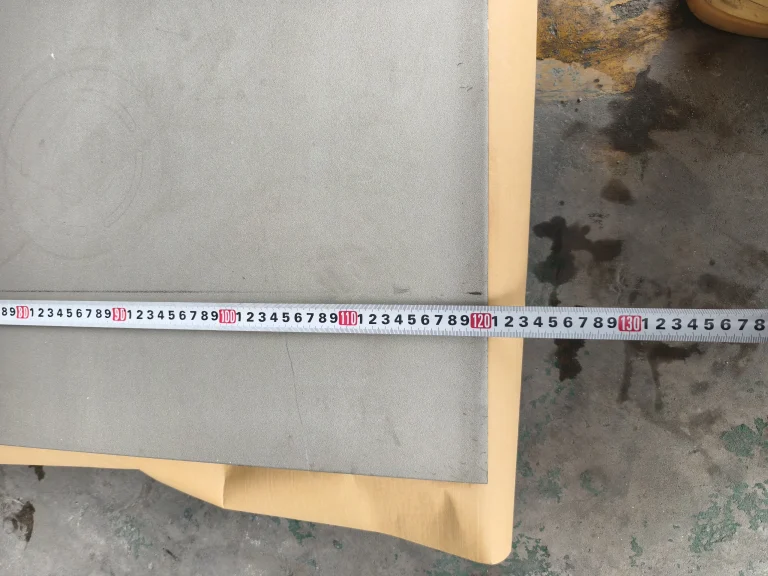
Applications of 1J85 Plate
- MRI Shielding
- Transformer Cores
- Aerospace Instruments
- Security Tags
- Circuit Shielding
- Recording Heads
- Signal Relays
- Sensor Protection
- Vehicle Sensors
- Lab Enclosures
Chemical Composition of 1J85 Plate
| Ni | Mo | Fe | Mn | Si | Cu | C | P | S |
|---|---|---|---|---|---|---|---|---|
| 79.0 – 81.0 | 4.80 – 5.20 | Équilibre | 0,30 – 0,60 | 0.15 – 0.30 | ≤ 0.20 | ≤ 0.03 | ≤ 0,02 | ≤ 0,02 |
Key Metallurgical Characteristics
Post-Fabrication Heat Treatment Dependency
As delivered from the rolling mill,a 1J85 plate has a single-phase Austenitic structure,but its internal crystal lattice is heavily distorted by cold-working stress.At this stage,it possesses almost no magnetic shielding capability.
- High-Temperature Annealing:
Once the plate is stamped,bent,or welded into its final part geometry,it must undergo high-temperature annealing at 1100°C to 1150°C in a high-vacuum or pure dry-hydrogen atmosphere. This eliminates internal stresses and purges remaining trace oxygen. - Controlled Cooling Rate:
The cooling velocity between 600°C and 400°C must be strictly regulated.This allows the Ni and Fe atoms to fall into an optimal “short-range ordered” crystalline state,which unlocks the material’s maximum magnetic permeability.
The Multi-Faceted Role of Molybdenum
While a pure binary 79%Ni-21%Fe alloy yields excellent static magnetic traits,it fails in dynamic applications due to its low electrical resistivity.Adding 5% Molybdenum alters the lattice structure to achieve two vital engineering goals:
- Eddy Current Mitigation:
It drives up the material’s electrical resistivity to approximately 0.56 μΩ·m,restricting the generation of heat and energy loss under alternating currents. - Zero Magnetostriction:
It fine-tunes the crystal lattice spacing so the alloy doesn’t change its mechanical volume when magnetized.Consequently,it remains magnetically stable even under mild mechanical stresses or vibrations.
Ultra-Low Carbon and Impurity Control
1J85 Plate Standards & Equivalent Designations
| 1J85 (High-Permeability Soft Magnetic Crystalline Alloy) | |||||
|---|---|---|---|---|---|
| Norme / Système | Désignation équivalente | Forme du produit | GB / GB/T (China) | GJB (Military) | GOST (Russia) |
| Norme chinoise | 1J85 | Plaques, feuilles et bandes | GB/T 32286.1 | GJB 5873 | GOST 10160 |
| Russian / CIS Standard | 79NM / 81NMA (79НМ / 81НМА) | Bars & Rods | GB/T 15018 | – | GOST 10994 |
| ISO Chemical Name | Ni80Mo5Fe / Ni79Mo5 | Tubes sans soudure | – | – | – |
| UNS System | UNS N14080 | Tubes et tuyaux soudés | – | – | – |
| Aviation / Aerospace | Moly-Permalloy / Supermalloy | Forgings & Rings | – | – | – |
| European / ASTM Designation | ASTM A753 Alloy 4 / DIN 2.4504 | ||||
| Nom commercial générique | Permalloy 80, HyMu 80 | ||||
Vous avez un besoin ?
Contactez-nous pour plus d'informations
Mechanical Properties of 1J85 Plate
| Mechanical Property Parameter | Cold-Rolled | Post-Hydrogen Annealed | Engineering Significance |
|---|---|---|---|
| Résistance à la traction | 980 – 1150 MPa | 540 – 620 MPa | Drops by nearly half post-annealing as internal strain crystal defects heal. |
| Limite d'élasticité | 880 – 1020 MPa | 150 – 240 MPa | Yield point is extremely low post-anneal; the material becomes highly malleable. |
| Élongation | 1% – 3% | 35% – 50% | High post-anneal ductility allows the metal to stretch without tearing. |
| Vickers Hardness | 280 – 320 HV | 110 – 130 HV | Softens remarkably, making the final components prone to physical denting. |
| Dureté Brinell | 265 – 305 HB | 105 – 123 HB | Reflects macro-structural softening across the plate thickness. |
| Module d'élasticité | ~210 GPa | ~190 GPa | Slight reduction in structural rigidity due to atomic lattice relaxation. |
Critical Engineering Insights into 1J85 Mechanical Behavior
Stamping vs. Magnetic Performance
- The Cold-Rolled State:
In its raw,unannealed sheet form,1J85 features high yield strength and minimal elongation.This state is perfect for high-speed automated stamping,blanking,laser cutting,and deep-drawing.It resists burring and holds precise dimensional tolerances. - The Structural Trap:
Machining or bending the plate introduces immense plastic deformation and dislocations into the crystal lattice.Mechanically,the part is sturdy.Magnetically,it is ruined because these dislocations block magnetic domains from rotating.Therefore,all severe structural mechanical forming must happen BEFORE the final magnetic annealing process.
Extreme Post-Anneal Softness & Vulnerability
- Yield Deformation Risk:
With a post-anneal yield strength as low as 150 MPa,the material can be plastically deformed by simple human handling,accidental dropping,or clamping forces inside an assembly. - The “Dead” Magnetic State:
If an annealed part undergoes even slight mechanical bending or dropping during installation,the localized stress re-introduces dislocations.This drastically reduces the magnetic shielding capability of that zone.Annealed 1J85 shields must be handled like fragile glassware.
Machining and Cutting Fluid Restrictions
- Work Hardening Tendency:
Due to its high nickel content,1J85 behaves similarly to austenitic stainless steels.It work-hardens rapidly under the cutting tool if the feed rate is too slow or the tool is dull.Sharp carbide tools with positive geometries and constant,deep feeds are mandatory. - Sulfur Contamination Ban:
Traditional cutting fluids containing heavy sulfur or chlorine additives must be strictly avoided.Residual sulfur can diffuse into the 1J85 grain boundaries during subsequent high-temperature annealing,causing intergranular embrittlement and ruining the alloy’s magnetic properties.
Our Advantages in Manufacturing 1J85 Plate
Fusion par induction sous vide
We utilize advanced Vacuum Induction Melting (VIM) systems to process our raw alloy.
This strictly eliminates interstitial trace gases like oxygen,nitrogen,and carbon,preventing the formation of micro-precipitates that block magnetic domain rotation.
Ultra-Low Impurity Controls
Our chemical metallurgical process maintains sulfur,phosphorus,and carbon levels far below traditional standard limits.
By removing these harmful elements from the grain boundaries,we guarantee a highly pure matrix that delivers maximum magnetic permeability and zero structural embrittlement.
Precision Gauge Consistency
We employ automated cold-rolling mills equipped with real-time Automatic Gauge Control (AGC) tracking.
This ensures uniform thickness tolerances across the entire plate surface,which is critical for maintaining stable magnetic shielding performance in thin-gauge electronic components.
Optimized Heat Treatment
We offer proprietary high-temperature dry-hydrogen and high-vacuum annealing protocols.
This perfects the cooling phase between 600°C and 400°C to achieve a flawless “short-range ordered” crystal lattice,releasing the absolute peak magnetic performance of the material.
FAQs About 1J85 Plate
Nous contacter
- RM901 No.22 Tangjiaqiao Road Wenzhou Chine
- +86 577 8551 1171
- [email protected]
- https://www.kaysuns.com/