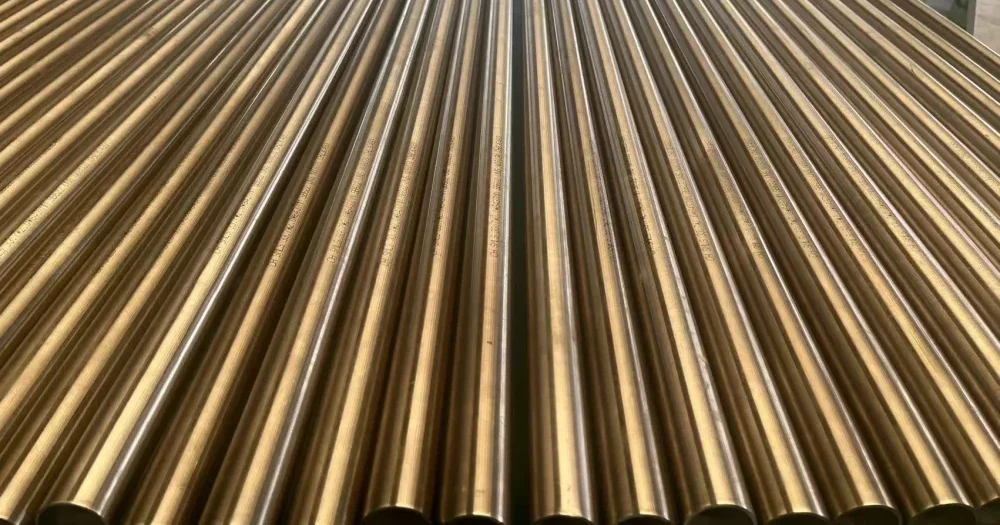
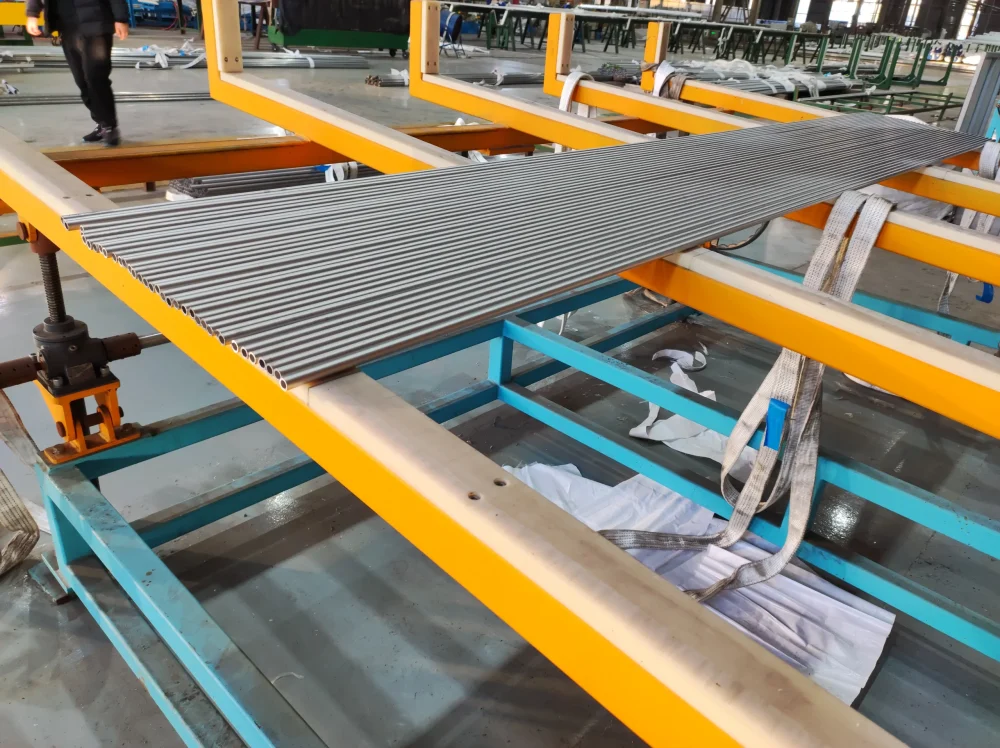
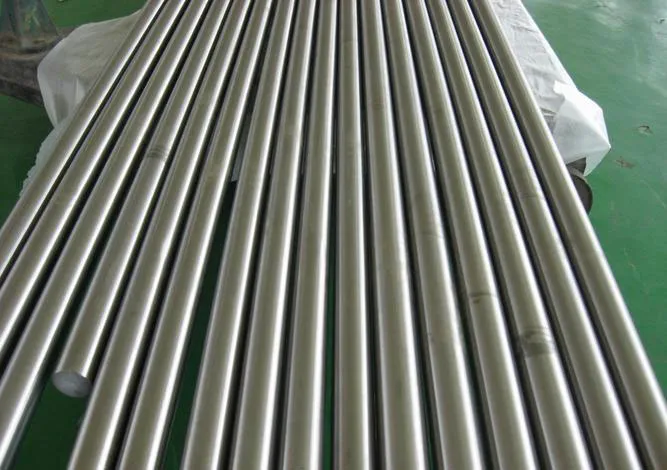
Alloy 52 Strip
Alloy 52 Strip is a specialized,thin,flat-rolled form of Alloy 52,which is a controlled expansion nickel-iron alloy.Composed of approximately 50.5% to 51% nickel with the remaining balance being iron,it is highly engineered to exhibit a virtually constant coefficient of thermal expansion up to approximately 1050°F (565°C).
This specific dimensional stability prevents stress fractures,making it the industry standard for creating reliable,hermetic glass-to-metal and ceramic-to-metal seals.
Key Material Properties
- Controlled Thermal Expansion:
Matches the expansion rate of specific soft glasses (like potash-soda-lead glass) and ceramics. - Standards Compliance:
It is manufactured to meet industry standard specifications,primarily ASTM F30 and SAE AMS-I-23011 Class 2. - Physical Characteristics:
Features a high density of ~8.3 g/cm³,good magnetic properties,and a melting point around 1430°C–1450°C. - Excellent Ductility:
The strip form allows it to be easily stamped,formed,deep-drawn,or etched into intricate electronic parts.
Applications of Alloy 52 Strip
- Бытовая электроника
- Semiconductor Industry
- Micrographics Processing
- Aerospace Engineering
- Defense Contracting
- Satellite Manufacturing
- Avionics Systems
- Missile Development
- Медицинское оборудование
- Industrial Automation
- Vacuum Technology
- Lighting Infrastructure
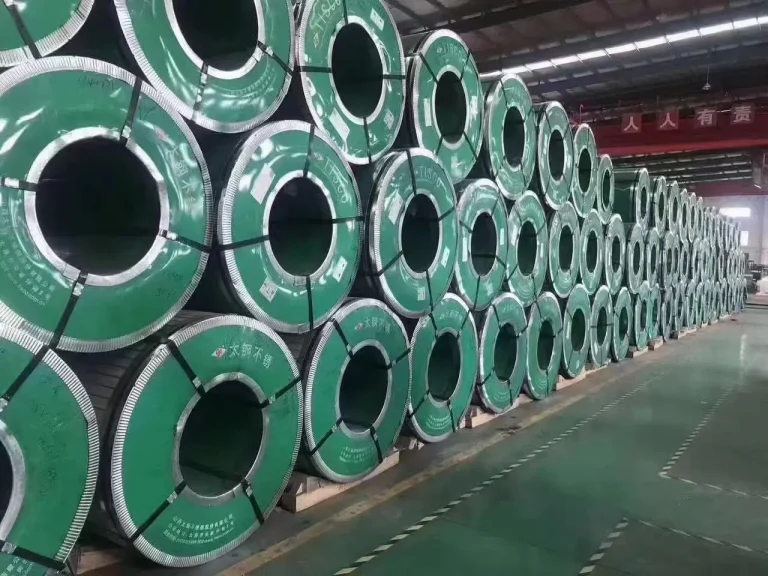
We offer Alloy 52 strips and coils in thicknesses of 0.1 – 100.We offer not only stainless steel strips but also precision strips made of Hastelloy, Incoloy, Inconel, Monel, and other high-performance alloys.Our products comply with ASTM F1684, EN 10204, ISO 9001, PED 2014/68/EU, CE,and other standards.With over a decade of experience in manufacturing and import/export,we are your best wholesaler in China.
Chemical Composition of Alloy 52 Strip
Alloy 52 is a binary nickel-iron alloy with a highly controlled chemistry designed to match the thermal expansion characteristics of soft glasses and ceramics.The nominal chemical composition breakdown according to ASTM F30 standards is as follows:
| Ni | Fe | Mn | Si | C | Cr | Co | п | S | Al |
|---|---|---|---|---|---|---|---|---|---|
| 50.5 – 51.5 | Остаток средств | ≤ 0.60 | ≤ 0.30 | ≤ 0.05 | ≤ 0.25 | ≤ 0.50 | ≤ 0.025 | ≤ 0.025 | ≤ 0.10 |
Why The Precision Matters
The primary purpose of Alloy 52 is its precise CTE.
Even a 0.5% variance in the Nickel content can radically shift the CTE inflection point.
Strictly controlling trace elements ensures the alloy expands and contracts at the exact same rate as potash-soda-lead glass during heating and cooling cycles,preventing hermetic seal failures.
Even a 0.5% variance in the Nickel content can radically shift the CTE inflection point.
Strictly controlling trace elements ensures the alloy expands and contracts at the exact same rate as potash-soda-lead glass during heating and cooling cycles,preventing hermetic seal failures.
The Role of Trace Elements
- Manganese & Silicon:
Act as deoxidizers during the melting phase to improve de-gassing and clean the crystal lattice structure. - Карбон:
Kept extremely low to prevent the formation of internal carbides,which cause brittleness and disrupt magnetic uniformity. - Sulfur & Phosphorus:
Classified as harmful impurities;keeping them near zero prevents “hot shortness” (cracking during hot rolling of the strip).
Composition VS Competitors
- Alloy 42 Strip (UNS K94100):
Contains 42% Nickel,designed for hard borosilicate glasses. - Kovar Plate (UNS K94610):
Contains 29% Nickel + 17% Cobalt,explicitly designed for thermal matching with alumina ceramics and pyrex glass. - Invar 36 Strip (UNS K93600):
Contains 36% Nickel,formulated for near-zero expansion at room temperature rather than glass sealing.
Alloy 52 Strip Standards & Equivalent Designations
| Alloy 52 Strip (Controlled Expansion) | |||||
|---|---|---|---|---|---|
| Стандарт / Система | Эквивалентное обозначение | Форма продукта | GB (Китай) | GJB (Military) | GOST (Russia) |
| Китайский стандарт | 4J50 / 4J52 (Fe-Ni52) | Plates, Sheets & Strips | GB/T 15018 | GJB 1952A | – |
| Russian / CIS Standard | 52N / 52H (52Н) | Bars & Rods | GB/T 14985 | – | GOST 10994 / 14080 |
| ISO Chemical Name | Ni52 / FeNi52 | Seamless Pipes & Tubes | – | – | – |
| UNS System | UNS N14052 / K95050 | Welded Pipes & Tubes | – | – | – |
| Aviation / Aerospace | ASTM F30 / Werkstoff 2.4475 | Forgings & Rings | – | – | – |
| UK Designation | NILO Alloy 52 / Pernifer 50 | ||||
| Generic Trade Name | Alloy 52, Glass Sealing 52 | ||||
У вас есть требования?
Kaysuns is a professional supplier of Alloy 52 Strips.Please feel free to contact me if you have any requirements.
Свяжитесь с нами для получения дополнительной информации
Mechanical Properties of Alloy 52 Strip
The mechanical properties of Alloy 52 strip are highly dependent on the material’s temper condition,which ranges from fully annealed to full-hard.This adaptability allows manufacturers to choose the right balance between formability for stamping and structural rigidity for final components.
| Механические свойства | Annealed Temper (Soft) | Hard Temper (Cold Rolled) |
|---|---|---|
| Предел прочности | 450 – 550 MPa (65 – 80 ksi) | ≥ 700 MPa (≥ 101 ksi) |
| Предел текучести | 240 – 350 MPa (35 – 50 ksi) | ≥ 620 MPa (≥ 90 ksi) |
| Удлинение | 25% – 35% | ≤ 5% |
| Твердость | 70 – 82 HRB | ≥ 95 HRB |
| Модуль упругости | 140 GPa (20.3 × 10⁶ psi) | 140 GPa (20.3 × 10⁶ psi) |
| Poissons Ratio | 0.29 | 0.29 |
Formability and Workability
- Deep Drawing and Stamping:
In its annealed state,Alloy 52 strip exhibits exceptional ductility.This makes it perfectly suited for high-speed automated progressive stamping presses,severe forming,and deep drawing into miniature cap,cup,or eyelet configurations for electronic packages. - Укрепление работоспособности:
Like most nickel-iron formulations,Alloy 52 work-hardens rapidly during cold reduction.This property is heavily exploited when slicing or punching lead frames,where structural rigidity and crisp edges are mandatory to prevent lead deformation.
Heat Treatment & Property Recovery
- Stress Relieving:
After stamping or punching operations,cold-working stresses can alter the strip’s microstructural stability and distort its precise thermal expansion parameters.Inter-stage or post-form stress relieving is usually executed at approximately 760°C to 870°C in a protective hydrogen atmosphere. - Full Annealing:
To reset the mechanical properties back to the softest matrix for subsequent operations,a full anneal is conducted at 850°C to 1000°C for up to 1 hour, followed by controlled cooling.
Machinability Profiles
- Gummy Matrix:
Because of the high nickel content,the alloy behaves like austenitic stainless steel when subjected to edge trimming or slitting.It tends to be tough and “gummy.” - Tool Wear Mitigation:
Sharp tooling edges,high-speed cobalt or carbide tool steel,and heavy continuous lubrication are critical when processing Alloy 52 strip to avoid premature burring,tearing,or severe tool wear.
Mechanical Stability at Elevated Temperatures
- Curie Point Inflection:
The mechanical integrity and dimensional stability remain highly linear up to its Curie temperature (450°C / 842°F). - Above this thermal point,the magnetic orientation degrades, resulting in altered mechanical elasticity and structural stiffness coefficients.This must be carefully mapped out if the final electronic application involves sustained high-temperature thermal cycling.
Our Advantages in Manufacturing Alloy 52 Strip
Ultra-Precise Chemistry Control
We use VIM and ESR melting to control nickel content within a tight ±0.2% margin.This guarantees an exceptionally stable and predictable thermal expansion rate across all batches.By reducing impurities like carbon and sulfur to near zero,we prevent micro-cracks and vacuum leaks during high-temperature glass-to-metal bonding.
Superior Surface Integrity
Our cold-rolling process ensures a flawless finish completely free of scratches,pits,or defects.The strip surface is specially treated to promote a uniform,tightly adherent oxide layer during pre-oxidation.With clean,deburred edges,our material ensures smooth feeding and zero jamming in automated stamping presses.
Tailored Mechanical Tempers
We engineer custom tempers ranging from deep-draw annealed (70 HRB) to high-rigidity full hard (≥ 95 HRB).The high elongation of our soft temper prevents localized tearing during complex,multi-stage stamping.Protective atmosphere annealing eliminates internal stresses,keeping the strip perfectly flat and workable.
Dimensional Accuracy Mastery
Advanced Automatic Gauge Control systems keep thickness tolerances within micro-level variations.Tension-leveling technology eliminates common defects like edge waves,center buckles,and lateral camber.These strict geometric tolerances maximize your material yield and drastically reduce stamping tool wear.
FAQs About Alloy 52 Strip
Heat-treating in a damp hydrogen atmosphere is critical for pre-oxidation.The process removes residual carbon and allows trace manganese and iron to form a uniform,tightly adherent surface oxide layer.When sealing,molten glass flows into this micro-porous oxide structure,creating the actual molecular hermetic bond.
It is generally available in tempers ranging from Annealed (Soft) to Full Hard:
- Annealed (~70 HRB, ~30% elongation):
Ideal for deep-drawing,bending,and complex progressive stamping without tearing. - Full Hard (≥95 HRB):
Ideal for flat components like lead frames or reed switches that require high structural rigidity and crisp,burr-free stamped edges.
The Curie temperature of Alloy 52 is approximately 450°C (842°F).Below this inflection point,the material maintains its signature controlled thermal expansion profile.Above 450°C,the alloy loses its magnetic properties,causing the rate of thermal expansion to increase significantly.Engineers must factor this inflection into high-temperature designs.
Связаться с нами
Свяжитесь с нами
- RM901 No.22 Tangjiaqiao Road Wenzhou Китай
- +86 577 8551 1171
- [email protected]
- https://www.kaysuns.com/
Найти нас