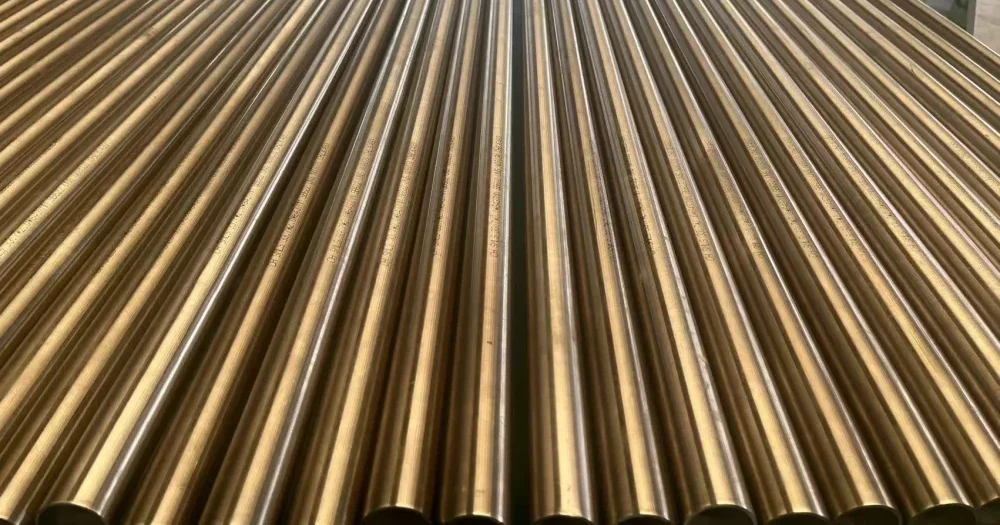
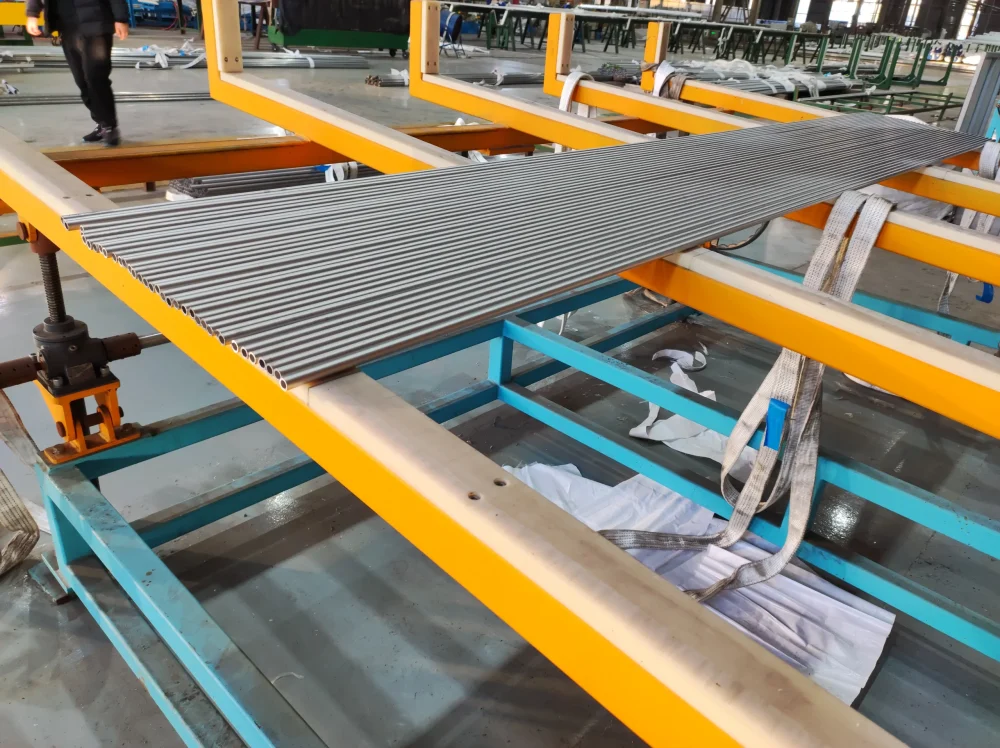
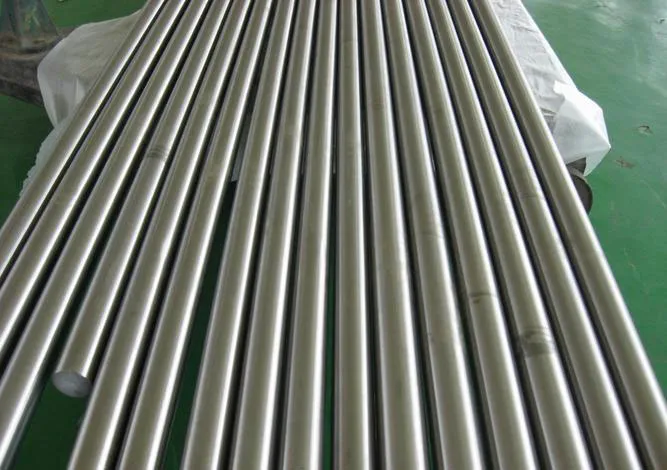
Invar 42 Strip
Invar 42 Strip is a precision-rolled,thin ribbon of controlled-expansion iron-nickel alloy consisting of 42% nickel and 58% iron.Also known as Alloy 42 or Nilo 42,its defining characteristic is a virtually constant,ultra-low coefficient of thermal expansion from room temperature up to approximately 300°C (570°F).
The “strip” format refers to the material being cold-rolled into flexible,thin,continuous coils.This format is ideal for high-speed manufacturing processes like stamping,bending,or chemical etching.
Основные свойства
- Thermal Expansion Matching:
Its CTE closely matches that of silicon,alumina ceramics,and specific hard glasses.This prevents cracking or warping during temperature shifts when bonded together. - High Dimensional Stability:
The alloy undergoes minimal physical expansion or contraction when exposed to heat. - Curie Point:
It maintains its unique low-expansion properties up to its Curie temperature of roughly 370°C to 380°C (700°F),where it transitions from ferromagnetic to paramagnetic.
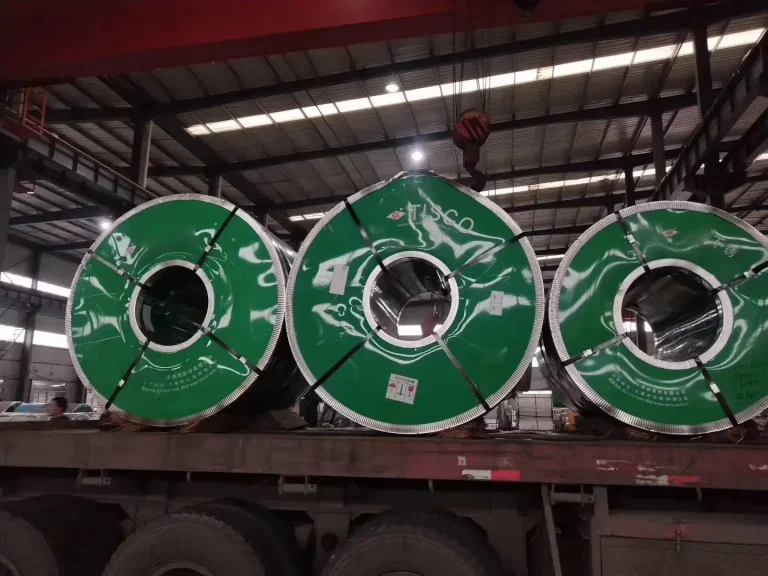
Applications of Invar 42 Strip
- Lead frames
- Silicon bonding
- Ceramic sealing
- Vacuum tubes
- Circuit boards
- Microelectronic packaging
- Glass seals
- Thermostat strips
- Laser systems
- Satellite structures
- Optical mounts
- Cryogenic containers
- Shadow masks
- Precision gauges
- Measuring tapes
- Scientific instruments
We offer Invar 42 strips and coils in thicknesses of 0.1 – 20.We offer not only stainless steel strips but also precision strips made of Hastelloy, Incoloy, Inconel, Monel, and other high-performance alloys.Our products comply with ASTM F1684, EN 10204, ISO 9001, PED 2014/68/EU, CE,and other standards.With over a decade of experience in manufacturing and import/export,we are your best wholesaler in China.
Chemical Composition of Invar 42 Strip
Invar 42 is a binary iron-nickel controlled-expansion alloy.Its precise chemical composition is strictly regulated by international specifications such as ASTM F30 to ensure predictable thermal behavior.
| Ni | Fe | Mn | Si | C | Cr | Al | п | S | Co |
|---|---|---|---|---|---|---|---|---|---|
| 41.0 – 43.0 | Остаток средств | ≤ 0,80 | ≤ 0.30 | ≤ 0.05 | ≤ 0.25 | ≤ 0.10 | ≤ 0.025 | ≤ 0.025 | ≤ 0.50 |
The Chemistry-Expansion Mechanism
The low coefficient of thermal expansion is entirely dependent on the specific 42% Nickel ratio.At the atomic level,when the temperature rises,thermal vibration causes normal lattice expansion.Simultaneously,a spontaneous magnetostriction contraction counterbalances this volume change.If the Nickel content drops below 40% or climbs above 43%,this delicate magnetic balancing effect breaks down,drastically accelerating the rate of thermal expansion
Thermal Performance Boundaries
- Inflection Point:
Unlike classic Invar 36 strip,which only maintains its low expansion up to about 100℃,Invar 42 extends its steady,low CTE up to 300℃. - Curie Temperature:
At around 380℃,the material transitions from ferromagnetic to paramagnetic.Above this thermal threshold,the Invar effect ceases,and the material begins expanding rapidly like regular steel.
Processing, Welding, & Surface Finish Characteristics
- Термообработка:
To relieve internal stress and optimize its dimensional stability,Invar 42 strip undergoes process annealing at approximately 785℃.This must be conducted in a controlled atmosphere, such as dry hydrogen,to protect the clean surface from oxidation. - Chemical Etching Compatibility:
For specialized parts like electronics lead frames or display shadow masks,the chemical structure is processed to achieve a specific crystallographic texture fraction of 60–80%.This micro-alignment ensures perfectly uniform,highly precise chemical micro-etching. - Joining & Plating:
Thanks to its balanced composition,the strip easily accepts electroplating with copper,nickel,tin,or gold.It accommodates versatile industrial joining methods,including electron-beam welding,laser welding,and thermocompression bonding.
Invar 42 Strip Standards & Equivalent Designations
| Invar 42 Alloy (Controlled Expansion) | |||||
|---|---|---|---|---|---|
| Стандарт / Система | Эквивалентное обозначение | Форма продукта | GB (Китай) | GJB (Military) | GOST (Russia) |
| Китайский стандарт | 4J42 (Fe-Ni42) | Plates, Sheets & Strips | GB/T 15018 | GJB 1952A | – |
| Russian / CIS Standard | 42N / 42H (42Н) | Bars & Rods | GB/T 14985 | – | GOST 10994 / 14080 |
| ISO Chemical Name | Ni42 / FeNi42 | Seamless Pipes & Tubes | – | – | – |
| UNS System | UNS K94100 / K94101 | Welded Pipes & Tubes | – | – | – |
| Aviation / Aerospace | ASTM F30 / Werkstoff 1.3917 | Forgings & Rings | – | – | – |
| UK Designation | NILO Alloy 42 / Pernifer 42 | ||||
| Generic Trade Name | Invar 42, Alloy 42 | ||||
У вас есть требования?
Kaysuns is a professional supplier of Invar 42 Strips.Please feel free to contact me if you have any requirements.
Свяжитесь с нами для получения дополнительной информации
Mechanical Properties of Invar 42 Strip
The mechanical properties of Invar 42 Strip vary depending on the material’s temper.Because the strip format is commonly processed through stamping,deep drawing,or photochemical etching,it is typically supplied in either an Annealed state or a Cold-Rolled temper.
| Механические свойства | Annealed (Soft) Temper | Cold-Rolled (Hard) Temper |
|---|---|---|
| Предел прочности | 490 – 550 MPa (71 – 80 ksi) | 690 – 850 MPa (100 – 123 ksi) |
| Предел текучести | 240 – 310 MPa (35 – 45 ksi) | 580 – 760 MPa (84 – 110 ksi) |
| Удлинение | 30 – 45% | 2 – 8% |
| Твердость | ≤ 80 HRB (≤ 160 HV) | ≥ 95 HRB (≥ 220 HV) |
| Модуль упругости | 145 – 150 GPa (21 × 10⁶ psi) | Slightly higher depending on cold work |
| Poisson’s Ratio | 0.25 – 0.29 | 0.25 – 0.29 |
Grain Size Control for Etching and Stamping
For ultra-thin Invar 42 strips used in semiconductor lead frames or OLED shadow masks,grain size control is critical.Manufacturers must balance the annealing cycle to achieve a fine,uniform grain size (ASTM 7 or finer).
- Too coarse grain structures lead to an orange-peel effect during stamping and uneven edges during chemical micro-etching.
- Too fine structures might induce excessive residual stress,causing the strip to warp or oil-can during high-speed stamping operations.
The Interplay Between Cold Working and Magnetic properties
Cold rolling increases the mechanical strength through work hardening,but it introduces heavy internal lattice strains.These strains disrupt the spontaneous magnetostriction mechanism responsible for the low thermal expansion effect.Therefore,if a strip is stamped or formed in a cold-rolled condition,a final stress-relief or recrystallization anneal is required to fully restore its original low coefficient of thermal expansion.
High-Temperature Mechanical Behavior
Unlike structural carbon steels,Invar 42 retains relatively stable mechanical integrity up to its Curie point (380°C).However,beyond 400°C to 500°C,its yield strength drops rapidly.If used in glass-to-metal sealing applications,the structural components must be supported during the high-temperature glass-firing cycle (800°C – 1000°C) to prevent plastic deformation under their own weight.
Anisotropy in Cold-Rolled Strips
When Invar 42 is heavily cold-rolled into thin strips,it develops a directional crystallographic texture .This results in mechanical anisotropy,meaning the tensile strength and elongation will differ when measured parallel versus perpendicular to the rolling direction.Engineering designs for stamped components must account for this directional variance to prevent cracking along bend radii.
Our Advantages in Manufacturing Invar 42 Strip
Ultra-Precise Gauge Control
Our manufacturing facility utilizes state-of-the-art 20-high Sendzimir cold-rolling mills capable of reducing Invar 42 strips to ultra-thin gauges down to 0.05 mm.By implementing real-time automatic gauge control systems,we guarantee extremely tight thickness tolerances and exceptional flatness across the entire length of the coil.This eliminates structural defects like edge waves or center buckles,ensuring seamless compatibility and maximum yields during high-speed automated progressive die stamping operations.
Optimized Micro-Etching Texture
We precisely regulate the final recrystallization annealing cycle to develop a highly uniform,fine grain structure rated at ASTM 8 or finer with a specific crystallographic orientation.This microstructural optimization is engineered specifically for chemical photo-etching,completely eliminating edge burrs and jagged sidewalls during processing.As a result,our strips deliver the flawless precision required for manufacturing high-density semiconductor lead frames and delicate OLED display shadow masks.
Flawless Thermal Matching
Through advanced Vacuum Induction Melting technology,we strictly control the alloy matrix,keeping harmful trace impurities such as carbon,chromium,and sulfur well below 0.01%.This pristine chemical purity ensures a stable and predictable coefficient of thermal expansion that perfectly matches silicon,alumina ceramics,and hard glass up to 300°C.By securing this ideal thermal harmony,our material prevents any structural cracking or delamination caused by thermal stress in electronic packaging.
Customized Surface Finishes
Our strips undergo specialized continuous annealing in a pure,dry hydrogen atmosphere,resulting in an oxide-free,bright mirror-like surface finish.This ultra-clean surface chemistry provides exceptional adhesion for subsequent industrial electroplating processes involving nickel,tin,copper,or gold.Furthermore,we offer bespoke post-processing solutions,including precision slitting to your exact width requirements and customized coil packaging tailored to fit your automated production feeders.
FAQs About Invar 42 Strip
Invar 36 (36% Ni) offers the lowest overall expansion but only up to 100°C (212°F).Invar 42 (42% Ni) maintains its stable,low expansion rate up to a much higher temperature of approximately 300°C (572°F).
Yes.Cold rolling increases mechanical strength and hardness for cleaner stamping,but the internal stresses increase its thermal expansion rate.A final stress-relief anneal is required to fully restore its low-expansion properties.
Yes.When manufactured with an ultra-fine grain size (ASTM 8 or finer),it allows for highly precise photochemical machining. This ensures uniform material removal,sharp corners,and burr-free edges for electronics.
Parts should be annealed at 780°C to 850°C (1435°F to 1560°F) for 30 to 60 minutes,followed by slow cooling.This must be done in a dry hydrogen or vacuum atmosphere to prevent surface oxidation.
Yes.While its high nickel content provides better atmospheric resistance than carbon steel,it is not stainless steel and will rust in humid environments.It is frequently electroplated with nickel or gold for protection.
Связаться с нами
Свяжитесь с нами
- RM901 No.22 Tangjiaqiao Road Wenzhou Китай
- +86 577 8551 1171
- [email protected]
- https://www.kaysuns.com/
Найти нас