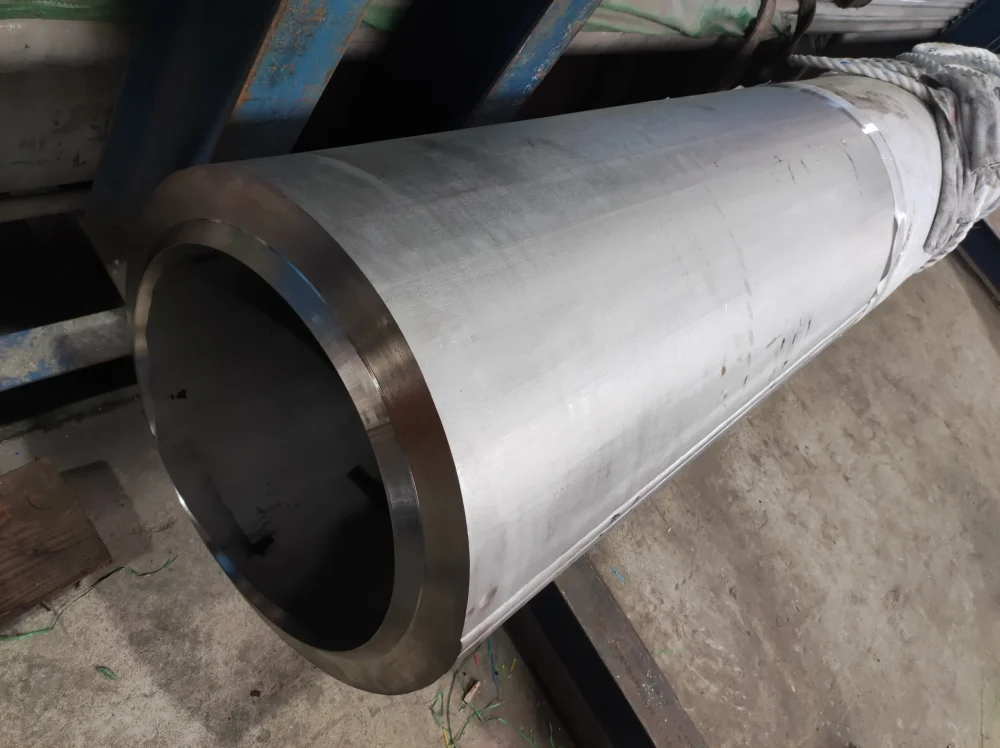
O que é aço inoxidávelEste material é a pedra angular da indústria e fabricação modernas. Oferece resistência incomparável à ferrugem e corrosão. Isso o torna essencial para aplicações de alta integridade. tubo SS produção. Além disso, é vital para crucial Acessórios para tubos SS.Sua durabilidade excepcional frequentemente o torna o melhor investimento a longo prazo.
Definindo o aço inoxidável e sua composição
O aço inoxidável é basicamente uma liga de ferro e o cromo é seu elemento definidor. 10.5% Esse cromo é a fonte da defesa passiva do metal. Outros elementos importantes incluem o níquel, o molibdênio e o carbono. A adição de molibdênio aumenta a resistência ao ataque de cloreto.
Quando o cromo encontra o oxigênio, ele forma instantaneamente uma camada de passivação, o óxido de cromo. Essa fina camada de proteção possui propriedades protetoras excepcionais, protegendo continuamente o metal subjacente do contato com o ar e evitando a ferrugem.
| Elemento | Função principal | Efeito em tubos/acessórios |
|---|---|---|
| Crómio | Forma uma camada passiva | Resistência à corrosão |
| Níquel | Estabiliza a austenita | Aumenta a resistência e a ductilidade |
| Molibdênio | Combate ataques localizados | Resistente a corrosão por pite e fendas |
| Carbono | Controla a dureza | Influências na soldabilidade |
O que fazemos
- Placa
- Folha
- Forjados
- Barra redonda
- Mesa
- Tubos
- Conexões
- Personalizado
Entre em contato conosco para obter mais informações
Classificação do aço inoxidável
O SS é categorizado principalmente em Cinco tipos principais.A microestrutura da liga determina sua classificação.
Compreender essas classificações ajuda a determinar a aplicação ideal para o material.
Aços austeníticos (série 300)
O aço inoxidável austenítico é o tipo mais comum, pois classes como 304 e 316 pertencem a esse tipo de aço, contendo altos níveis de níquel e cromo. Os aços austeníticos não são magnéticos e são altamente resistentes à corrosão, não podendo ser endurecidos por tratamento térmico.
Aços ferríticos (Série 400)
Os aços ferríticos exibem propriedades magnéticas, mas contêm níveis mais baixos de níquel. Graus como o 430 são representantes comuns. Essa categoria de aço oferece excelente resistência a rachaduras por corrosão sob tensão e é frequentemente empregada no setor de fabricação de automóveis.
Aços martensíticos (Série 400)
O aço martensítico apresenta propriedades magnéticas e pode ser endurecido por meio de tratamento térmico. O aço grau 410 tem ampla aplicação, o que o torna adequado para componentes de alto desgaste, como hastes de válvulas.
Aços duplex
O aço duplex combina partes aproximadamente iguais de estruturas austeníticas e ferríticas. Esse equilíbrio proporciona alta resistência e excelente resistência à corrosão. 2205 são usados em ambientes agressivos e corrosivos.
| Família de notas | Principais recursos | Estrutura | Exemplo de nota |
|---|---|---|---|
| Austenítico | Resistência à corrosão | Não magnético | 304, 316 |
| Ferrítico | Custo mais baixo | Magnético | 430 |
| Martensítico | Alta dureza | Magnético, endurecível | 410 |
| Duplex | Alta resistência | Misto | 2205 |
Principais vantagens do aço inoxidável
A camada de óxido de cromo oferece resistência eficaz à corrosão química. Essa ação protetora é crucial em ambientes úmidos ou ácidos, garantindo que o material permaneça durável por décadas.
Esse material mantém sua integridade sob pressão e altas temperaturas, reduzindo, assim, o risco de ruptura ou falha por fadiga, e suporta de forma confiável sistemas de fluidos de alta pressão.
A superfície lisa e não porosa inibe o crescimento bacteriano e facilita a desinfecção e limpeza eficientes. Essa característica é um requisito obrigatório em aplicações farmacêuticas.
O aço inoxidável apresenta excelente resistência a temperaturas extremamente altas e baixas, e essa versatilidade o torna a escolha ideal para diversas aplicações industriais, evitando efetivamente a degradação térmica.
Principais desvantagens do aço inoxidável
O aço inoxidável é mais caro do que o aço-carbono, devido ao custo de sua fabricação. liga de cromo-níquel. O seu investimento inicial deve ser justificado pela sua vida útil prolongada.
Altas concentrações de sal ou cloreto podem comprometer a camada de passivação, levando à corrosão por pite localizada. Os tipos de aço com alto teor de molibdênio devem ser empregados em ambientes marinhos.
A soldagem exige um controle rigoroso da entrada de calor para evitar a sensibilização do metal, o que envolve o tratamento térmico pós-soldagem.
Certos tipos de aço de alta liga possuem alta resistência, tornando-os difíceis de cortar e moldar com precisão, aumentando assim o tempo e o custo de fabricação dos componentes.
Processo de fabricação: como é feito o aço inoxidável
- Primeiro, as matérias-primas são fundidas em um forno elétrico a arco (EAF). Posteriormente, o metal fundido entra na fase de refino. O processo de descarbonização com argônio-oxigênio (AOD) remove o excesso de carbono, garantindo uma composição precisa da liga.
- O aço fundido refinado é fundido em placas ou tarugos. As placas passam por laminação a quente imediatamente após a fundição para formar o material de base.
- O refinamento final é normalmente obtido por meio de laminação a frio ou trefilação a frio, processos que atingem dimensões finais precisas e o acabamento superficial necessário.
| Etapa do processo | Objetivo principal | Equipamento utilizado |
|---|---|---|
| Derretimento | Liga inicial | Forno elétrico a arco (EAF) |
| Refinamento | Controle de carbono | Conversor AOD |
| Elenco | Solidificar aço | Máquina de lingotamento contínuo |
| Formação | Material de forma | Laminadora |
Manchas e corrosão do aço inoxidável
Muitos questionam as características de desempenho a longo prazo deste material. O aço inoxidável não enferruja como o ferro comum. No entanto, a corrosão por cloretos ou ambientes com baixo teor de oxigênio podem causar corrosão localizada, manifestando-se como manchas escuras ou uma camada oxidada. É precisamente esta questão que torna crítica a escolha entre aço inoxidável e aço carbono. O aço inoxidável requer medidas de proteção apenas contra ameaças químicas específicas.
Aplicações em tubulações e produtos de uso diário
Os tubos de aço inoxidável são fabricados em duas formas.Tubo soldado é fabricado a partir de tiras laminadas.Tubo sem costura Os acessórios para tubos de aço inoxidável direcionam o fluxo do fluido e os produtos comuns incluem cotovelos, flanges e tês.
Os produtos de uso diário também utilizam esse material. Eletrodomésticos, instrumentos cirúrgicos e peças automotivas dependem de sua durabilidade.
Contate-nos
- RM901 No.22 Tangjiaqiao Road Wenzhou China
- +86 577 8551 1171
- [email protected]
- https://www.kaysuns.com/