To prevent catastrophic brittle fracture at temperatures as low as -162°C (-260°F), our customers ask us how to select the most suitable stainless steel pipes for LNG when placing orders for LNG pipelines.
To ensure efficient transportation, liquefied natural gas is typically compressed to one-six-hundredth of its original volume. However, the extremely low temperatures can instantly turn ordinary carbon steel into brittle glass, and a ruptured pipeline would very likely release an explosive vapor cloud, affecting the entire offshore pipeline system.
This guide covers low-temperature alloys, pipe specifications, shrinkage control, and low-temperature insulation. Follow along as we help you select safe tuyaux en acier inoxydable for LNG infrastructure.
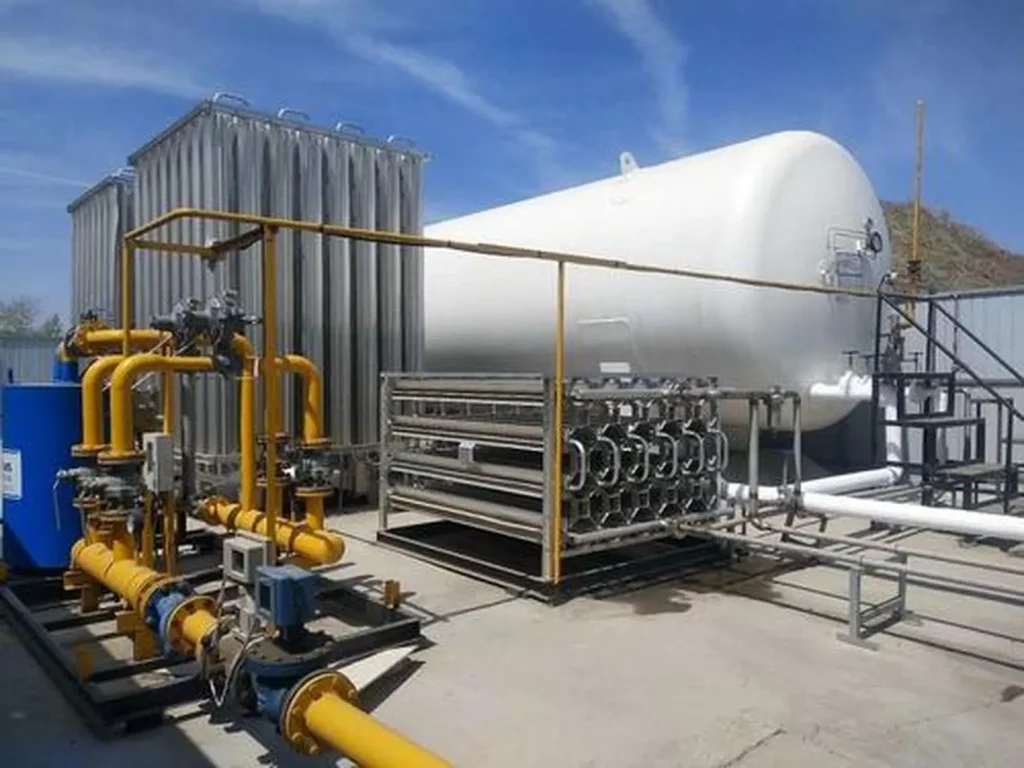
Table des matières
Why Cryogenic Temperatures Challenge Pipes for LNG
The boiling point of liquefied natural gas at atmospheric pressure is exactly -162°C, whereas the impact toughness of ordinary carbon steel pipes decreases rapidly at temperatures below -29°C—a phenomenon known as the ductile-to-brittle transition.
If a brittle pipeline is subjected to vibration or a sudden increase in pressure, it can rupture without warning. Stainless steel pipelines for LNG must be made of metals with atomic structures that remain stable at extremely low temperatures.
Pipelines at coastal export terminals are exposed to corrosive salt spray on a daily basis; selecting an unsuitable metal can lead to chloride pitting and sudden structural failure.
Ce que nous faisons
- Plaque
- Feuille
- Forgeage
- Barre ronde
- Bride
- Tuyaux
- Raccords
- Sur mesure
Contactez-nous pour plus d'informations
Comparing Core Stainless Steel Pipes For LNG
Austenitic Stainless Steel (TP304L / TP316L)
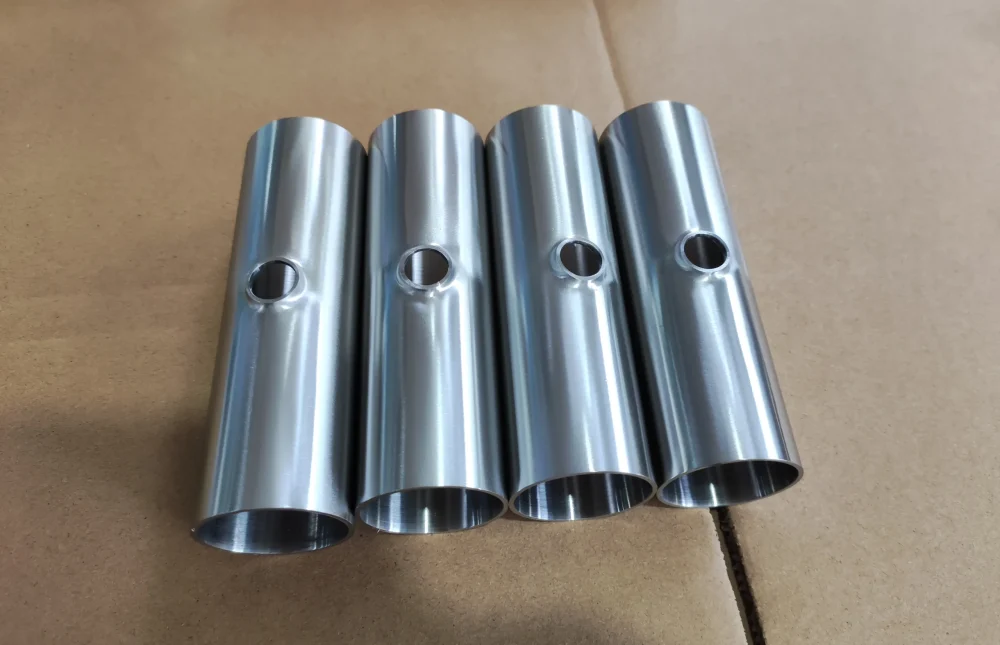
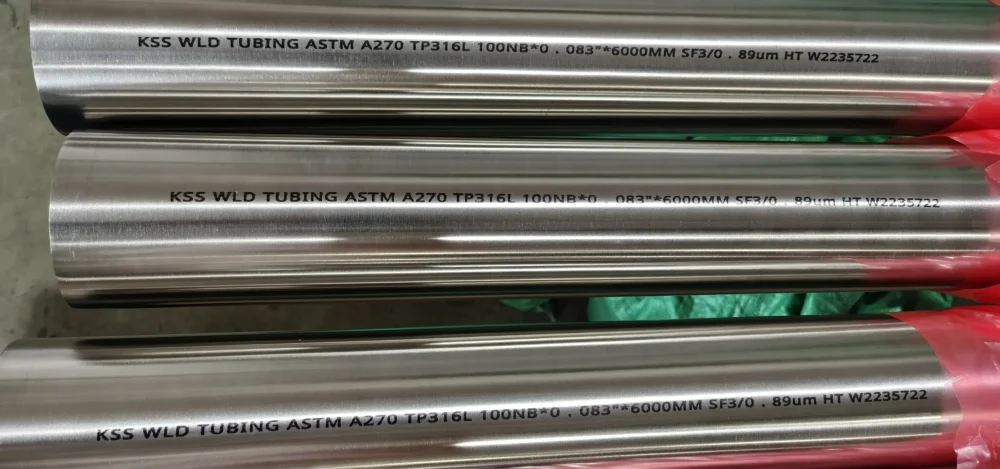
TP304L and TP316L are the primary materials used in modern LNG transmission pipelines; they retain their toughness at temperatures as low as -196°C and are also easy to weld. Tubes en acier inoxydable 316L contain molybdenum, which helps prevent pitting corrosion in seawater, making them the recommended choice for coastal pipelines. 304L stainless steel pipes, on the other hand, offer a cost-effective solution for inland liquefaction process pipelines.
9% Nickel Steel (ASTM A333 Grade 8 / A353)
ASTM A333 Grade 8 ferritic alloy can safely withstand extremely cold environments as low as -196°C; its yield strength is three times that of standard 304L stainless steel, and it is commonly used to manufacture internal storage tanks and large manifolds. It is worth noting that this steel requires the use of expensive nickel-based welding wire, and the arc-blow welding process must be strictly controlled.
Low-Temperature Carbon Steel (ASTM A333 Grade 6)
We must never use ASTM A333 Grade 6 steel for liquid LNG pipelines, as its temperature limit is only -45°C (-50°F) and it is suitable only for warm vapor and utility manifolds.
Aluminum Alloys (ASTM B241 5083 / 6061)
Aluminum retains excellent ductility even at -162°C and weighs only one-third as much as steel; it is commonly used to manufacture primary cryogenic heat exchangers and cryogenic vessels.
Cryogenic Piping Material Comparison at -162°C
| Qualité des matériaux | Norme ASTM | Minimum Service Temp | Limite d'élasticité | Primary LNG Application |
|---|---|---|---|---|
| TP304L | ASTM A312 / A358 | -196°C (-320°F) | 170 MPa | Inland liquefaction & process skids |
| TP316L | ASTM A312 / A358 | -196°C (-320°F) | 170 MPa | Coastal marine jetty & loading lines |
| 9% Nickel Steel | ASTM A333 Gr. 8 | -196°C (-320°F) | 515 MPa | Inner tank piping & high-pressure headers |
| Low-Temp Carbon | ASTM A333 Gr. 6 | -45°C (-50°F) | 240 MPa | Warm boil-off gas (BOG) & fuel lines |
| Aluminum 5083-O | ASTM B241 | -196°C (-320°F) | 125 MPa | Internal cold box heat exchangers |
Selecting Diameters and Schedules for Pipes for LNG
The sizing of liquefied natural gas pipelines requires a balance between fluid velocity and system pressure drop and must comply with the ASME B31.3 Process Piping Code and the ASME B36.19M Stainless Steel Sizing Specification.
Small instrumentation and pressure gauge lines typically use 1/2-inch to 2-inch seamless steel pipes. Skid-mounted process equipment and pump suction lines typically use 2-inch to 12-inch seamless steel pipes. Large ship loading and unloading lines require pipes ranging in diameter from 16 inches to 48 inches. For pipes with diameters exceeding 14 inches, if you consider the manufacturing cost of seamless pipes to be too high, you may specify electrofusion-welded pipes that comply with the ASTM A358 Grade 1 standard.
As a reliable manufacturer of EFW stainless steel pipes in China, we guarantee that their pressure ratings are equivalent to those of seamless pipes. All products undergo 100% X-ray weld inspection, and we are capable of providing MTCs and assisting you with customs clearance documentation.
| Taille nominale du tuyau | Pipe Construction | Norme ASTM | Typical Schedule | Terminal System Zone |
|---|---|---|---|---|
| 1/2″ to 2″ | Seamless Tubing | ASTM A269 / A312 | Sch 40S / 80S | Instrumentation & pressure sampling |
| 2″ to 12″ | Tuyaux sans soudure | ASTM A312 | Sch 10S / 40S | Pump discharge & liquefaction trains |
| 14″ to 24″ | EFW Welded Pipe | ASTM A358 Cl. 1 | Sch 10S / 20S | Tank rundown & vapor return headers |
| 24″ to 48″ | EFW Welded Pipe | ASTM A358 Cl. 1 | Sch 10S / 20S | Marine jetty ship-loading manifolds |
As a professional and reliable manufacturer of stainless steel pipes in China,Kaysuns can not only help you avoid most mistakes when purchasing stainless steel pipes,but we also offer one-stop piping system services to eliminate all purchasing hurdles for you.Feel free to contact us at any time for a free and quick quote.
Contactez-nous pour plus d'informations
Managing Thermal Contraction in Cryogenic Pipelines
LNG cooling pipelines are cooled from +20°C to -162°C, resulting in a temperature difference of 182°C. Austenitic stainless steel contracts by approximately 3.0 millimeters per meter during the cooling process, meaning a 100-meter-long terminal pipeline will shrink by a total of 300 millimeters.
However, this is not an insurmountable problem. Currently, there are three proven mechanical design methods available to address this thermal contraction issue:
- Expansion Loops:
U-shaped pipe bends absorb axial contraction through natural elastic flexing. - Bellows Expansion Joints:
Multi-ply 316L bellows absorb high movement inside compact pump skids. - Cryogenic Cold Shoes:
High-density polyurethane blocks support pipes while letting them slide freely.
Cold Insulation Systems for Pipes for LNG
Uninsulated pipelines used to transport liquefied natural gas can cause the LNG to boil instantly, forming dangerous ice. Warm ambient air rapidly transfers heat to the cold metal pipe walls. Water vapor condenses on the cold surface, trapping corrosive chlorides on the steel surface—a phenomenon known as corrosion under insulation (CUI).
A suitable insulation system maintains the low temperature of liquefied natural gas (LNG) and completely blocks out ambient moisture. LNG pipelines can be wrapped with multiple layers of polyisocyanurate (PIR) or polyurethane foam (PUF), and each foam joint can be sealed with moisture-resistant sealant and a stainless steel jacket. For fire-rated areas, non-combustible honeycomb glass insulation is recommended. Ultra-high-efficiency transmission pipelines typically employ vacuum-jacketed piping (VJP) to achieve zero evaporation losses.
Cryogenic Insulation Comparison for LNG Pipelines
| Insulation Type | Conductivité thermique | Fire Resistance | Moisture Barrier | Best Terminal Application |
|---|---|---|---|---|
| PIR / PUF Foam | Very Low (0.022 W/m·K) | Modéré | Requires vapor wrap | Long overland & jetty transfer pipes |
| Cellular Glass | Low (0.038 W/m·K) | Non-Combustible | Closed-cell waterproof | High-fire-risk process & valve zones |
| Aerogel Blankets | Ultra-Low (0.015 W/m·K) | Haut | Hydrophobic | Tight valve boxes & complex flanges |
| Vacuum Jacketed | Near Zero | Haut | Sealed steel outer pipe | Zero-boil-off fueling & bunkering lines |
Mandatory Quality Testing and Welding Standards
Strict factory verification prevents catastrophic failures in deep-freeze gas terminals. Reputable manufacturers test pipes for LNG well beyond basic commercial requirements.
As a trusted LNG pipeline manufacturer in China, Kaysuns’ laboratory is capable of conducting Charpy V-notch impact tests on weld metal at -196°C. Samples must absorb at least 40 joules of energy without experiencing brittle fracture. Kaysuns’ inspectors perform 100% radiographic or ultrasonic testing on all longitudinal welds and verify alloy composition using a positive material identification X-ray scanner.
During on-site assembly, welders must purge the inner wall of the pipe with argon gas of 99.999% purity to prevent the formation of internal scale and maintain a smooth weld root. Of course, you can also order finished, pre-welded products directly from Kaysuns—contact us today! We provide factory test certificates in accordance with EN 10204, clauses 3.1 or 3.2, upon shipment.
FAQs on Pipes for LNG
Grade 316L contains 2% to 3% molybdenum, which blocks saltwater chloride pitting. Coastal marine terminals expose insulated pipes for LNG to humid salt air constantly. Using 316L prevents stress corrosion cracking under wet insulation jackets.
Non, never use ASTM A333 Grade 6 for liquid LNG service. This carbon steel becomes brittle below -45°C, whereas liquid LNG sits at -162°C. Limit Grade 6 strictly to warm boil-off gas and utility lines.
Choose ASTM A312 seamless pipes for high-pressure lines up to 12 inches. For large jetty transfer headers from 16 to 48 inches, choose ASTM A358 Class 1. EFW welded pipes cut material costs while maintaining 100% X-ray weld integrity.
Austenitic stainless steel contracts roughly 3 millimeters per meter when cooled to -162°C. A 50-meter pipe run shrinks by 150 millimeters during commissioning. Engineers absorb this shrinkage using U-shaped expansion loops and cryogenic sliding cold shoes.
Nous contacter
Prendre contact
- RM901 No.22 Tangjiaqiao Road Wenzhou Chine
- +86 577 8551 1171
- [email protected]
- https://www.kaysuns.com/
Trouvez-nous