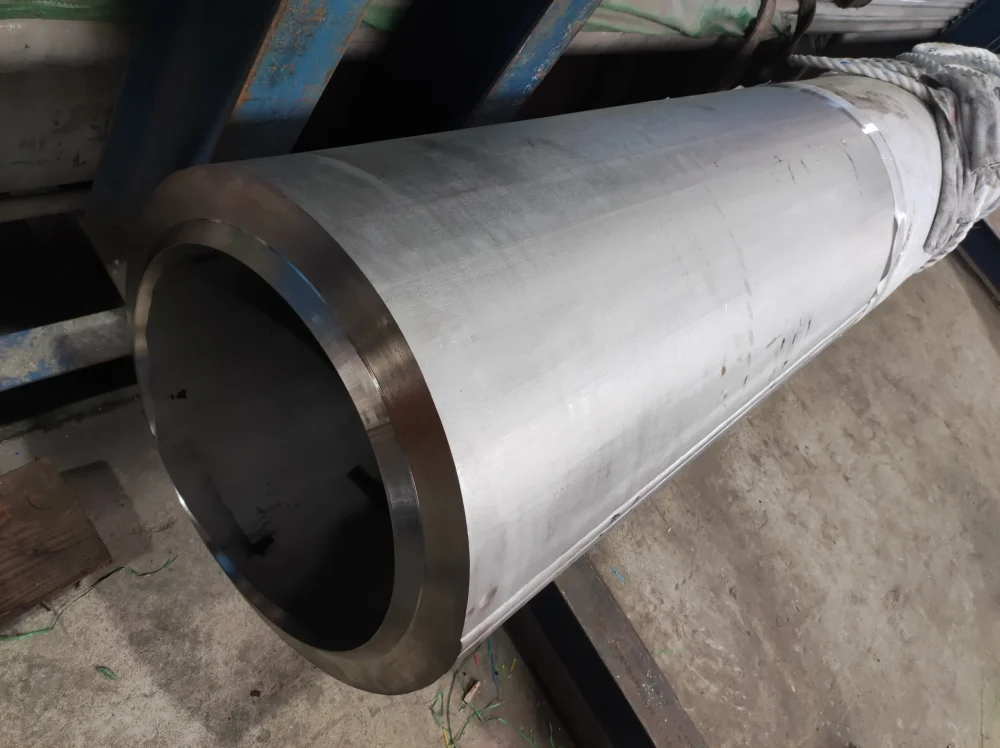
Dégradation thermique L'acier inoxydable perd ses propriétés bénéfiques à la suite d'une exposition prolongée à des températures élevées, ce qui constitue un risque important pour les systèmes qui emploient des métaux lourds. tuyaux en acier inoxydable et raccords. L'exposition prolongée à des températures élevées modifie fondamentalement la structure interne du métal, ce qui entraîne une diminution de la résistance mécanique et de la résistance à la corrosion.
Qu'est-ce que la dégradation thermique ?
La dégradation thermique n'est PAS la même chose que la fusion. Elle implique plutôt des changements métallurgiques lents au sein du métal solide. Ces changements se produisent principalement entre 400 °C et 900 °C (750 °F et 1650 °F). La température élevée provoque le déplacement et la précipitation de certains éléments. Ce mouvement forme de nouvelles phases fragiles. Par conséquent, le métal perd sa résistance et sa ductilité d'origine.
Ce que nous faisons
- Plaque
- Feuille
- Forgeage
- Barre ronde
- Bride
- Tuyaux
- Raccords
- Sur mesure
Contactez-nous pour plus d'informations
Mécanismes clés de la dégradation thermique
Plusieurs mécanismes distincts conduisent à la perte d'intégrité des matériaux. Dans des conditions de fonctionnement à haute température, ces processus se produisent souvent simultanément.
Formation de phase Sigma
La phase sigma(σ) est un composé intermétallique fragile riche en chrome et en molybdène. Cette phase se forme lentement dans les aciers inoxydables austénitiques et duplex. La phase σ se forme généralement dans une plage de température de 600°C à 900°C (1112°F à 1650°F). Sa formation réduit considérablement la ténacité du matériau et augmente le risque de fracture fragile due à l'impact.
Fragilisation à 475 °C
Ce phénomène touche principalement les aciers inoxydables ferritiques et duplex. Lorsque les matériaux sont exposés pendant de longues périodes à une température proche de 475 °C (885 °F), des atomes de chrome s'accumulent dans la matrice métallique. Cette accumulation augmente considérablement la dureté du matériau, mais rend simultanément l'acier extrêmement cassant à température ambiante. Cette fragilité présente des risques lors des opérations de maintenance et d'inspection.
Précipitation de carbure
La précipitation des carbures est communément appelée sensibilisation.Elle affecte principalement les aciers inoxydables austénitiques tels que le 304.Dans la plage de température de 450°C à 850°C,les carbures de chrome se forment le long des joints de grains.Ce processus épuise le chrome du métal environnant,ce qui fait que les régions appauvries en chrome perdent leur couche de passivation.Par conséquent,l'acier devient très sensible à la corrosion intergranulaire.
| Mécanisme | Niveaux concernés | Plage de température | Effet primaire |
|---|---|---|---|
| phase σ | Austénitique, duplex | 600 °C à 900 °C (1112 °F à 1650 °F) | Fragilité sévère |
| Fragilisation à 475 °C | Ferritique, duplex | ≤ 475 °C (885 °F) | Augmentation de la dureté, perte de ductilité |
| Précipitation de carbure | Austénitique (304, 316) | 450 °C à 850 °C (840 °F à 1560 °F) | Sensibilité à la corrosion intergranulaire |
Effets de la dégradation thermique sur les systèmes de tuyauterie
La fragilisation induite par la phase σ limite la capacité de flexion du matériau, rendant l'acier inoxydable sujet à la fissuration. Tout impact mécanique inattendu peut entraîner une défaillance immédiate.
La sensibilisation induite par la précipitation du carbure réduit considérablement la résistance à la corrosion. Les zones affectées deviennent sensibles à l'érosion chimique, ce qui entraîne une corrosion par piqûres prématurée et une défaillance des pipelines de traitement.
La dégradation thermique réduit la durée de vie prévue des équipements, ce qui nécessite le remplacement prématuré de composants et augmente considérablement les coûts de maintenance à long terme.
Les défaillances des conduites à haute pression ou à haute température présentent des risques pour la sécurité. Le maintien de l'intégrité structurelle est essentiel pour garantir la sécurité de l'exploitation.
Sélection des matériaux et atténuation
- Classes à faible teneur en carbone:
Les qualités 304L et 316L sont recommandées. La lettre “L” qui suit la qualité indique une faible teneur en carbone, ce qui minimise la précipitation de carbure, réduisant ainsi le risque de sensibilisation pendant le soudage ou le service à haute température. - Grades stabilisés:
Les qualités telles que 321 et 347 contiennent des éléments stabilisateurs (titane ou niobium) qui forment de préférence des carbures, empêchant ainsi la formation de carbures de chrome nocifs. - Contrôle de l'acier duplex:
Les aciers duplex nécessitent un contrôle rigoureux de la fabrication afin de limiter la teneur en ferrite et de réduire au minimum le risque de formation de phase σ.
Stratégies de prévention dans les tuyauteries à haute température
| Stratégie | Type de composant | Mesure d'atténuation |
|---|---|---|
| Choix des matériaux | Tuyaux, raccords, brides | Utilisez des grades à faible teneur en carbone (“ L ”) ou stabilisés. |
| Soudage | Assemblages soudés | Utiliser des méthodes de soudage spécialisées à faible apport thermique. |
| Traitement thermique | Composants fabriqués | Recuit de mise en solution après soudage pour redissoudre les carbures |
| Conception | Structure du système | Évitez les temps d'attente prolongés dans les plages de température critiques. |
Nous contacter
- RM901 No.22 Tangjiaqiao Road Wenzhou Chine
- +86 577 8551 1171
- [email protected]
- https://www.kaysuns.com/