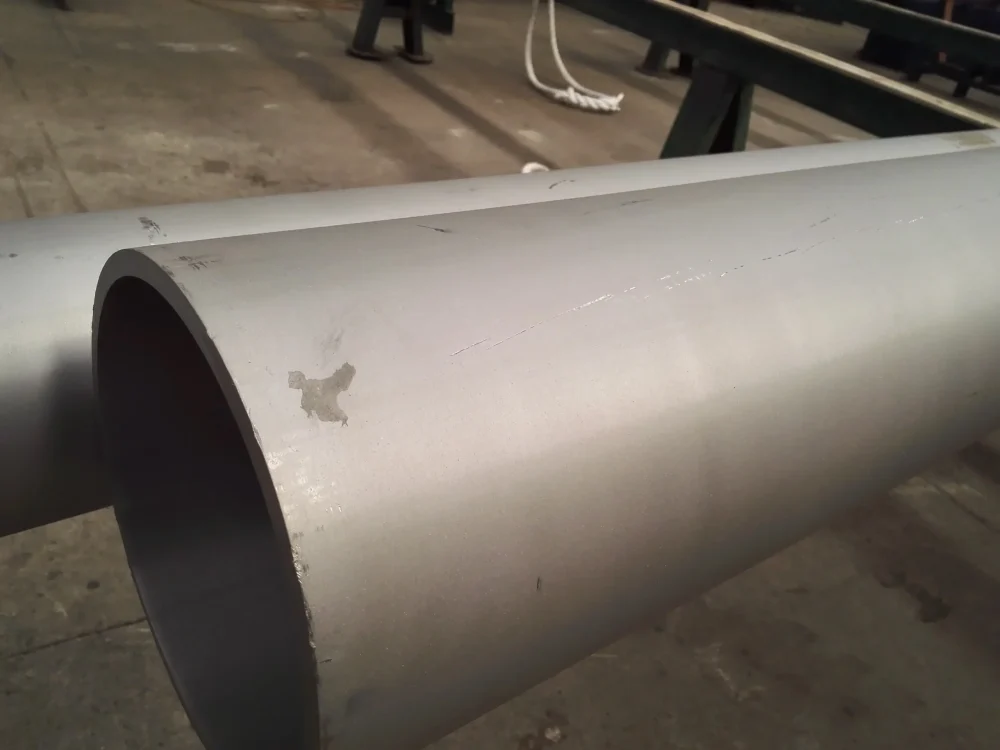
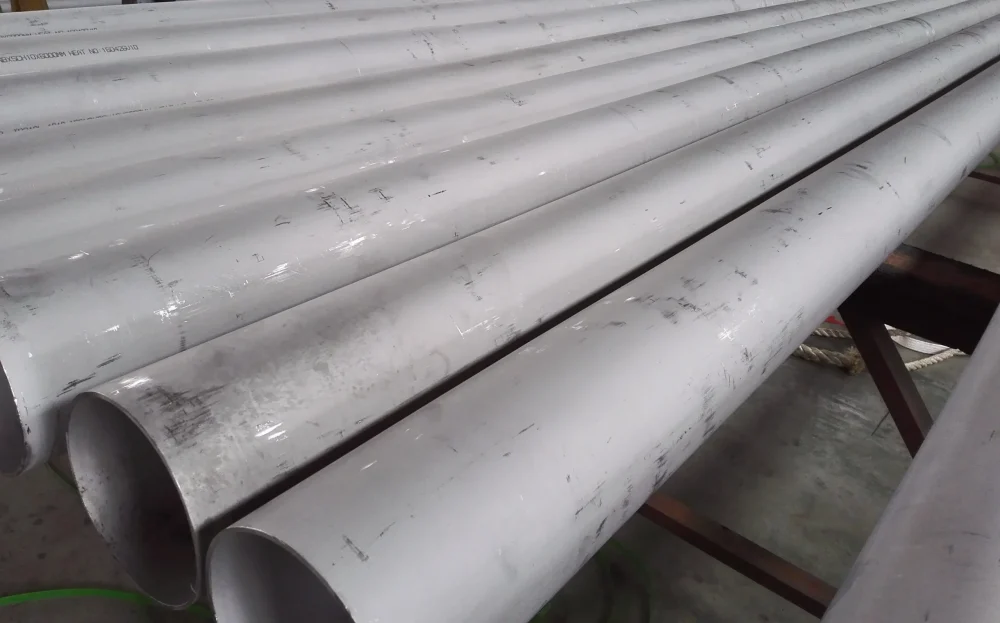
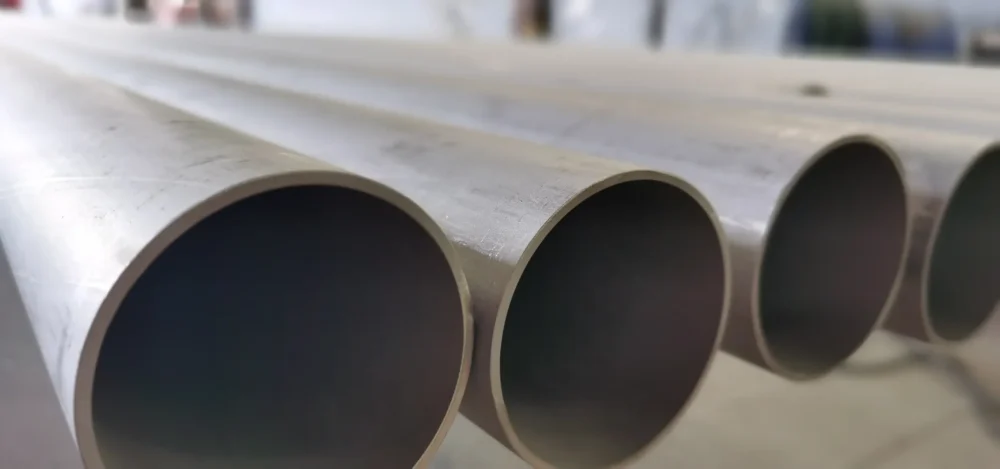
Hastelloy B3 Pipe Manufacturer in China
Notre capacité
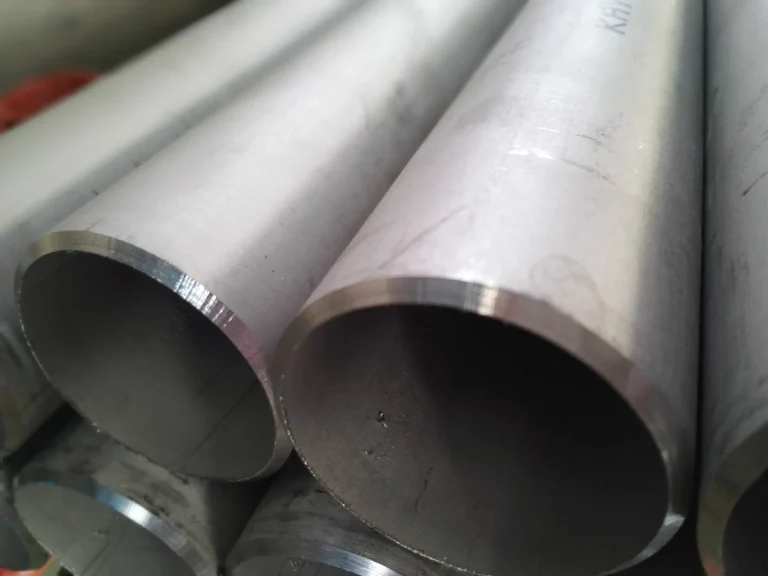
Hastelloy B3 Equivalent Designations
- UNS N10675
- W.Nr. 2.4600
- EN NiMo30Cr
- GB NS3203
- ASTM B622 / SB622
- ASTM B619 / SB619 / B626 / SB626
Vous avez un besoin ?
Contactez-nous pour plus d'informations
Standards of Hastelloy B3 Pipe & Tube
| Forme du produit | Norme ASTM | Norme ASME | Description / Application |
|---|---|---|---|
| Tubes et tuyaux sans soudure | ASTM B622 | ASME SB622 | High-pressure piping and tubing without weld seams. |
| Tuyau soudé | ASTM B619 | ASME SB619 | Large diameter process piping for chemical plants. |
| Tube soudé | ASTM B626 | ASME SB626 | Specifically for Heat Exchangers and Condensers. |
Normes relatives aux composants
- Pipe Fittings: ASTM B366 / ASME SB366.(Wrought fittings like Elbows, Tees, and Reducers.)
- Forgings & Flanges: ASTM B564 / ASME SB564.(Custom forgings, flanges, and machined parts.)
- Rod & Bar: ASTM B335 / ASME SB335.(Round bars for fasteners, bolts, and valve stems.)
- Plate & Sheet: ASTM B333 / ASME SB333.(Raw material for vessel shells and welded structures.)
Chemical Composition of Hastelloy B3 Pipe, wt.%
| Ni | Mo | Cr | Fe | W | Mn | Co | Si | C | Al | Ti | P | S |
|---|---|---|---|---|---|---|---|---|---|---|---|---|
| Équilibre | 27.0 – 32.0 | 1,0 – 3,0 | 1,0 – 3,0 | 3.0 Max | 3.0 Max | 3.0 Max | 0.10 Max | 0,01 Max | 0.50 Max | 0.20 Max | 0,03 maximum | 0,01 Max |
Notes techniques clés
- High Molybdenum (Mo):
The 28.5% (average) molybdenum content is the primary reason for its exceptional resistance to Hydrochloric Acid across all concentrations and temperatures. - Low Chromium (Cr):
Because chromium is low,this alloy is not suitable for oxidizing environments (e.g., Nitric Acid) or in the presence of oxidizing salts like Ferric or Cupric chlorides. - Stabilité thermique :
The specific balance of elements in B3 prevents the precipitation of detrimental intermetallic phases during welding,which was a common issue with the older Hastelloy B2 grade.
Why Can't B3 Pipes Be Used For Nitric Acid?
Mechanical Properties of Hastelloy B3 Pipe
| Résistance à la traction | Limite d'élasticité | Élongation | Dureté | Densité |
|---|---|---|---|---|
| ≥ 760 MPa(110 ksi) | ≥ 350 MPa(51 ksi) | ≥ 40% | ≤ 100 HRB | 9.24 g/cm3(0.334 lb/in3) |
Does Welding Reduce The Strength of B3 Pipes?
Thermal Properties of Hastelloy B3 Pipe
| Biens | Valeur métrique | Valeur impériale |
|---|---|---|
| Plage de fusion | 1370 – 1418°C | 2500 – 2585°F |
| Conductivité thermique | 11.2 W/m·°C (at 25°C) | 78 Btu·in/ft²·h·°F |
| Chaleur spécifique | 397 J/kg·°C (at 25°C) | 0.095 Btu/lb·°F |
| Moyenne CTE | 10.6 μm/m·°C (25-100°C) | 5.9 μin/in·°F |
Why Does B3 Emphasize “Thermal Stability”?
What is The Maximum Safe Operating Temperature For This Alloy?
How Do You Perform Solution Annealing To Restore Thermal Properties?
Corrosion Rates of Hastelloy B3 in Hydrochloric Acid (HCl)
| HCl Concentration (wt.%) | Température | État | Corrosion Rate (mm/y) |
|---|---|---|---|
| 5% | 70°C(158°F) | Hot | < 0.02 |
| 101°C(214°F) | Boiling | 0.41 | |
| 10% | 70°C(158°F) | Hot | 0.13 |
| 102°C(216°F) | Boiling | 0.46 | |
| 15% | 70°C(158°F) | Hot | 0.23 |
| 104°C(219°F) | Boiling | 0.51 | |
| 20% | 70°C(158°F) | Hot | 0.28 |
| 108°C(226°F) | Boiling | 0.58 | |
| 30% | 50°C(122°F) | Warm | 0.15 |
| 37% | 50°C(122°F) | Warm | 0.25 |
Key Findings and Design Recommendations
- Full Concentration Coverage:
Hastelloy B3 is one of the very few metallic materials capable of maintaining a low corrosion rate across the entire concentration range (from 0% to 37%) and up to the boiling point.
- Characteristics Of The Isocorrosion Curve:
In the isocorrosion curve at 0.1 mm/y,the temperature range of B3 is significantly higher than that of stainless steel or typical nickel-based alloys (such as C276). - Warning—Oxidizer:
- The data above is based on the assumption that the substance is pure hydrochloric acid.
- If hydrochloric acid contains more than 5 ppm of iron ions (Fe³⁺) or copper ions (Cu²⁺),the corrosion rate can instantly increase by a factor of tens.This is because B3 is extremely susceptible to attack by oxidizing ions.
- Welding Effects:
Due to B-3’s excellent thermal stability,the corrosion rate in its heat-affected zone (HAZ) is typically comparable to that of the base material,so there is no need to worry about preferential corrosion at the weld.
Applications of Hastelloy B3 Pipe
- HCl Production & Handling
- Acetic Acid Processing
- Sulfuric Acid Recovery
- Alkylation Units
- Pesticide & Herbicide Production
- Intermédiaires pharmaceutiques
- Chlorination Systems
- Acid Waste Treatment
- Flue Gas Scrubber Components
- R&D and Pilot Plants
FAQs About Hastelloy B3 Pipe
Oxidizing environments.B3 contains virtually no chromium (Cr) and must therefore never be used in nitric acid or in solutions containing iron (III) ions (Fe³⁺) or copper (II) ions (Cu²⁺).In these oxidizing media,B3 will corrode extremely rapidly.
It depends on the specific circumstances.
For purely reducing acids (such as pure hydrochloric acid),B3 performs significantly better than C276.
If the medium contains oxidizing impurities (such as dissolved oxygen,chlorine gas,or iron ions),C276 must be used.
This is generally not necessary.B3 is specifically designed for use in the as-welded condition.Unless there are special requirements or the material has undergone severe cold working,local heat treatment is not recommended,as improper heating may actually impair performance.
Nous contacter
- RM901 No.22 Tangjiaqiao Road Wenzhou Chine
- +86 577 8551 1171
- [email protected]
- https://www.kaysuns.com/