What Are The Cons of Stainless Steel Pipe?While this material offers incredible durability,it is certainly not a perfect solution for every scenario.We must weigh the advantages against the specific limitations of different metal alloys.This article explores the drawbacks of stainless pipes and tubes in various shapes.Furthermore,we provide a complete set of solutions to mitigate these common industrial issues.
General Cons of Stainless Steel Pipe in Modern Industry
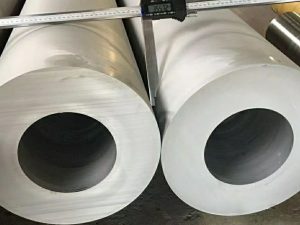
The most significant cons of stainless steel pipe involve the high initial procurement cost.Stainless steel contains expensive raw materials like nickel and chromium.Consequently,the market price fluctuates significantly based on global commodity trends.Moreover,this material is much harder than carbon steel or copper.This hardness makes cutting and threading the pipe quite difficult for inexperienced workers.Therefore,you must invest in specialized tools and high-quality saw blades.Without the right equipment,your labor costs will rise very quickly.
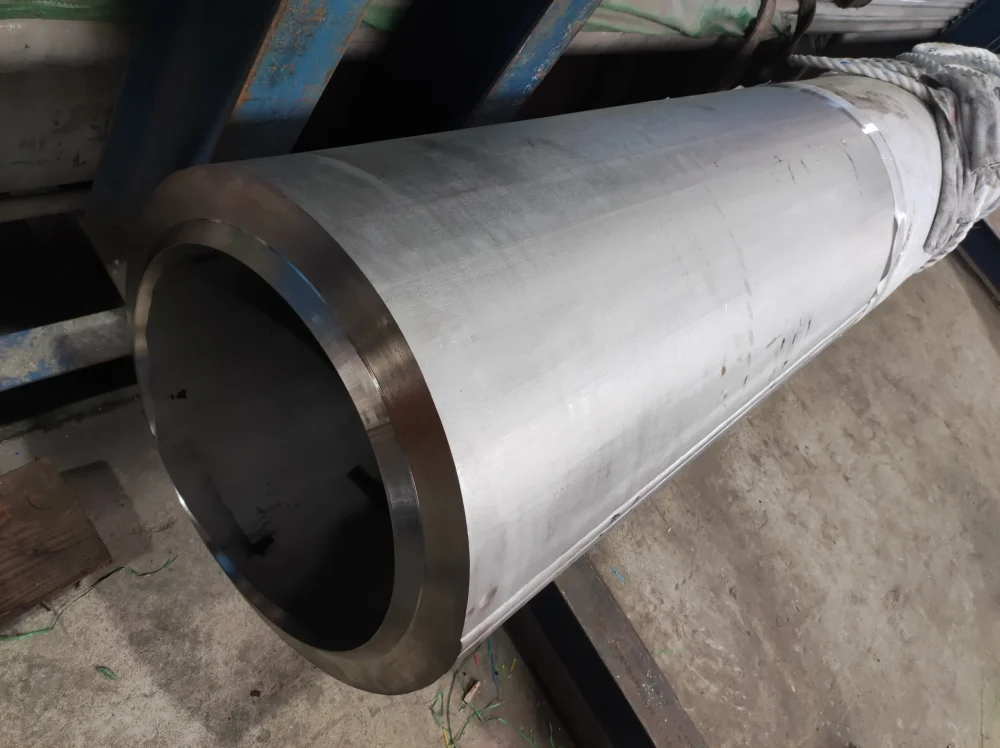
Another factor involves the weight and density of the metal.While stainless steel is strong, it is also quite heavy.Consequently,shipping costs for large orders can become very expensive.Furthermore,installing heavy pipe systems requires robust support brackets and heavy-duty hangers.If your building cannot support the weight,you may face structural safety risks.Always consult with a structural engineer before installing large-diameter stainless networks.
Ce que nous faisons
- Plaque
- Feuille
- Forgeage
- Barre ronde
- Bride
- Tuyaux
- Raccords
- Sur mesure
Contactez-nous pour plus d'informations
Comparing Cons of Stainless Steel Pipe and Tubing
Our customers often confuse pipes and tubes,yet they have very different drawbacks.Pipes follow nominal sizes and primarily transport high-pressure fluids.Conversely,tubes focus on structural applications and require exact outside dimensions.The cons of stainless steel pipe usually relate to the internal flow resistance.However,tubing faces different challenges regarding precision and bending.
Comparing Cons of Stainless Steel Pipe and Tubing
| Fonctionnalité | Pipe Drawbacks | Tube Drawbacks |
|---|---|---|
| Sizing Standard | Nominal sizes are confusing. | High cost for tight tolerances. |
| Épaisseur du mur | Limited schedule options. | Very difficult to weld thin walls. |
| Bending | Very difficult to bend without cracking. | Requires expensive internal mandrels. |
| Coût | High per-foot price. | Even higher for precision grades. |
Shape-Specific Cons of Stainless Steel Pipe Products
When you choose specific shapes,you encounter unique mechanical limitations.Round tubes are the most common,but they are not always the best choice.Let us examine the specific cons of stainless steel pipe shapes like square and rectangular options.
Round Tubing Drawbacks
Round tubes offer excellent pressure resistance but are difficult to join at angles.To join two round tubes,a complex “fish-mouth” cut must be made.As a result,the preparation time for welding round tube frames is quite long.Furthermore,round tubes tend to roll during storage or transportation,which can pose a safety hazard.
Square and Rectangular Tubing Drawbacks
The sharp internal corners of square stainless steel tubes can easily lead to stress concentration.As a result,these tubes may fracture under extreme torsional loads.Furthermore,cleaning the interior of square tubes is more difficult;debris often accumulates in the corners,thereby masking the primary enemy of stainless steel—localized corrosion.
Drawbacks by Geometric Shape
| Tube Shape | Mechanical Weakness | Défi de fabrication |
|---|---|---|
| Round | Low structural rigidity in frames. | Hard to align and join. |
| Carré | Stress concentration in corners. | Internal cleaning is difficult. |
| Rectangular | Uneven weight distribution. | Prone to twisting under load. |
Fabrication and Welding Cons of Stainless Steel Pipe
One of the main cons of stainless steel pipe is its low thermal conductivity.This metal retains heat for long periods in very small areas.As a result,the tubing is prone to warping or deformation during the welding process.If the metal becomes overheated,it loses its corrosion resistance and undergoes “sensitization,” which permanently damages the material.
To prevent this from happening,argon gas must be used to shield the back of the weld.This process,known as “back-side shielding,” significantly increases the duration of the project.During welding,a specific filler wire that matches the base metal’s alloy must be used;if the wrong filler wire is used,the weld will rust immediately.
Maintenance Challenges and Environmental Weakness
You might think that stainless steel requires no maintenance,but this is actually a dangerous misconception.One major drawback of stainless steel piping is its extreme sensitivity to chlorides.Keep in mind that in coastal areas,salt and bleach are the main enemies of stainless steel.If salt remains on the surface of the pipes for an extended period,it can cause tiny pits to form.These pits can corrode through even thick pipe walls within a matter of months.
Stainless steel is prone to “seizing” during installation.Seizing occurs when the threads of a bolt and nut become locked together.Once seizing occurs,the connection cannot be loosened without cutting.Anti-seize lubricant must always be used on all stainless steel fasteners.This adds an extra step to every connection in the system.
Common Problems and Professional Solutions
| Common Problem | Root Cause | Effective Solution |
|---|---|---|
| Surface Rusting | Iron contamination. | Use dedicated stainless tools. |
| Galling Threads | Friction during tightening. | Apply nickel-based anti-seize. |
| Warped Welds | Excessive heat input. | Use pulsed TIG welding. |
| Corrosion par piqûres | Chloride exposure. | Upgrade to 316L or Duplex steel. |
Overcoming the Cons of Stainless Steel Pipe
Fortunately,you can overcome most of these drawbacks with proper planning.First,always select the correct grade for your specific environment.If you work near the ocean,avoid 304 and use 316L instead.Second,use the right fabrication techniques to prevent damage.Passivation is a chemical bath that restores the protective layer after welding.
Furthermore,consider using mechanical press-fit systems instead of welding.Raccord à sertir en acier inoxydable eliminates the need for high-heat welding and back-purging.Consequently,it solves the problem of thermal distortion and sensitization.This method is much faster and requires less skilled labor.Ultimately,choosing the right connection method saves you time and money.
Nous contacter
Prendre contact
- RM901 No.22 Tangjiaqiao Road Wenzhou Chine
- +86 577 8551 1171
- [email protected]
- https://www.kaysuns.com/
Trouvez-nous